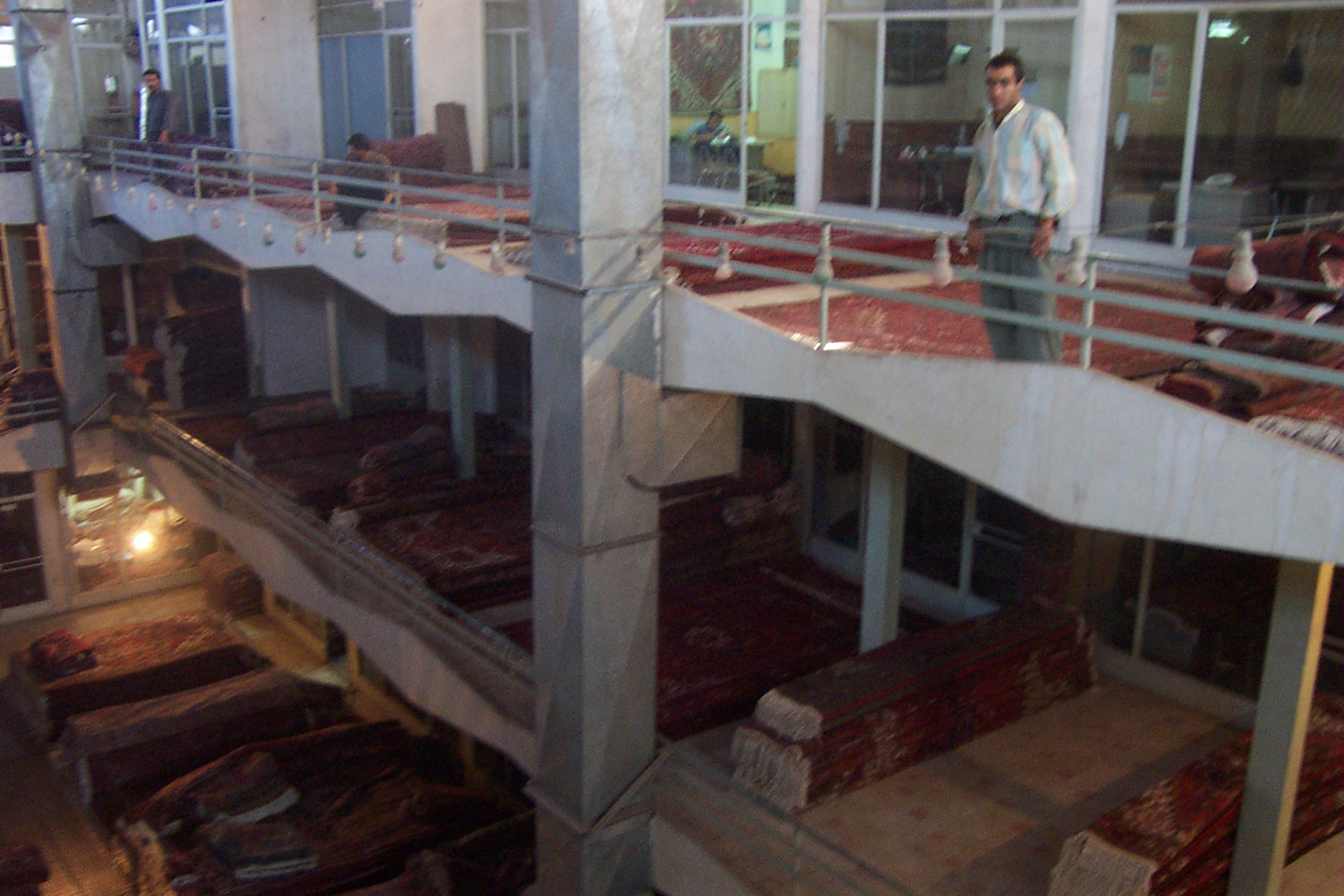
Bazaar of Tabriz
Marco Polo described it as a place where merchants from across the world gathered to trade in precious goods. That was 1271. Walk through the Bazaar of Tabriz today and the scene has not fundamentally changed. Beneath a labyrinth of vaulted brick ceilings stretching over five and a half kilometers, thousands of merchants still ply their trades in specialized rows -- gold and jewelry in Amir Bazaar, hand-woven rugs sorted by knot size in Mozzafarieh, shoes in Bashmakhchi, fresh produce in Rahli. The air shifts from the metallic clang of coppersmiths to the deep, lanolin smell of stacked carpets. This is the largest covered bazaar in the world, and it has been operating on this same site since the earliest centuries of Islamic Iran.
A Thousand Years of Witnesses
The guest book of the Bazaar of Tabriz reads like a who's who of medieval exploration. Al-Maqdisi documented it in the 10th century. Yaqut al-Hamawi wrote about it around 1213. Zakariya al-Qazwini followed in 1252, and then Marco Polo passed through in 1271 on his journey along the Silk Road. Ibn Battuta arrived around 1330, Ambrogio Contarini in 1474, and Jean Chardin visited during the reign of the Safavid kings. Dozens more geographers, diplomats, and wanderers left accounts of this place across the centuries. No other bazaar in the Islamic world can claim such a continuous record of outside attention. The reason is simple: Tabriz sat at a crossroads. Routes from Constantinople, Baghdad, Central Asia, and the Caucasus converged here, making its marketplace not just a commercial hub but a node of cultural exchange that shaped art, language, and cuisine across the region.
The Safavid Golden Age
Tabriz and its bazaar reached their zenith in the 16th century, when the city served as the capital of Safavid Iran. Under Shah Ismail I and his successors, the bazaar became one of the most important commercial centers in Asia. Caravanserais -- the inns where traveling merchants lodged their camels and their goods -- clustered around the market's edges, and the complex grew into a small city within a city. The bazaar's 27-hectare footprint encompasses not just shops but mosques, bathhouses, and warehouses, all interconnected by covered passages that kept merchants and buyers sheltered from Tabriz's harsh winters and scorching summers. When the capital moved to Isfahan in the 17th century, Tabriz lost its political prominence. But the bazaar endured. Its geographic advantage -- the same crossroads that had drawn Polo and Ibn Battuta -- ensured that trade continued to flow through its corridors.
Living Architecture
Walk through the bazaar and look up. The vaulted brick ceilings are engineering marvels, punctuated by domes that admit shafts of light into the covered passageways below. Each row has its own architectural character -- the Mozzafarieh section, devoted to carpets, features especially grand vaulting, with ornate brickwork and high arched entrances that signal the prestige of the goods sold within. The structure is not a museum piece. It breathes and adapts. Modern shops exist alongside stalls that have been in the same family for generations. Despite the proliferation of malls and modern commercial districts across Tabriz in recent years, the bazaar remains the economic heart of the city and all of northwestern Iran. Its merchants still set prices, its tea houses still broker deals, and its rhythms still follow the call to prayer.
Restoration and Recognition
In 2000, Iran's Cultural Heritage Organization launched a restoration project for the bazaar, and they did something unusual: they brought the shopkeepers into the process. Rather than shutting down sections and imposing plans from above, the restorers worked alongside the merchants who knew every crack and settlement in the old walls. The approach paid off. In 2013, the rehabilitation won the prestigious Aga Khan Award for Architecture, one of the highest honors in the field. UNESCO had already inscribed the bazaar as a World Heritage Site in July 2010, recognizing it as one of the most complete examples of the traditional Middle Eastern commercial and cultural exchange system. The designation acknowledged what the travelers of a thousand years already knew: this was not simply a place to buy and sell. It was where civilizations met.
From the Air
Located at 38.08N, 46.29E in the historic center of Tabriz, northwestern Iran. The bazaar complex covers 27 hectares and is visible as a dense urban cluster. Nearest airport is Tabriz Shahid Madani International (OITT/TBZ), approximately 10 km to the northwest, elevation 4,449 feet. The city sits in a valley surrounded by mountains, with Mount Sahand to the south. Best viewed at 5,000-8,000 feet AGL. Cold winters with snow and hot, dry summers -- visibility generally good in summer months.