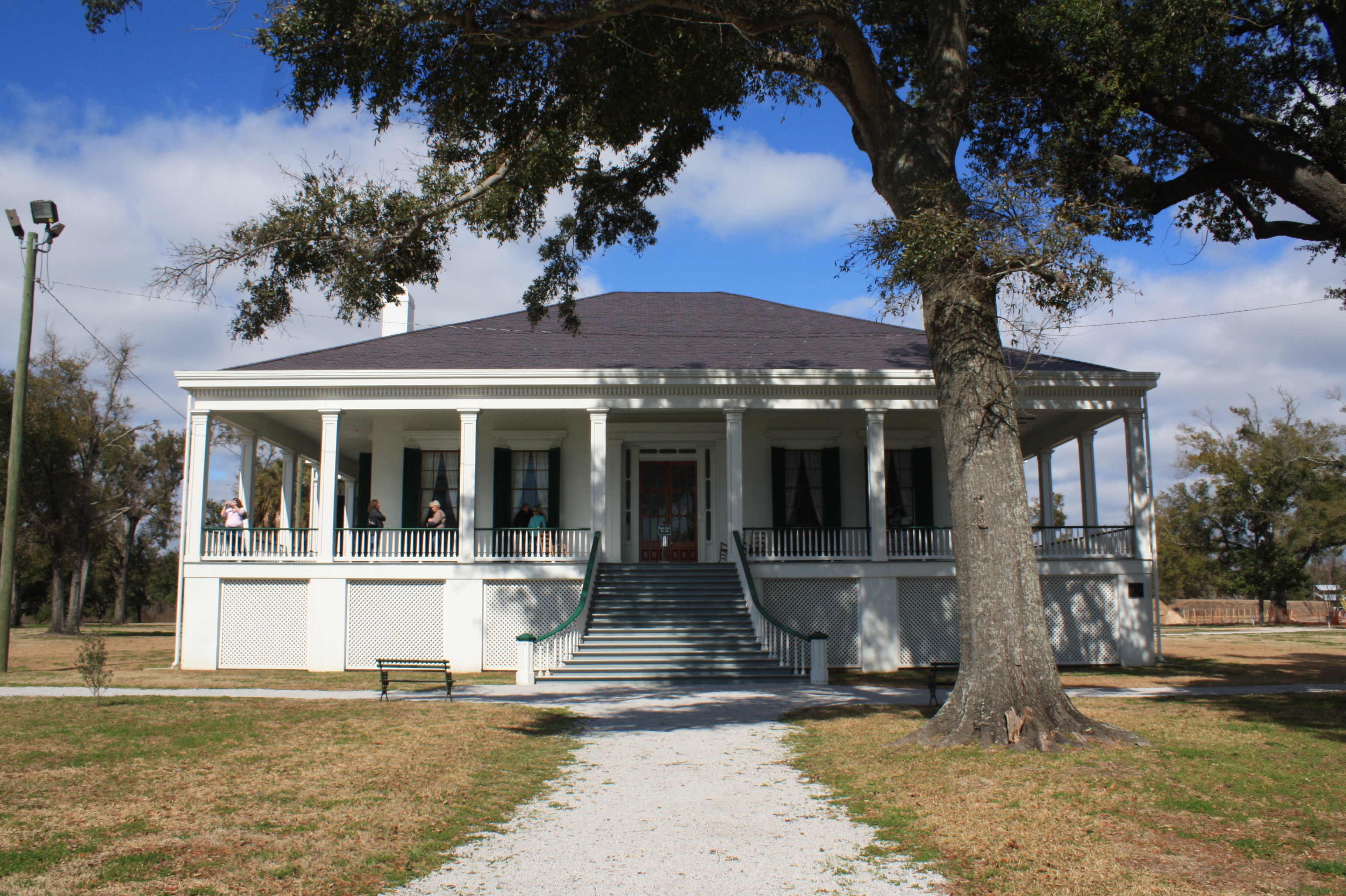
Beauvoir
Sarah Dorsey heard that Jefferson Davis was struggling. The former president of the Confederacy, stripped of citizenship and fortune after the Civil War, had no home and no clear future. In 1876, the novelist and plantation owner invited Davis to her Gulf Coast estate, offering him a cottage where he could live and write in peace. Davis came for a visit and never left. Beauvoir -- French for 'beautiful view' -- became the place where one of the most controversial figures in American history spent his final thirteen years, composing his two-volume memoir while gazing across the waters of the Gulf of Mexico from a raised Louisiana-style cottage surrounded by cedars, oaks, and magnolia trees.
A Writer's Refuge
Beauvoir was built by planter James Brown between 1848 and 1852. By the time Sarah Dorsey purchased it in 1873 with her husband Samuel, it was a working cotton plantation. Sarah was no ordinary planter's wife -- born into the prominent Percy family of Natchez, Mississippi, she was a novelist and historian whose biography of Louisiana's wartime governor Henry Watkins Allen became a notable work of its era. When Samuel died in 1875, Sarah ran the estate alone. She did more than offer Davis shelter. She organized his notes, took dictation, and encouraged him through the long process of writing The Rise and Fall of the Confederate Government, published in 1881. Ill with cancer in 1878, Dorsey revised her will to leave Beauvoir to Davis, with his youngest daughter Winnie as the residuary legatee.
The Davis Years
Davis moved into the main house with his wife Varina and their daughter Winnie, who became known as 'the Daughter of the Confederacy.' The family's years at Beauvoir were marked by quiet domesticity but also by the social constraints of their position. They refused to allow Winnie to marry a young man from the family of a Northern abolitionist, a decision that shaped the rest of her life. Davis wrote, received visitors, and watched the Gulf from the galleries of the raised cottage until his death in December 1889. Varina and Winnie left for New York City in 1891. The estate later served as a Confederate veterans' home before becoming a museum property.
Surviving the Storms
Beauvoir endured Hurricane Camille in 1969, but Hurricane Katrina on August 29, 2005, nearly erased it. The main house lost its newly refurbished galleries and a section of roof. The Hayes Cottage, Library Pavilion, Confederate Museum, a barracks replica, and the director's home were destroyed outright. The storm gutted the first floor of the Jefferson Davis Presidential Library, and approximately 40 percent of the collection was lost. Civilian volunteers and the Mississippi Army National Guard worked through debris where authentic artifacts lay mixed with gift-shop replicas, making identification agonizing. Restoration began in early 2006. On June 3, 2008 -- Jefferson Davis's 200th birthday -- the mansion reopened, restored to its condition during the Davis era. The presidential library followed in June 2013. Total renovation funding reached $17.2 million from state and federal sources.
Contested Ground
Beauvoir sits across US Highway 90 from Biloxi Beach, a Louisiana-raised summer cottage flanked by a botanical garden, a historic Confederate cemetery containing the Tomb of the Unknown Confederate Soldier, and the Jefferson Davis Presidential Library and Museum. The National Park Service designated it a National Historic Landmark in 1974. Today, the estate is owned and operated by the Mississippi Division of Sons of Confederate Veterans. A 2018 Smithsonian magazine report noted that the museum presents a Lost Cause perspective on the Civil War, including characterizations of slavery as a positive institution. The state of Mississippi provides an annual grant of $100,000 for maintenance. The grounds retain a patch of pre-urban hardwood forest on the northeast portion, an environment similar to what stood here in the 1800s, when the orange grove behind the house was still producing fruit.
From the Air
Located at 30.39N, 88.97W directly on the Mississippi Gulf Coast in Biloxi. Beauvoir sits on the north side of US Highway 90, across from Biloxi Beach. The estate grounds and tree canopy are visible from low altitude along the beachfront. Nearest airport: Gulfport-Biloxi International (KGPT), approximately 8nm west. Keesler Air Force Base (KBIX) is immediately east in Biloxi. Best viewed at 1,500-2,500 ft AGL while following the Gulf Coast shoreline. The white raised cottage and surrounding grounds contrast with the dense beachfront development on either side.