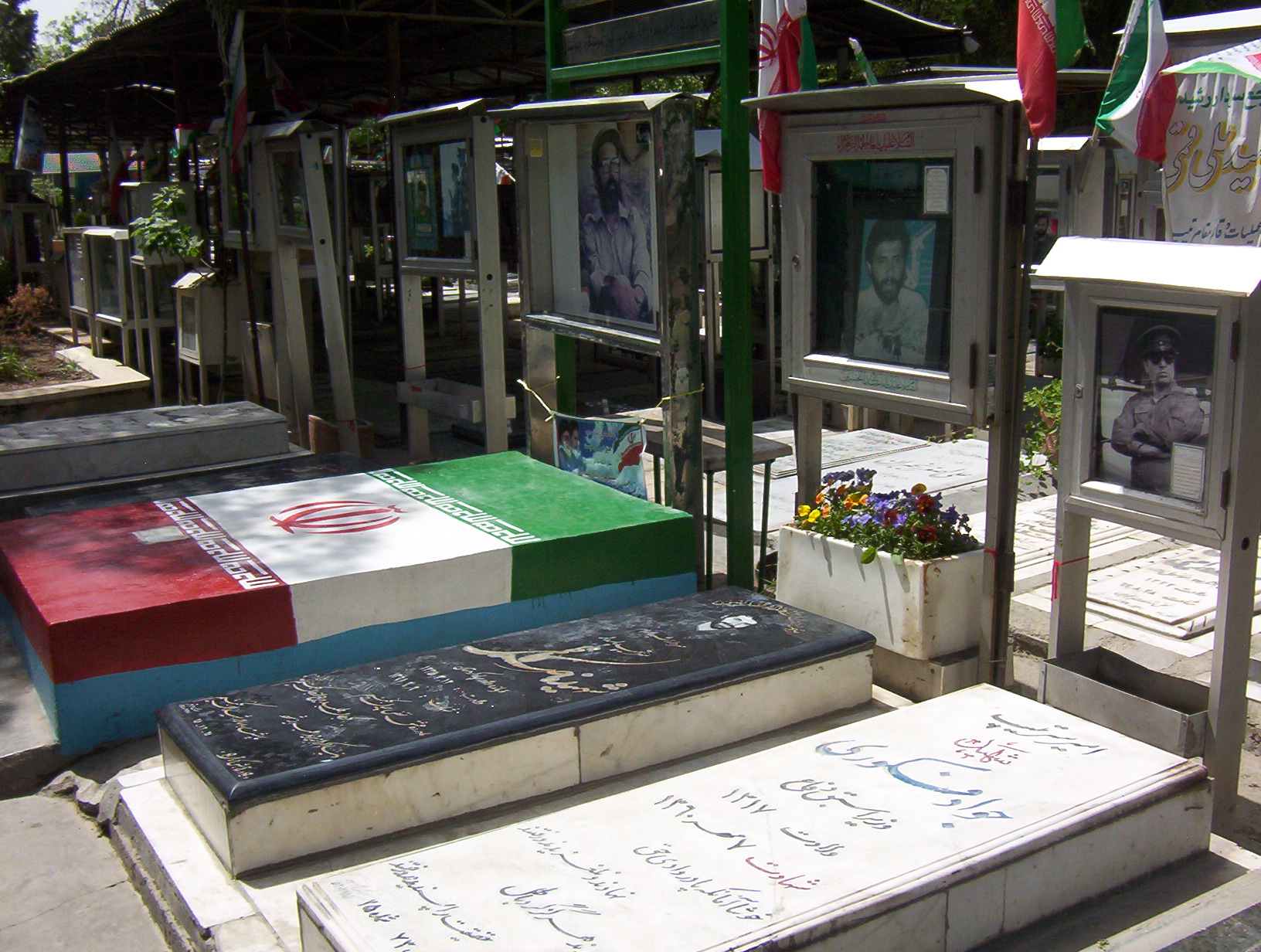
Behesht-e Zahra: Iran's City of the Dead
A metro ride south from central Tehran ends at the largest cemetery in Iran. Behesht-e Zahra opened on June 29, 1970, built on the southern edge of the capital toward the direction of Qom, as part of a 1950s plan to replace Tehran's scattered urban graveyards with large modern cemeteries outside the city limits. Mayor Gholamreza Nikpey oversaw its opening. Within a decade, the cemetery would hold the remains of a deposed prime minister executed by revolutionaries. Within two decades, entire sections would fill with the dead of the Iran-Iraq War. The name means "Zahra's Paradise," and the scale of the place makes the name feel less like poetry and more like geography.
Where Dynasties Share Ground
Behesht-e Zahra's burial rolls read like a compressed history of modern Iran. Qajar princesses rest here: Ezzosaltaneh, daughter of Naser al-Din Shah, and Irandokht, daughter of Ahmad Shah Qajar. So do Pahlavi royals, including Hamid-Reza Pahlavi, youngest son of Reza Shah, and Sadigheh Pahlavi, one of Reza Shah's daughters. Prime Minister Amir-Abbas Hoveyda, who served the Shah from 1965 to 1977, was executed after the revolution and buried here. Mostafa Chamran, the revolutionary-era defense minister who died fighting in the Iran-Iraq War, lies in the martyrs' section. The cemetery does not sort its dead by political alignment. Monarchists and revolutionaries occupy the same earth, their graves sometimes within walking distance of each other.
The Martyrs' Sections
The Iran-Iraq War, which lasted from 1980 to 1988, filled entire sections of Behesht-e Zahra with the graves of soldiers. The martyrs' areas became pilgrimage sites for families and a focal point for national mourning. Ruhollah Khomeini's tomb, a vast shrine of its own, anchors the cemetery's symbolic weight. The Haft-e Tir memorial commemorates the 1981 bombing that killed more than 70 members of the Islamic Republican Party, including Chief Justice Ayatollah Mohammad Beheshti. Rows of identical headstones in the military sections stretch to the horizon, each one marking a young life spent in trenches along the Iraqi border. The scale of the war dead is difficult to grasp from a single vantage point. The cemetery forces you to walk, and the walking makes the numbers real.
Musicians, Poets, and the Famous Dead
Behesht-e Zahra is not only a political cemetery. Iran's cultural history is well represented among its graves. Musician and composer Ali-Naqi Vaziri, who modernized Persian classical music, is buried here. So is painter Faramarz Pilaram, filmmaker Parviz Kimiavi, and wrestler Gholamreza Takhti, one of the most beloved athletes in Iranian history. Poets, architects, academics, and journalists share the ground with generals and politicians. The cemetery functions as a kind of national archive in stone, a record of who mattered enough to be remembered but not powerful enough to warrant a separate mausoleum. For many Iranians, a visit to Behesht-e Zahra is both an act of remembrance and an education in the country's turbulent modern history.
Lot 41 and the Buried Evidence
In 2025, satellite images revealed that Lot 41 of Behesht-e Zahra, where victims of mass executions carried out in the years following the 1979 revolution were buried, was being paved over and converted into a parking area. Human rights organizations and the families of victims raised alarms. The executions of political prisoners in 1988, which killed thousands, had already been documented by international bodies, but the burial sites remained sensitive and largely unacknowledged by the state. The paving of Lot 41 represented not just the physical erasure of graves but an attempt to remove the last visible evidence of mass killings from the landscape. The controversy highlighted a tension that runs through the entire cemetery: Behesht-e Zahra is both a place of public mourning and a site where uncomfortable history is managed, curated, and sometimes literally buried under concrete.
From the Air
Located at 35.54N, 51.37E in the southern part of metropolitan Tehran, along the road toward Qom. Behesht-e Zahra is one of the largest contiguous cemetery complexes visible from the air in the Middle East, with geometric sections of graves, tree-lined paths, and the distinctive golden dome of Khomeini's mausoleum at its center. Tehran Metro Line 1 provides a visual trace from central Tehran south to the cemetery. Nearest airports: Tehran Imam Khomeini International Airport (OIIE) approximately 20 km to the south, Tehran Mehrabad International Airport (OIII) approximately 20 km to the north. Best viewed at 3,000-6,000 feet AGL where the full extent of the cemetery and its distinct sections become visible. The contrast between Tehran's dense urban fabric to the north and the open cemetery to the south is striking.