Behkadeh Raji
The idea was radical for 1961: instead of isolating people with leprosy in hospital wards, build them an entire village. Give them livestock, farmland, schools, a cinema, and the means to support themselves. Behkadeh Raji, located 450 kilometers northeast of Tehran in Iran's Khorasan region, became the world's first leper colony designed as an economically self-sufficient community. It was not a place of confinement. It was an experiment in restoring dignity to people whom society had cast out.
A Schoolgirl's Promise
The story begins with a lecture. Farah Diba, still a high school student, attended a presentation about the suffering of people with leprosy in Iran. The experience stayed with her. After her marriage to Shah Mohammad Reza Pahlavi, she took on the chairmanship of Iran's Leprosy Relief and Works Agency as one of her first official duties, at the request of former Health Minister Abdol-Hossein Raji. What she found was devastating. The few treatment stations in the country were mostly run by Christian priests and nuns. From across Iran, people afflicted with leprosy made pilgrimages to the shrine of Imam Reza in Mashhad, hoping for miraculous recovery. The shrine offered spiritual comfort and, practically, the chance to survive by begging. The city administration of Mashhad, however, wanted them gone.
A Village from Royal Land
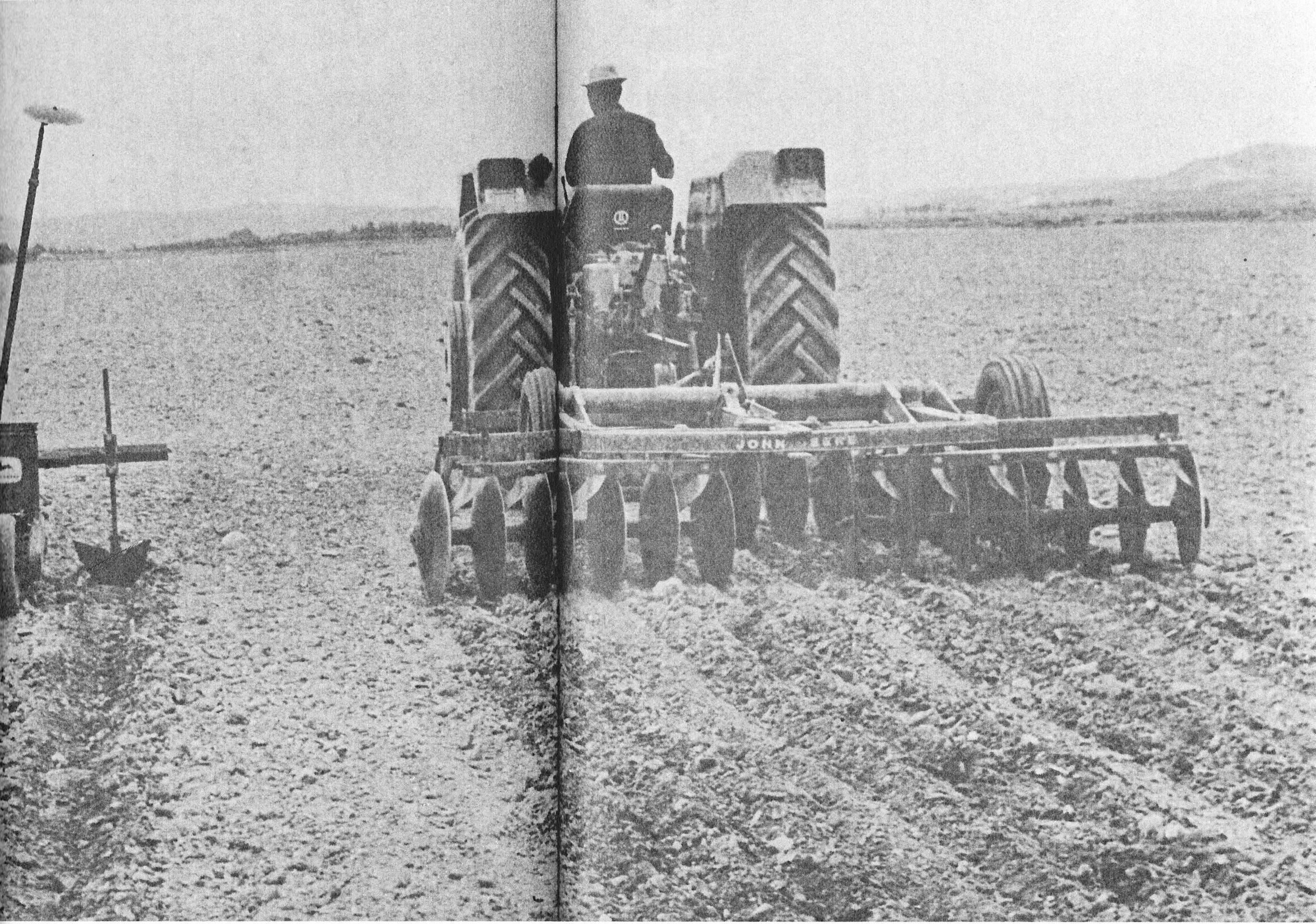
The Shah donated 30,000 hectares of private land near Bojnurd for the project. What rose from that land was not a hospital but a functioning community: over three hundred buildings including medical facilities, primary schools, a cinema, a police station, a restaurant, a public bathhouse, workshops for cottage industries, vegetable gardens, a gas station, and a car repair shop. There was even a knitting operation producing stockings and socks. The hospital's medical equipment was funded by a donation from Germany's Deutschen Aussatzigen-Hilfswerk. Each resident received 30 sheep to begin building economic independence, with a professional sheep breeder providing training. The community maintained its own 24-hectare pasture. Iranian doctors provided primary care, while volunteer surgeons from Pakistan, India, France, and Switzerland traveled to the village to perform reconstructive plastic surgery on patients whose faces, hands, and legs had been disfigured by the disease.
Why a Village, Not a Ward
The World Health Organization had recommended treating leprosy patients in their own villages to prevent social exclusion. In Iran, this proved impossible. Villagers feared contamination and refused to allow patients to remain among them. A leprosarium near Mashhad, Asayeshgah Mehrab Khans, housed 900 patients, including 180 healthy children of mothers with leprosy who lived in the facility without school supplies. The compound had modern touches like sensor-equipped faucets, but it fell short of international standards and offered no path beyond institutionalization. A national survey revealed that both the general population and most physicians were poorly informed about the disease. The gap between medical reality and public fear drove the decision to build an entirely new settlement where patients could live with their families, work for their livelihoods, and interact with healthy community members on equal footing.
Harvests Beyond Survival
The experiment worked in ways its planners might not have predicted. Agricultural production at Behkadeh Raji eventually exceeded the community's own needs. Surplus potatoes and cotton were sold at markets in the surrounding area, making the village not just self-sustaining but a contributor to the regional economy. The healed residents of Behkadeh Raji became farmers and traders, their identities no longer defined by disease. In a country where leprosy carried enormous stigma, this small village in the Khorasan hills demonstrated that the boundary between patient and citizen could be crossed, and that the crossing required not just medicine but land, labor, and the stubborn insistence that people deserve more than survival.
From the Air
Located at 36.83N, 54.48E in northeastern Iran near Bojnurd, in the Khorasan region approximately 450 kilometers northeast of Tehran. The site is in hilly terrain east of the Alborz mountain range. Nearest major airport is Bojnurd Airport (OIMB). The village is small and may not be individually distinguishable from altitude, but the surrounding agricultural landscape of Khorasan province is visible. Best viewed at 5,000-8,000 feet in clear conditions.