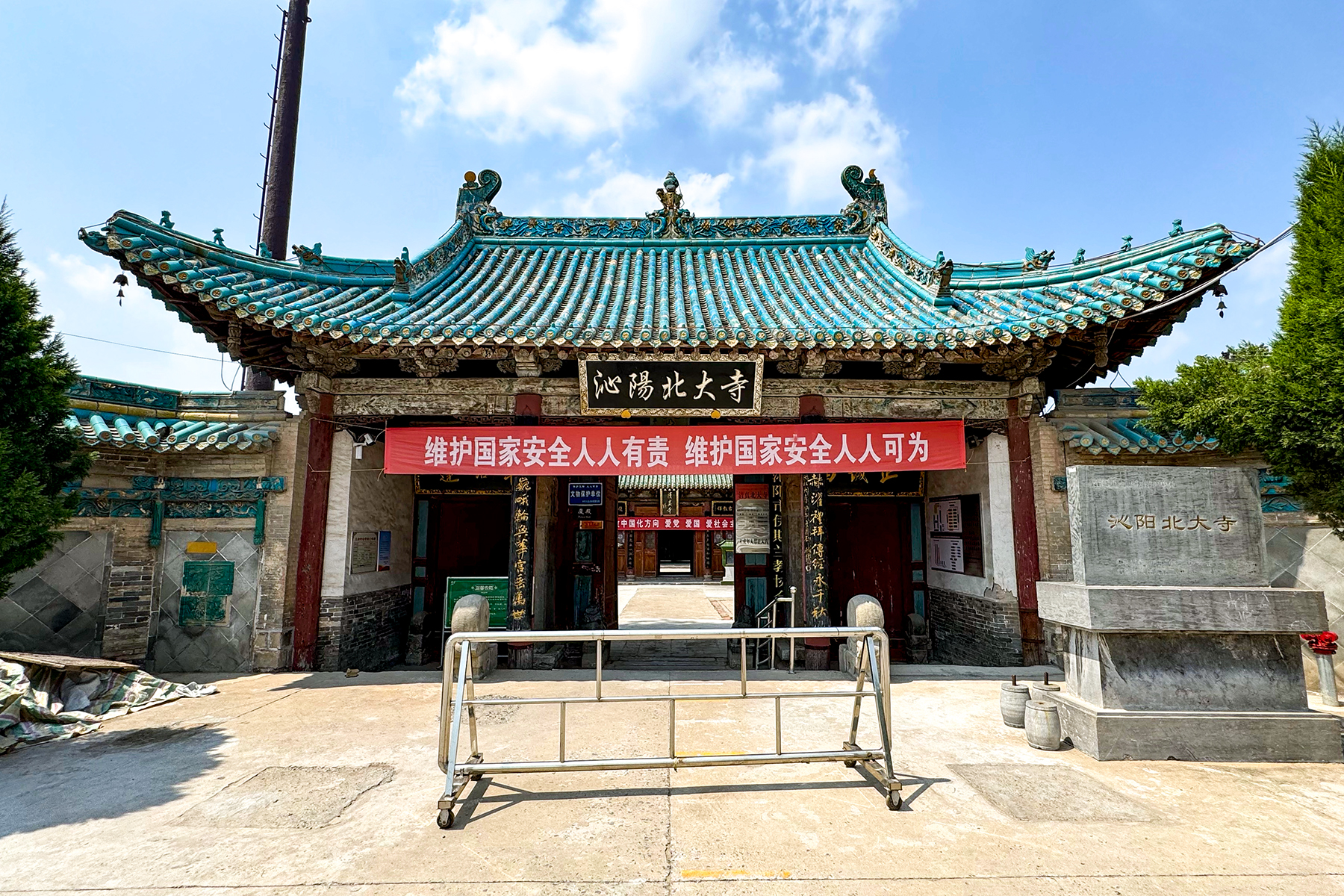
Beida Mosque
A building that has burned to ashes, been flattened by earthquake, and been rebuilt from rubble more than once might be expected to show some signs of weariness. The Beida Mosque in Qinyang, Henan province, shows instead a quiet persistence. It is the largest architectural complex of any mosque in China's Central Plains -- the Zhongyuan region -- and its current incarnation, completed in 1887, is only the latest chapter in a story that reaches back to the Yuan dynasty.
Founded Under Mongol Rule
The mosque was first established during the Zhizheng period of the Yuan dynasty (1271-1368), when Mongol rule over China brought increased contact between Chinese and Islamic cultures along the old Silk Road trade routes. Islam had been present in China for centuries, but the Yuan period saw a significant expansion of Muslim communities, particularly in northern China. The mosque in Qinyang served a community that had put down roots far from the traditional Islamic heartlands, building a place of worship that adapted the architectural vocabulary of Chinese temple design to the requirements of Islamic liturgy.
Three Destructions, Three Renewals
The mosque's history reads like a catalog of catastrophe. After its Yuan dynasty founding, it was rebuilt in 1561 during the Ming dynasty's Jiajing period. In 1628, a devastating fire reduced the entire complex to ashes. Three years later, in 1631, it was restored during the reign of the Chongzhen Emperor -- the last Ming emperor, who would hang himself thirteen years later as rebels breached Beijing's walls. Then came the Qing dynasty and, with it, an earthquake during the Daoguang Emperor's reign that destroyed the mosque completely. The current structure rose from the rubble beginning in 1887, during the Guangxu period, rebuilt on its original foundations.
Where Chinese Architecture Meets Islamic Faith
What makes the Beida Mosque architecturally significant is not merely its size but its synthesis. Chinese mosque design does not typically follow the domed, minaret-flanked pattern of West Asian mosques. Instead, it adapts the courtyard compounds, upturned eaves, and axial layouts of Chinese temple architecture to serve Islamic worship. The Beida Mosque exemplifies this tradition: a distinctly Chinese building complex that is unmistakably a mosque in function and spiritual orientation. Its designation as a Major National Historical and Cultural Site reflects recognition that the building represents not just Islamic heritage in China but a uniquely Chinese expression of Islamic architecture that developed over centuries in the Central Plains.
From the Air
Located at 35.095N, 112.936E in Qinyang, Jiaozuo prefecture, Henan province. The mosque complex is situated within the city and is identifiable as one of the larger traditional architectural compounds in the urban area. Nearest major airport is Zhengzhou Xinzheng International (ZHCC/CGO), approximately 100 km to the southeast. Luoyang Beijiao Airport (ZHLY) lies about 80 km to the southwest. Best viewed at lower altitudes of 2,000-3,000 feet where the traditional Chinese architectural layout of the mosque compound is discernible.