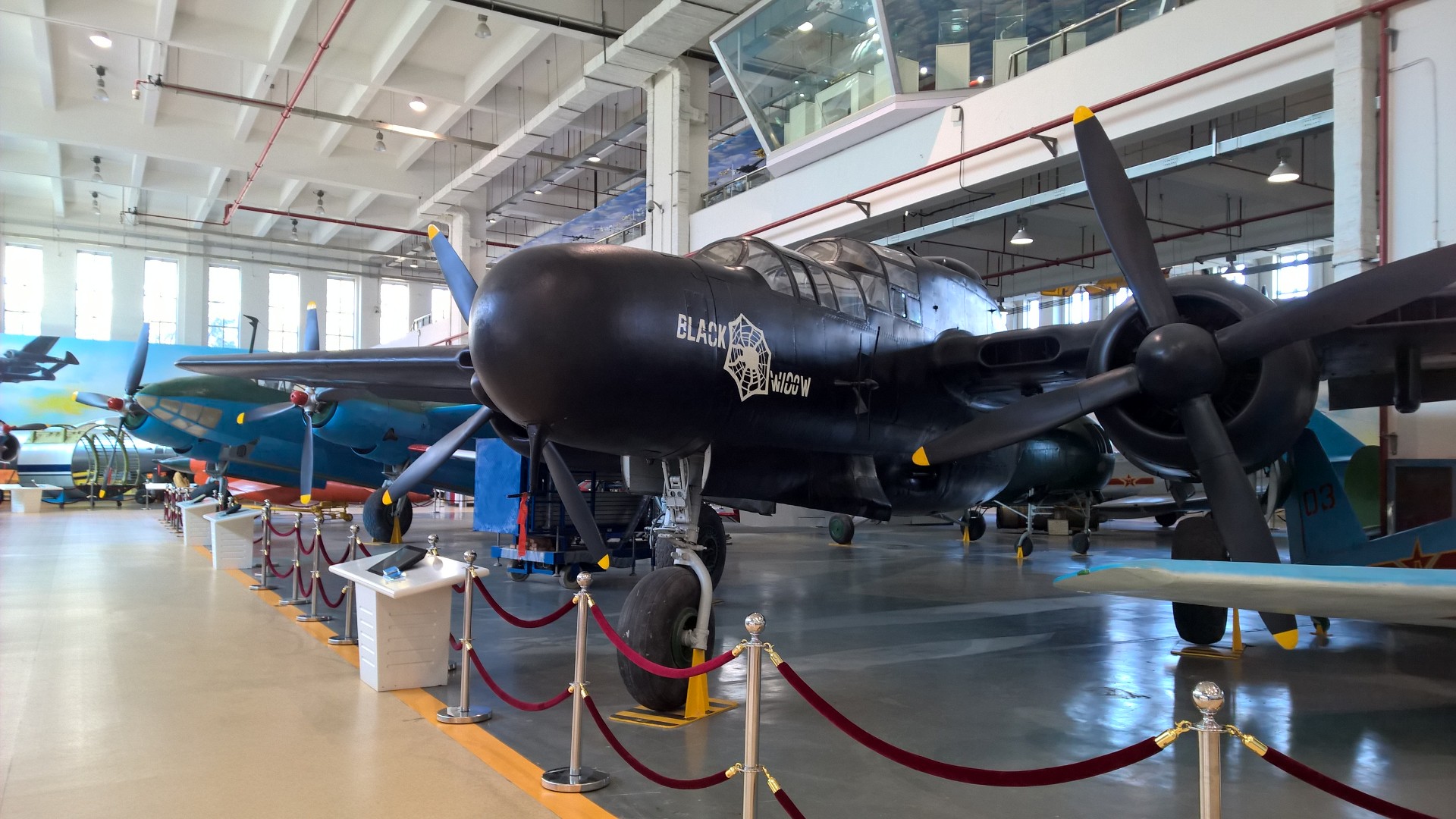
Beijing Air and Space Museum
The building drew crowds before it even opened. Designed by the architecture firm Hetzel Design, the Beijing Air and Space Museum's 43,000-square-meter structure features a bridge element shaped like an aircraft lifting off the runway -- a visual metaphor made concrete. Inside, over 300 domestic and international aerospace artifacts fill 8,300 square meters of exhibition space, from dismantled fuselages to space suits. But this is not just a museum for tourists. It is a working classroom for one of China's most prestigious engineering universities.
From Aviation Museum to Aerospace Cathedral
The museum began in 1985 as the Beijing Aviation Museum, founded as part of the university then known as the Beijing University of Aeronautics and Astronautics. It opened to the public in 1986 with a focused mission: to support teaching and popularize aviation knowledge. When the university renamed itself Beihang University in 2002, the museum followed suit after extensive renovations, reopening in 2012 as the Beijing Air and Space Museum. The expansion was not just cosmetic. The museum became China's first aerospace science and technology museum, broadening its scope from flight to include rockets, satellites, and manned spaceflight. The 18 interactive exhibits, three theaters, and a children's astronaut training center transformed a traditional collection into an immersive experience.
Walking Through a Century of Flight
The Silver Eagle Air Patrol exhibit displays over 30 aircraft arranged in a circular layout that traces the evolution of aviation through the decades. Some of these aircraft were designed and built by Beihang University itself -- a reminder that this is a research institution, not just a display venue. Each plane is backed by a painted panel themed to its era and accompanied by touchscreens providing background information. Among the collection is the only Harrier jump jet in China. The Air Corridor, suspended between the first and second floors, features model aircraft hung from the ceiling in precise formation, creating a visual timeline of flight development overhead as visitors walk beneath.
Dream of the Sky and the Void Beyond
The Dream of the Sky exhibit places visitors inside a simulated aircraft environment, using sound and light effects alongside actual aircraft components -- fuselages, wings, landing gear, engines -- to create a full sensory experience. At its center sits a 3D cinema that projects aerospace imagery across large screens. The Shenzhou to Space exhibit pushes further, filling its galleries with rockets, missiles, space suits, satellites, and spacecraft spanning half a century of Chinese space exploration. A deep space background painting with celestial imagery creates the sensation of standing in the void. Both exhibits serve double duty: they are public attractions and active teaching environments, used for university courses in aircraft structure, avionics, and aerospace engineering.
A Bridge That Became a Wing
The building's most distinctive feature emerged from a design problem. Hetzel Design wanted to connect the museum to surrounding parkland as part of the larger Futura City development scheme, which aimed to break away from Beijing's standard grid with meandering boulevards leading to a central park. They needed a bridge, and after multiple renderings, they realized the bridge should be the building -- or at least part of it. The resulting structure, with its sweeping lines suggesting an aircraft in ascent, won several architectural awards and gave the museum an identity visible from blocks away. For a museum dedicated to flight, the metaphor is almost too perfect: a building that looks like it is trying to leave the ground.
From the Air
Located at 39.981N, 116.345E on the campus of Beihang University in Haidian district, northwest Beijing. The museum's distinctive wing-shaped architecture may be identifiable from lower altitudes. The campus sits between the 3rd and 4th Ring Roads. Nearest airports: Beijing Capital International (ZBAA) approximately 25 km northeast, Beijing Daxing International (ZBAD) approximately 50 km south. Beihang University, one of China's leading aerospace engineering schools, is the institutional context for this museum.