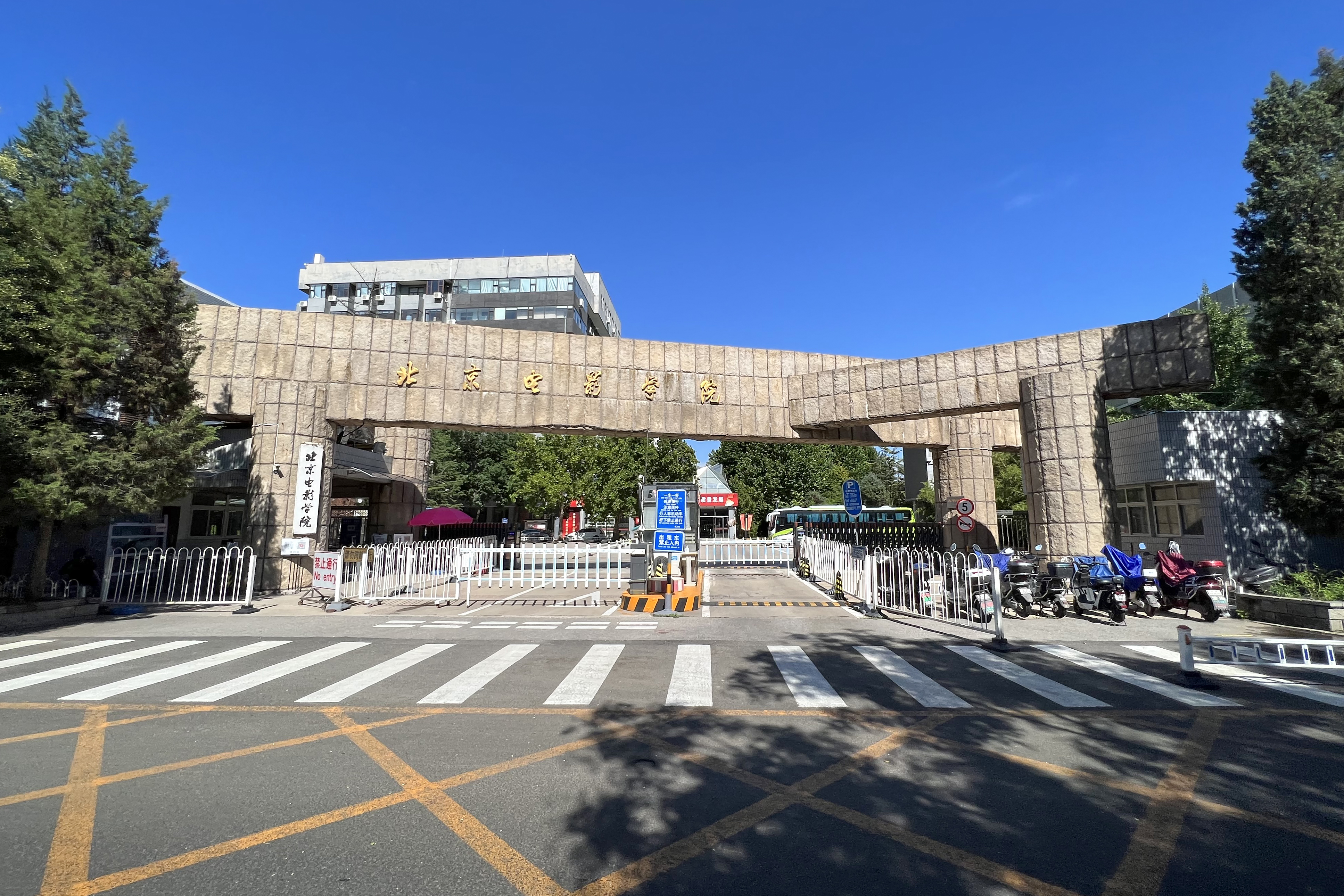
Beijing Film Academy
Over 40,000 students apply every year. Fewer than 500 are accepted. The Beijing Film Academy is not just a school -- it is the bottleneck through which nearly all significant Chinese filmmaking talent has been compressed for over seven decades. Chen Kaige, Zhang Yimou, Jia Zhangke, Ai Weiwei, Zhao Wei, Liu Yifei -- the directors and actors who have defined Chinese cinema on the world stage almost all passed through this single institution in Haidian district.
Thirty-Eight Students and a Revolution
The school opened in May 1950 as the Performance Art Institution of the Film Bureau of the Ministry of Culture, enrolling exactly 38 students. It was renamed three times in five years -- a bureaucratic restlessness that belied the institution's growing ambition. By the time it became the Beijing Film Academy on June 1, 1956, it had already established departments in photography, animation, screenwriting, and performing arts. Its first undergraduate acting course, launched in September 1950, attracted 30 students, many of whom became notable figures in Chinese film and television. From the start, the academy was not training technicians -- it was cultivating an industry's creative leadership.
The Lost Decade and What Came After
The Cultural Revolution struck the academy in 1966 with the same force it brought to every intellectual institution in China. Professors fled. Programs shut down. For nearly a decade, the school that was meant to shape Chinese culture was silenced by it. Faculty members began returning in 1976, and by 1977 the academy had stabilized. In 1978, it reopened admissions. That first post-Revolution class is legendary. It included Zhang Yimou, Chen Kaige, and Tian Zhuangzhuang -- the three directors who would become the vanguard of China's fifth-generation filmmaking movement. Their films shattered the conventions of socialist realism and put Chinese cinema on the international festival circuit. The academy had lost a decade, but the generation that emerged from the silence proved to be its most transformative.
The Factory of Fame
The Performance Institute's class rosters read like a who's who of Chinese entertainment. The class of 1996 alone produced Zhao Wei, Chen Kun, and Huang Xiaoming -- three of the biggest stars in Chinese-language media. The class of 2002 included Liu Yifei, who would go on to star in Disney's live-action Mulan. Yang Mi (class of 2005), Zhou Dongyu (class of 2011), and Guan Xiaotong (class of 2016) continued the tradition of the academy producing the country's most bankable stars. Artist and activist Ai Weiwei studied animation at BFA before becoming one of China's most internationally recognized -- and politically controversial -- cultural figures.
The Narrowest Door in Chinese Education
Admission to Beijing Film Academy remains one of the most competitive processes in Chinese higher education. The entrance examinations, held in February and March, combine subject-specific tests with the National Humanities Examination. Acting hopefuls face the fiercest competition, with thousands vying for a handful of spots. The academy now comprises nine schools and eight departments, offering courses ranging from film directing and screenwriting to sound recording and entertainment management. Its international programs have expanded as well, including what was announced in 2013 as the first English-language undergraduate film production program. But the core identity remains unchanged: an institution that selects ruthlessly and, from that narrow selection, produces the people who make Chinese cinema what it is.
From the Air
Located at 39.972N, 116.353E in Haidian district, northwest Beijing, near the intersection of the 3rd Ring Road and Xitucheng Road. The campus is modest in size compared to neighboring universities but sits in Beijing's dense university corridor. Nearest airports: Beijing Capital International (ZBAA) approximately 25 km northeast, Beijing Daxing International (ZBAD) approximately 50 km south. The surrounding area includes multiple universities and the tech hub of Zhongguancun.