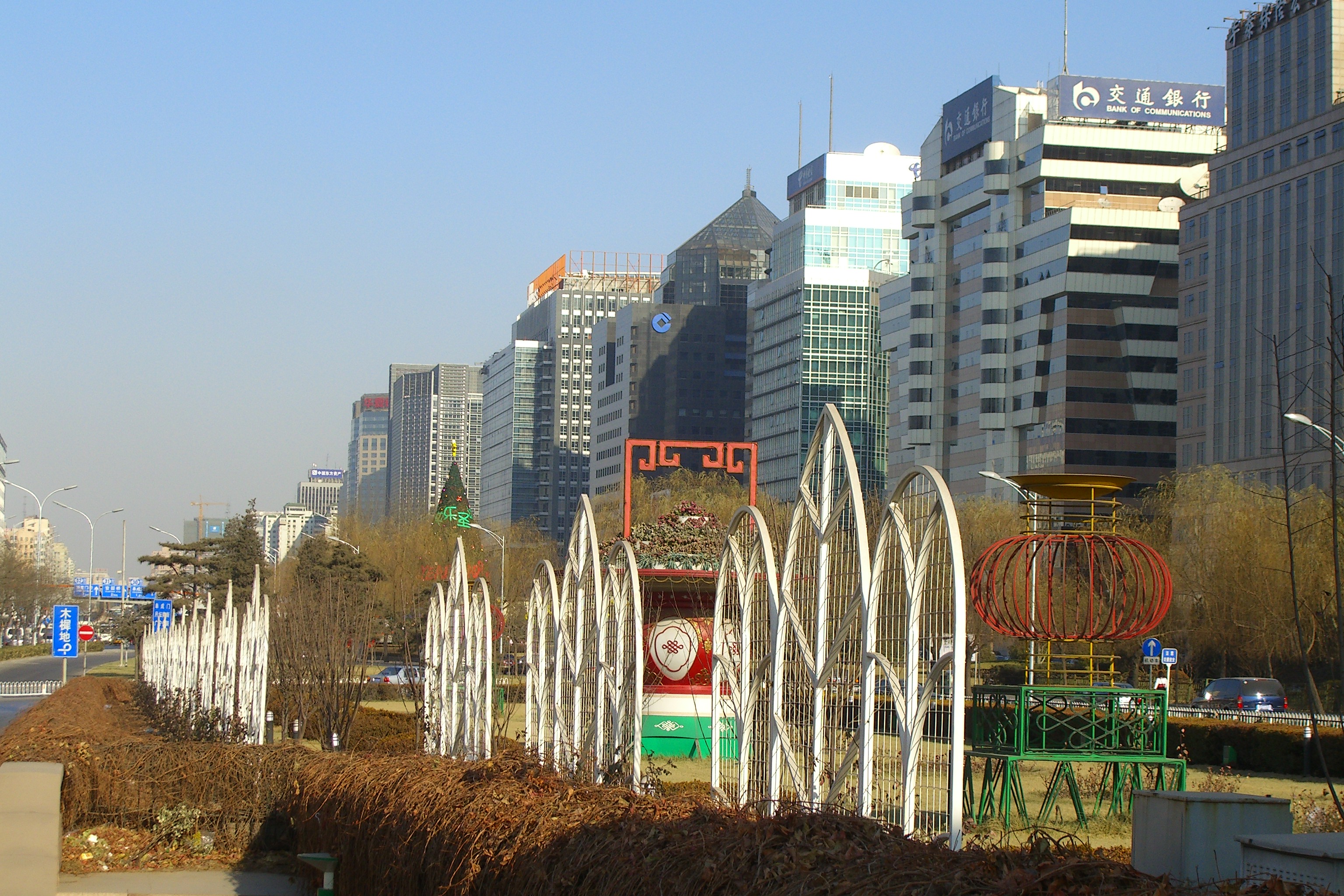
Beijing Financial Street
Four institutions control the financial machinery of the world's second-largest economy, and they all share the same street address. The People's Bank of China, the National Financial Regulatory Administration, the China Securities Regulatory Commission, and the Central Financial Commission are clustered along Beijing Financial Street -- a corridor inside the capital's innermost Second Ring Road where the decisions that move global markets are made in buildings designed to echo the hutong courtyards they replaced.
Command Center Behind the Ring Road
Beijing Financial Street is not a financial district in the way that Wall Street or the City of London are -- sprawling ecosystems of banks, traders, and service firms competing for space. It is something more concentrated: the regulatory heart of China's financial system, the place where monetary policy is set, securities markets are supervised, and banking regulations are written. The People's Bank of China, the country's central bank, anchors the street. The other major regulatory bodies surround it, creating a density of financial authority that has no precise Western equivalent. Imagine the Federal Reserve, the SEC, and the Treasury Department all occupying the same city block, and you begin to approach the concentration of power that exists here.
Courtyards in Glass and Steel
The architectural firm Skidmore, Owings & Merrill, working with SWA landscape architects, prepared the urban plan and building design guidelines for the street's Central Park area. Their approach was unusual: the building facilities were designed around interior courtyards, a concept drawn directly from the hutong neighborhoods that once surrounded the Forbidden City just to the east. The result is a financial district that, despite its glass and steel towers, organizes space the way Beijing has organized space for centuries -- around enclosed, inward-facing enclosures that create calm within density. The development is managed by Beijing Financial Street Holding Company, and the Central Park area anchors the streetscape with fountains and green space flanked by the twin towers housing the Bank of Beijing and China Life.
Where Old Beijing Meets New Money
The street's location is no accident. Financial Street sits inside the Second Ring Road, which traces the path of the old city wall demolished in the 1960s. This places it within the historical core of Beijing, minutes from the Forbidden City and the ancient hutong neighborhoods that still thread through the surrounding blocks. The juxtaposition is striking: narrow alleys where residents have lived for generations exist within walking distance of towers where officials set interest rates for 1.4 billion people. Financial Street did not displace old Beijing so much as insert itself into it, creating a modern power center that draws its legitimacy, in part, from its proximity to the ancient one. Viewed from Fuxingmen, the towers of the financial district rise behind the rooflines of a city that has been the seat of imperial and national authority for over six hundred years.
From the Air
Located at 39.910N, 116.357E in Xicheng District, central Beijing, inside the Second Ring Road. The cluster of modern towers is visible from altitude, contrasting with the lower-rise traditional neighborhoods surrounding it. The Forbidden City lies approximately 2 km to the east. Nearest airports: Beijing Daxing International (ZBAD) to the south, Beijing Capital International (ZBAA) to the northeast. The financial district's tower cluster is identifiable between the Second Ring Road and the Fuxingmen intersection.