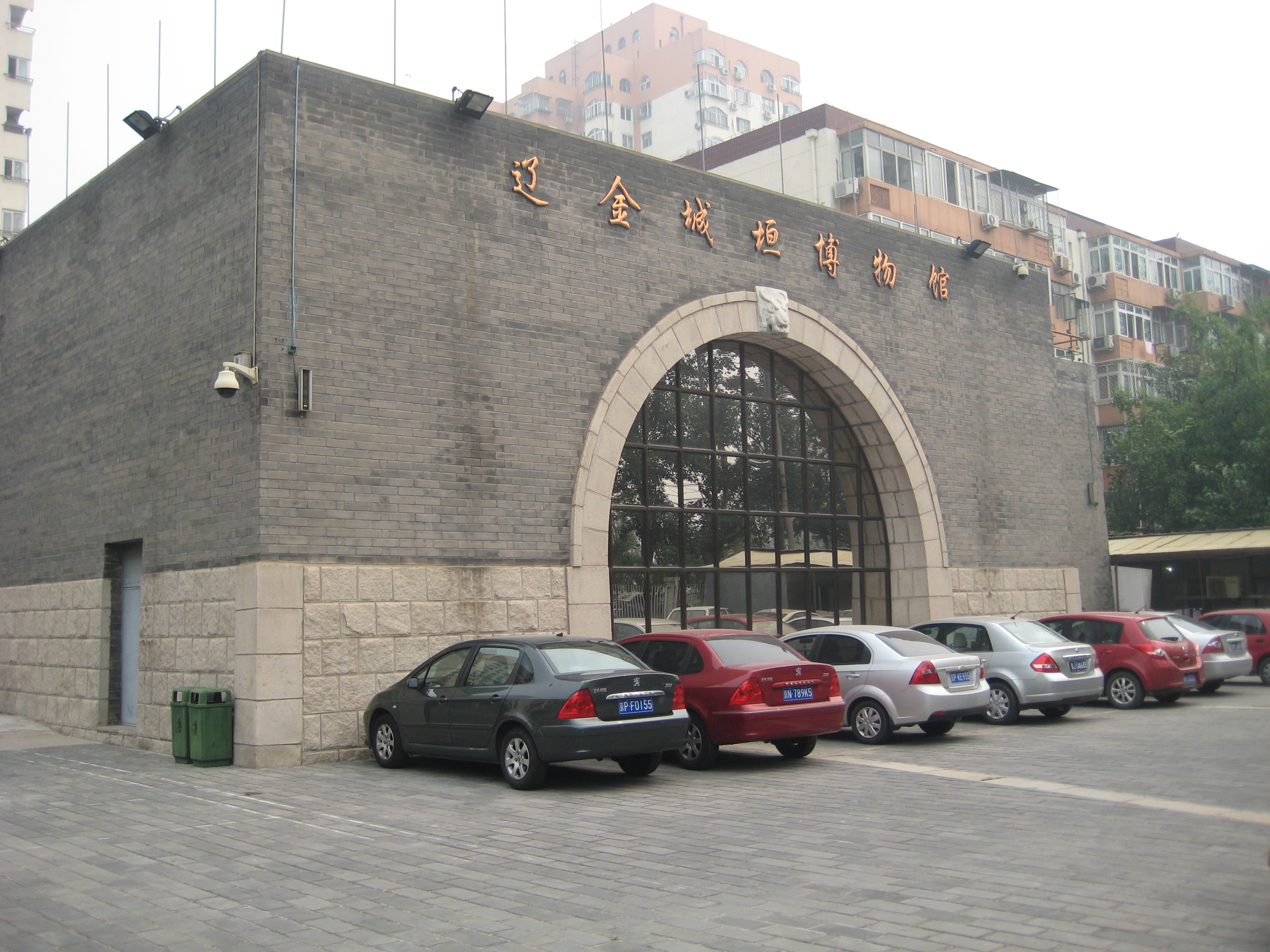
Beijing Liao and Jin City Wall Museum
Beneath the apartment blocks and traffic of southwestern Beijing, a water gate has been waiting for almost nine centuries. The Beijing Liao and Jin Dynasty City Wall Museum sits atop this fragment of medieval infrastructure in Fengtai District, near the north bank of the Liangshui River, preserving a section of fortification from the Jin dynasty (1115-1234). When the museum opened in 1995, it gave modern Beijing something rare: a physical link to the city's identity before the Mongol conquest, before the Ming walls, before the Forbidden City reshaped the capital into the form the world recognizes today.
Walls Before the Walls
Most visitors to Beijing associate the city's fortifications with the Ming dynasty ramparts, sections of which still stand in parks east of the Forbidden City. But Beijing was a walled city long before the Ming arrived. During the Liao dynasty (907-1125), the Khitan rulers designated the city as their southern capital, calling it Nanjing. When the Jurchen-led Jin dynasty seized it in 1122, they expanded the fortifications and renamed the city Zhongdu. The wall remnants preserved in this museum date from that Jin-era expansion, a period when Beijing was transitioning from a regional garrison town into an imperial capital of genuine grandeur. The water gate the museum protects was part of the hydraulic infrastructure that channeled the Liangshui River through the city's defenses.
Reading the Ruins
The museum's centerpiece is not a collection of artifacts behind glass but the excavated wall foundation itself, exposed where builders discovered it during modern construction. Visitors walk above and around the ruins of the water gate, seeing the layered rammed earth and stone that once formed the base of fortifications standing more than ten meters tall. The scale is modest compared to the Great Wall, but its intimacy makes the history tangible. These stones were fitted together by laborers working under Jin dynasty engineers who understood that a capital's defenses depended as much on controlling water as on stacking stone. The museum contextualizes the ruins with exhibits on the Liao and Jin periods, an era when Beijing was contested ground between nomadic empires and Chinese dynasties, each leaving architectural traces that the next regime built over.
A Capital's Many Names
The museum tells a story of reinvention. Beijing has been called Youzhou, Nanjing, Zhongdu, Dadu, Beiping, and Beijing across different dynasties, and with each new name came new walls, new gates, and new definitions of what the city contained. The Liao and Jin fortifications occupied a smaller footprint than the later Ming walls, centered on what is now the southwestern portion of Beijing proper. When Kublai Khan established the Yuan dynasty, he abandoned Zhongdu entirely and built his capital of Dadu to the northeast. The old walls fell into disuse, buried under centuries of subsequent development. That this fragment survived at all is a consequence of geography: the Liangshui River's course preserved the water gate beneath layers of sediment while the rest of the wall was dismantled for building material.
Fengtai's Hidden Heritage
Fengtai District, where the museum stands at No. 41 Yulinli on Yulin South Road, is not the part of Beijing that guidebooks typically celebrate. It sits well southwest of the tourist circuits around the Forbidden City and Temple of Heaven. Yet this district holds some of the capital's deepest archaeological layers. The nearby Marco Polo Bridge, the Dabaotai Western Han Dynasty Mausoleum, and this museum together span more than two thousand years of Beijing's history. The museum itself is designated a Major National Historical and Cultural Site, placing it among the most significant heritage locations in the country. For travelers willing to venture beyond the city center, these sites offer a Beijing stripped of imperial spectacle but rich in the kind of rough, layered history that spectacle is built upon.
From the Air
Located at 39.86N, 116.35E in southwestern Beijing's Fengtai District, near the Liangshui River. The nearest major airport is Beijing Daxing International Airport (ZBAD), approximately 30 km to the south. Beijing Capital International Airport (ZBAA) is about 40 km northeast. From the air, Fengtai District appears as dense urban development southwest of the old city center, with the Liangshui River threading through as a visible waterway.