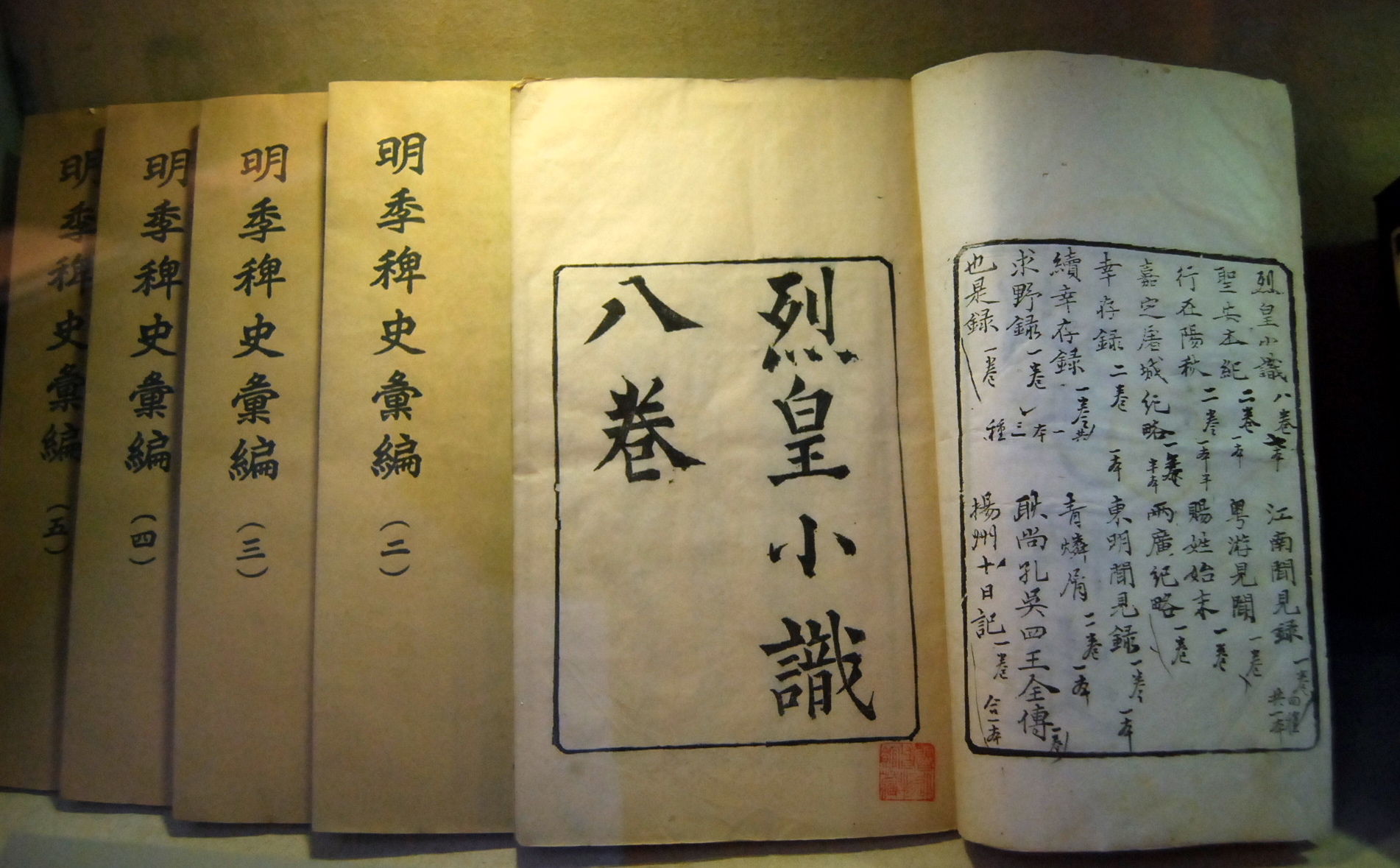
Beijing Lu Xun Museum
In 1918, a short story appeared in a Chinese literary magazine that began with a question no one in Chinese literature had dared to ask quite so bluntly: was the narrator insane, or was the civilization around him the mad one? 'A Madman's Diary' by Lu Xun became the first major work of modern Chinese fiction, written in vernacular rather than classical Chinese, and it detonated like a charge beneath the literary establishment. The house where Lu Xun lived during his Beijing years -- the years when he was producing his most transformative work -- still stands on Fucheng Gate Avenue. It has been a museum since 1956.
The Writer's Rooms
The museum is built around Lu Xun's former Beijing residence, preserving the physical spaces where one of the 20th century's most consequential writers lived and worked. The buildings are modest -- consistent with Lu Xun's reputation as a writer who rejected the pretensions of the literary elite even as he became its most prominent voice. The rooms have been maintained as a writer's house museum, allowing visitors to see the scale at which Lu Xun operated: not in grand salons or academic towers, but in a Beijing courtyard home where the distance between the writing desk and the kitchen was measured in steps.
Beyond the Manuscripts
The museum holds large quantities of Lu Xun's scripts, photographs, and personal papers, but the collection extends well beyond the writer's own output. Lu Xun was a serious collector and patron of visual art, and the museum contains works by artists of his era. Book covers designed by Lu Xun himself are on display, alongside paintings by Tao Yuanqing, who created a portrait of Lu Xun in 1926 and designed covers for several of his works. Paintings by Situ Qiao, ink works by Chen Shizeng, and pieces by Li Licheng round out a collection that reveals Lu Xun not just as a writer but as a figure embedded in a broader artistic community -- a man who thought about visual culture as seriously as he thought about prose.
The Weight of a Single Voice
Lu Xun's influence on Chinese literature and thought is difficult to overstate. His short stories -- 'A Madman's Diary,' 'The True Story of Ah Q,' 'Medicine' -- used irony, allegory, and unflinching social criticism to challenge the complacency of Chinese intellectual life during the Republic era. He wrote in vernacular Chinese at a time when serious literature was still expected to use classical forms, a choice that was itself a political act. Mao Zedong called him 'the chief commander of China's cultural revolution' -- using the phrase decades before it would take on its more ominous meaning. The museum on Fucheng Gate Avenue preserves not just a house but the site where a single writer's voice became loud enough to reshape how an entire civilization talked to itself.
From the Air
Located at 39.924N, 116.352E in central Beijing, along Fucheng Gate Avenue (Fuchengmen Dajie) in Xicheng District. The museum is a low-rise traditional structure not easily distinguishable from altitude among the surrounding urban development. It sits near the Fuchengmen intersection, inside the Second Ring Road. Nearest airports: Beijing Daxing International (ZBAD) to the south, Beijing Capital International (ZBAA) to the northeast. Best reference points from air: the Second Ring Road's western section and the nearby Financial Street towers.