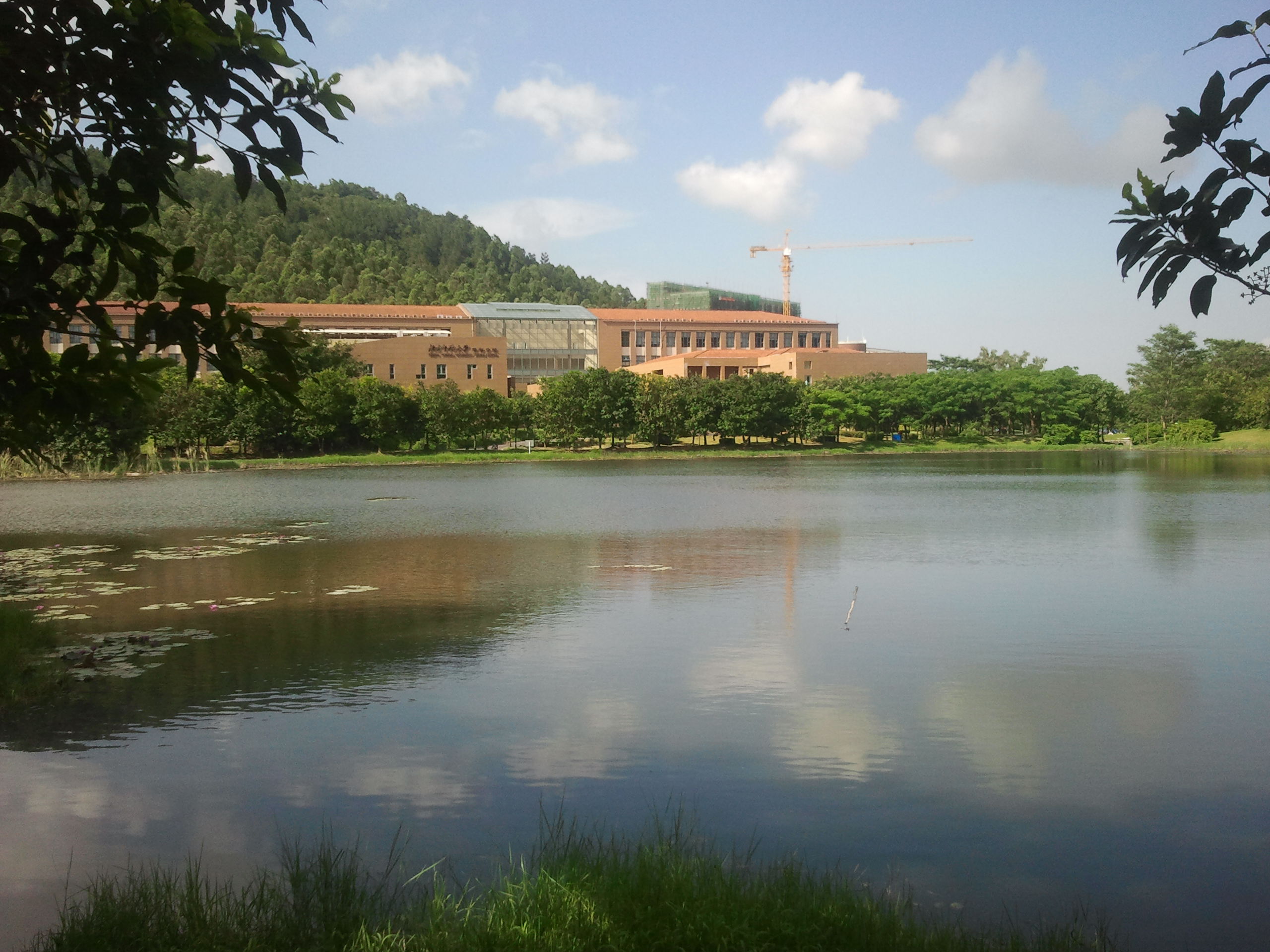
Beijing Normal University
Two Nobel laureates emerged from the same university -- and they could not be more different. Mo Yan won the 2012 Nobel Prize in Literature for novels that blended folk tales with history in prose the Swedish Academy called 'hallucinatory realism.' Liu Xiaobo received the 2010 Nobel Peace Prize while serving an 11-year prison sentence for his role in drafting Charter 08, a manifesto calling for political reform in China. Both attended Beijing Normal University, an institution founded in 1902 that has quietly shaped Chinese intellectual life for over a century.
The First Teachers' College
Beijing Normal University traces its origins to 1902, when the Department of Education of the Imperial University of Peking was established under decree of the Qing dynasty emperor. It was the first institution in Chinese history dedicated to teacher training -- a revolutionary concept in a country where education had been conducted through private tutors and the imperial examination system for centuries. The school gained independence in 1908 as the Supreme Education School of Peking, and by 1923 had become National Beijing Normal University. A significant expansion in 1931 merged Peking Women's Normal University into the institution. The word 'normal' in the university's name derives from the French ecole normale, meaning a school that establishes norms for teaching -- a name that speaks to the institution's founding purpose of setting standards for all of Chinese education.
Surviving the Storm, Shaping the Recovery
The Cultural Revolution devastated Chinese higher education, and BNU was no exception. But the university's recovery was swift, and its subsequent rise has been remarkable. It was included in Project 211 in 1996 and Project 985 in 2002 -- national initiatives to elevate China's top universities to world-class status. In 2009, The New York Times called it 'one of the most progressive institutions' in China. By 2017, it had earned a place among the 36 Double First-Class Construction universities, with 11 disciplines ranking among the nation's best. As of 2025, BNU ranks first in China, second in the Asia-Pacific, and seventh in the world for education and training in the QS World University Rankings.
Where Olympians Trained and Treasury Secretaries Studied
The university's reach extends well beyond education theory. Its campus in Haidian district -- the closest of all Haidian universities to Tiananmen Square -- hosted the U.S. Olympic Team during the 2008 Beijing Olympics. Timothy Geithner, who would become the 75th United States Secretary of the Treasury, studied Mandarin here as a Dartmouth College undergraduate in 1982. U.S. Senator Kirsten Gillibrand of New York attended through Dartmouth's Foreign Study Program. The Princeton in Beijing intensive Chinese language program, one of the most prestigious Mandarin study programs in the world, operates through BNU. These international connections coexist with deeply Chinese roots: the original campus sat near Hepingmen and Liulichang in central Beijing during the Republic era, and the merger with Fu Jen University gave BNU a northern campus at Shichahai.
More Than a Teachers' College
The alumni list tells the story of an institution that long ago outgrew its founding mandate. Beyond the two Nobel laureates, BNU produced Lang Ping, the volleyball gold medalist and coach; Qian Xuesen's colleague Wang Dezhao, founder of underwater acoustics in China and an officer of the French Legion of Honour; chess grandmaster Xie Jun; and Yu Dan, whose televised lectures on the Analects of Confucius became a national cultural phenomenon. The university now operates a second campus in Zhuhai, Guangdong, approved by the Ministry of Education in 2019. It remains the seat of the BRICS Universities League Secretariat, anchoring a network of academic cooperation among emerging powers. What began as a Qing-era experiment in standardizing teacher training has become one of the most internationally connected universities in China.
From the Air
Located at 39.957N, 116.363E in Haidian district, central-northwest Beijing, between the Second and Third Ring Roads. The campus is compact relative to neighboring universities. It is the closest Haidian university to Tiananmen Square, making it relatively easy to locate from altitude by reference to the Forbidden City. Nearest airports: Beijing Capital International (ZBAA) approximately 25 km northeast, Beijing Daxing International (ZBAD) approximately 50 km south.