Beijing Zoo
In 1949, when the People's Republic inherited Beijing's zoo, the animal inventory read like a riddle: thirteen monkeys, three parrots, and a one-eyed emu. That grim headcount marked the nadir of a place that had once dazzled late-Qing visitors with exotic creatures imported from Germany. Today, more than five million people pass through the gates each year, wandering paths that feel less like a modern zoo and more like a classical Chinese garden -- lotus pools, pavilion-dotted hills, dense groves of trees, and streams threading through meadows.
An Imperial Menagerie
The zoo's origins reach back to 1906, when the reformist Qing official Duanfang, Viceroy of Liangjiang, purchased a collection of animals from Germany and installed them on an experimental agricultural farm in western Beijing. When the farm opened to visitors on June 16, 1908, admission cost eight copper coins -- half price for children. The curiosity was enormous. Within three years the Qing dynasty itself would fall, and the grounds would be repurposed as a national botanical garden during the Republican period. In the 1930s, French assistance brought Lamarck Hall, named after the naturalist Jean-Baptiste Lamarck, where plant research flourished. But the Second Sino-Japanese War brought darker uses: Japanese occupiers built the monkey mountain in 1942, converted the experimental farm into a storage depot, and in 1943, the Imperial Japanese Army poisoned six lions and two leopards, reportedly to eliminate potential threats to nearby air defenses.
War Horses and Cold War Diplomacy
The zoo's resurrection after 1949 reads as a compressed history of the early People's Republic. With the capital barely established, the city government renamed the site the Western Suburban Park and began rebuilding from almost nothing. In 1952, Mao Zedong, Zhu De, and Ren Bishi donated their own war horses to the fledgling park -- a gesture that blurred the line between national symbolism and practical need. Staff traveled to the Soviet Union and Poland to study zoo management, and an era of animal diplomacy began. Beijing traded South China tigers, Chinese alligators, and black bears to Eastern Bloc countries, Burma, India, Indonesia, and Japan. In return, the Moscow Zoo and Leipzig Zoo sent African lions, polar bears, brown bears, and Himalayan vultures. The collection grew, and so did the zoo's stature.
Gardens Within Gardens
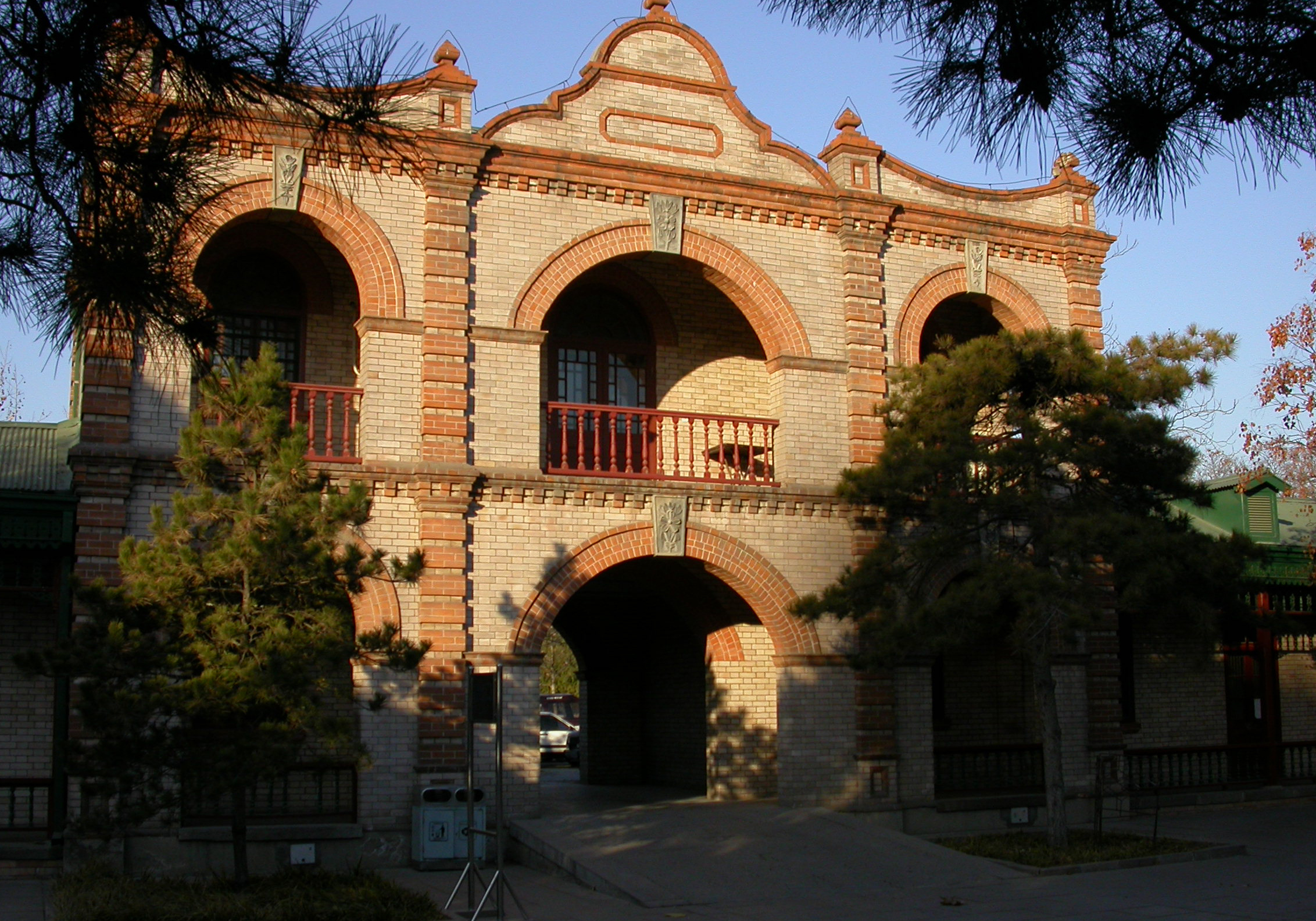
What makes Beijing Zoo unusual is how thoroughly it disguises itself as something older. The grounds are dotted with Qing dynasty buildings -- pavilions, halls, and walled compounds -- that predate the zoo's animal mission entirely. Walking the paths, visitors pass through landscapes designed according to principles of classical Chinese garden aesthetics: borrowed views of distant hills, carefully positioned rocks beside water, the interplay of enclosure and openness. The Beijing Aquarium, opened in 1999 on the northern bank of the Chang River within the zoo grounds, offers a different scale entirely. At 120,000 square meters, it is the largest aquarium in China, housing dolphins, beluga whales, and sea lions that perform daily shows. The contrast is jarring and deliberate -- imperial garden tranquility giving way to modern spectacle.
Controversies and Culture
The zoo has not avoided scrutiny. In 2010, The Guardian reported that a zoo restaurant called Bin Feng Tan served dishes made from exotic animals, prompting the International Fund for Animal Welfare to call the practice "utterly inappropriate for a zoo." The restaurant revised its menu after the backlash. American novelist James Rollins, visiting for research, described the zoo's conditions as "appalling" in the author's note to his 2015 novel The Bone Labyrinth. And yet the zoo has also inspired gentler art: the 2001 film Fish and Elephant, directed by Li Yu and set within the zoo, is widely considered the first Chinese mainland film to explore lesbian relationships. The Beijing Planetarium sits diagonally across the street, and the Purple Bamboo Park stretches to the west -- making this corner of Xicheng District a dense cluster of public institutions where science, nature, and culture overlap.
From the Air
Located at 39.94N, 116.33E in Beijing's Xicheng District, just west of the 2nd Ring Road. From altitude, look for the large green expanse amid dense urban blocks near the northwest corner of the ring road. The zoo sits near the Xizhimen transport hub. Nearest major airport is Beijing Capital International Airport (ZBAA/PEK), approximately 25 km northeast. Beijing Daxing International Airport (ZBAD/PKX) lies about 50 km to the south. Best viewed at 3,000-5,000 ft in clear conditions.