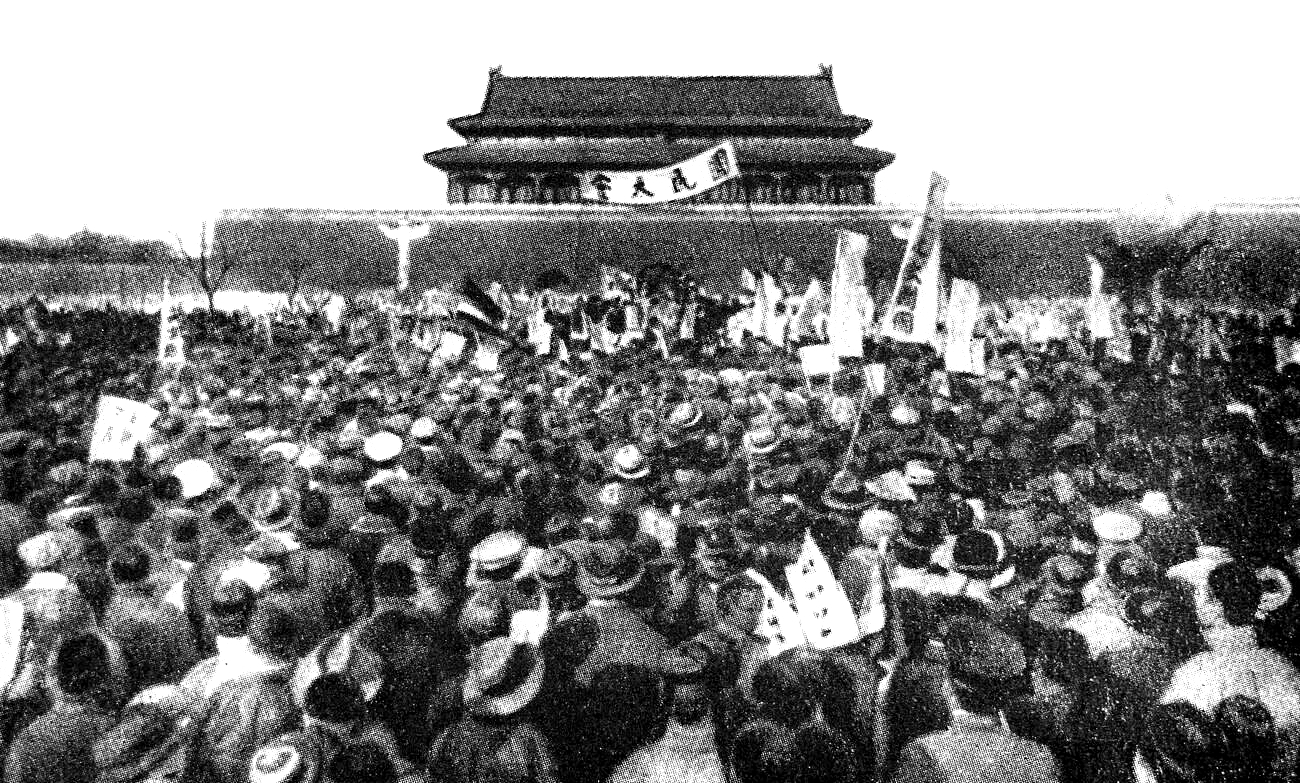
Beiyang Government
For sixteen years, from 1912 to 1928, China was nominally a republic governed from Beijing. In practice, the Beiyang government was a succession of military strongmen, constitutional crises, and warlord alliances held together by the fiction that the Republic of China still functioned as its founders intended. The government took its name from the Beiyang Army, the modernized military force built during the last years of the Qing dynasty, and for a time it represented the only internationally recognized authority in a country tearing itself apart.
A Republic in Name
When the Qing dynasty fell in 1911, the republic that replaced it inherited no consensus about how China should be governed. Sun Yat-sen briefly served as provisional president before yielding power to Yuan Shikai, a Beiyang military commander who had the army and the connections to hold the country together. Yuan governed from Beijing, and the Beiyang military establishment became the backbone of the new state. But Yuan's ambition exceeded his mandate. He attempted to declare himself emperor in 1915, a move that provoked such opposition that he was forced to abandon the plan. He died in 1916, and with him went whatever tenuous unity the republic had possessed.
The Warlords of Beijing
After Yuan Shikai's death, the Beiyang government fractured into competing factions. The Anhui, Zhili, and Fengtian cliques fought for control of Beijing and the legitimacy that came with occupying the capital. Presidents and premiers rose and fell with startling speed, some lasting months, others weeks. The Nationalist Party under Sun Yat-sen established a rival government in Guangzhou, challenging Beijing's claim to represent all of China. Foreign powers recognized the Beiyang government as the legitimate authority, but the territory it actually controlled shrank as warlords carved out independent domains across the country.
The Northern Expedition Arrives
In 1926, the Nationalist Party launched the Northern Expedition, a military campaign to unify China by force. Led by Chiang Kai-shek, Nationalist armies fought their way north, defeating or co-opting warlord armies as they advanced. By 1928, the last Beiyang strongman, Zhang Zuolin of the Fengtian clique, controlled Beijing but lacked the political power or military strength to hold it. Zhang was assassinated by Japanese agents in June 1928, and his son Zhang Xueliang inherited command of the remaining Beiyang forces. The United States became the first major power to switch diplomatic recognition from Beijing to the Nationalist capital in Nanjing.
The Flag Comes Down
On December 29, 1928, Zhang Xueliang raised the Nationalist flag over Manchuria, formally dissolving the Beiyang government and unifying China under one banner. Beijing was renamed Beiping, losing its status as capital until the Communist victory in 1949. The Japanese would later attempt to revive Beiyang symbolism in their puppet states: Manchukuo used Beiyang-era flags and insignia, as did the Provisional Government and Mengjiang. But when the high-ranking Nationalist defector Wang Jingwei was installed as head of the Japanese-backed Reorganized Government in 1940, he insisted on using Nationalist symbols instead. The Beiyang legacy, already fading, would not be resurrected. Both sides of the Chinese political divide claimed continuity from Sun Yat-sen's revolution rather than from the warlord government that had misruled from Beijing.
From the Air
Located at 39.90°N, 116.38°E in central Beijing, centered on the old government quarter near Tiananmen and the former presidential palace. Nearest airport: Beijing Capital International (ZBAA), approximately 25 km northeast. The area is now the heart of modern Beijing's government district. No visible traces of the Beiyang-era government remain, as the buildings have been repurposed or replaced.