Belfry of Ghent
A gilded dragon perches atop Belgium's tallest belfry, watching over Ghent as it has since the late 14th century. The creature came from Bruges, a trophy or gift depending on which city tells the story, and it has outlasted every regime that has ruled Flanders since. Below the dragon, 53 bells ring out across the old city center, part of a carillon that began as a single alarm bell in 1325. The Belfry of Ghent rises among two other medieval towers in the city's heart, each serving different masters: Saint Bavo's Cathedral answered to God, Saint Nicholas' Church to the parish, and the belfry to the citizens themselves.
A Tower Built Through Turmoil
Construction began in 1313 following plans by master mason Jan van Haelst, whose original drawings survive in the Ghent City Museum. Wars, plagues, and political upheaval interrupted the work repeatedly, but the builders persisted. By 1380, the tower stood complete. Near the end of construction, the gilded dragon arrived to crown the spire, a copper creature that would become inseparable from the city's identity. The belfry served as more than a bell tower. It was a fortified watchtower, a secure vault for municipal documents, and a physical declaration of civic power that could rival any church steeple. The UNESCO World Heritage designation it now shares with other belfries of Belgium and France recognizes what medieval Ghent already understood: this tower represented something new in European architecture.
Roland Rings the Hours
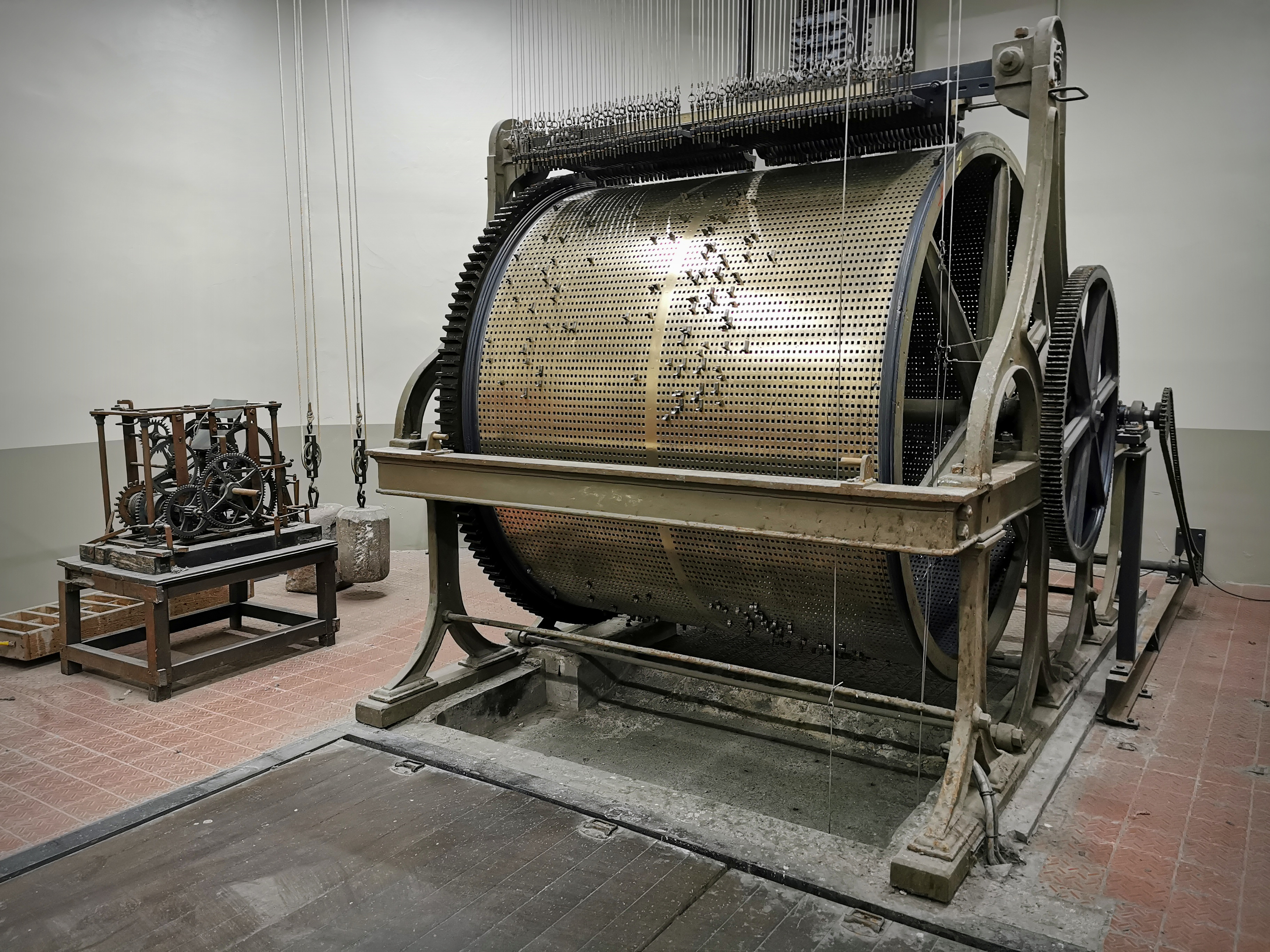
The alarm bell Roland, known in Dutch as Roeland, was installed in 1325. For the first half-century, it warned of fires and summoned citizens to arms. Beginning in 1378, Roland also marked the hours, its deep voice carrying across the growing medieval city. Three smaller bells with different tones preceded each hourly chime with warning signals, a pattern that evolved into the predecessor of the carillon. In the 17th century, the famous bellfounders Pieter and Francois Hemony built a proper carillon weighing 30 tons. After restoration in 1982, the instrument expanded to 53 bells. In 1993, a new bell named Robert joined the ensemble, adding its clear tone to a chorus that has regulated Ghent's daily life for seven centuries. Roland stars in the city's anthem, calling citizens to defend their land.
Cloth, Commerce, and Captivity
The rectangular hall adjoining the belfry tells its own story of Ghent's rise and transformation. Built between 1425 and 1445 to serve the cloth trade that made the city rich, the hall housed inspectors who checked and measured woollens, and merchants who negotiated transactions. Only seven of eleven planned bays were completed before the original builders stopped work. The remaining four bays were added in 1903, finally matching Jan van Haelst's vision. As the cloth industry faded, new occupants moved in: a militia guild, a fencing school. The building found uses that its medieval planners never imagined.
The Mammelokker's Strange Tale
A small 1741 annex called the Mammelokker served as the entrance to a city jail that occupied part of the cloth hall from 1742 to 1902. The name translates directly as 'breast sucker,' and the reason watches over the doorway: a sculpture depicting Roman Charity. The Roman legend tells of Cimon, a prisoner sentenced to death by starvation. His daughter Pero, a wet nurse, visited him secretly and kept him alive by breastfeeding him. Her act of devotion so moved the authorities that they freed her father. The sculpture reminded jailers and prisoners alike of filial love and mercy, though the irony of placing such an image at a prison entrance was perhaps not lost on 18th-century Ghent.
From the Air
Located at 51.054N, 3.725E in the heart of Ghent's old city center. The belfry forms part of a distinctive three-tower skyline with Saint Bavo's Cathedral and Saint Nicholas' Church. Look for the golden dragon atop the tallest spire. The adjoining cloth hall complex extends from the tower base. Nearest airports: Ghent-Wevelgem (EBKT) 45km west, Brussels (EBBR) 55km east. Best viewed from lower altitudes to appreciate the medieval urban fabric surrounding the tower.