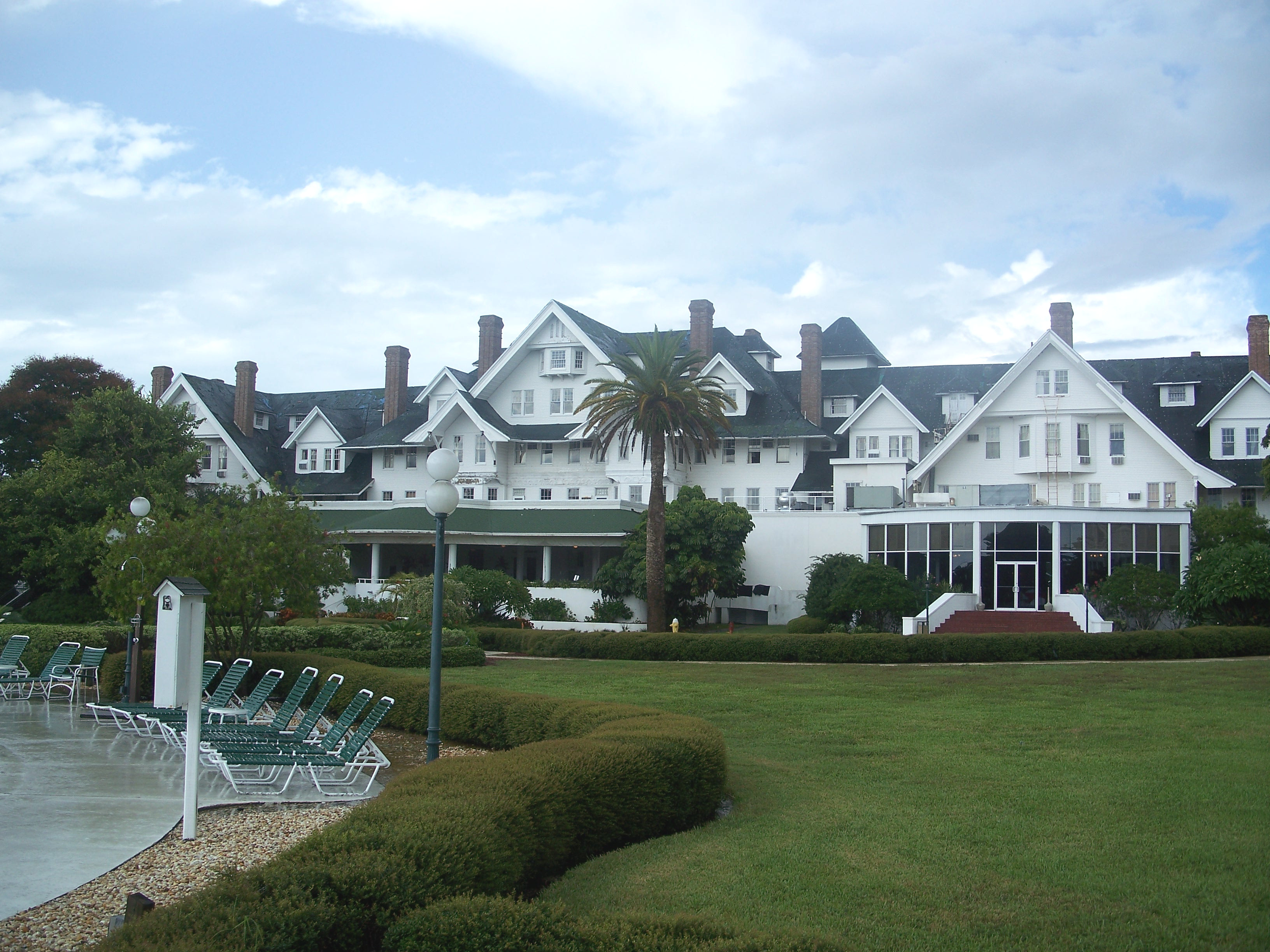
The Belleview-Biltmore: Florida's Gilded Age Hotel That Refused to Die Quietly
They rotated it ninety degrees, set it on hydraulic dollies, and rolled it 375 feet east. On December 21, 2016, the last surviving fragment of the Belleview-Biltmore Hotel - 38,000 square feet of Victorian gingerbread, Tiffany glass, and Florida heart pine - was physically relocated to a new foundation so that condominiums could rise where the rest of the hotel once stood. It was a fitting end for a building that had spent over a century defying demolition, bankruptcy, hurricanes, and neglect. The Belleview-Biltmore never went quietly.
A Railroad Man's Gamble on the Gulf
Henry B. Plant bought the land in 1893, part of his expanding Plant System railroad network threading down Florida's west coast. The idea was straightforward: build a destination resort at the end of the line, give wealthy Northerners a reason to buy a ticket. Construction began in the summer of 1896, and the Belleview Hotel opened its doors on January 15, 1897, built entirely of native Florida heart pine. Plant chose the highest point on the Pinellas County coastline, giving guests sweeping views of the bay and the barrier islands rimming the Gulf of Mexico. The hotel was a showcase of Queen Anne Victorian architecture - exposed rafter tails, peaked gables, wide verandas, and elaborate gingerbread ornamentation. Inside, handcrafted woodwork framed Tiffany glass windows. Guests arrived on the Pinellas Special, a dedicated train running from New York City to a station on the hotel grounds. After Plant's death in 1899, his son Morton took over and gave the building its signature look: bright white wood siding and green roof tiles that made it visible for miles.
From Babe Ruth to the Biltmore Chain
Morton Plant died in 1918, and his descendants sold the hotel to John McEntee Bowman of the Bowman-Biltmore Corporation. In 1926, Bowman renamed it the Belleview-Biltmore and added a new wing of accommodations. The guest book reads like a who's who of the twentieth century: Presidents Gerald Ford, Jimmy Carter, George H.W. Bush, and Barack Obama all stayed. So did British Prime Minister Margaret Thatcher and the Duke of Windsor. Babe Ruth and Joe DiMaggio visited. Thomas Edison and Henry Ford walked its verandas. At its peak, the 400,000-square-foot resort was the second-largest occupied wooden structure in the United States, surpassed only by the Hotel del Coronado in San Diego. The hotel was added to the National Register of Historic Places on December 26, 1979. But wooden empires are fragile things, and the Belleview-Biltmore's grandeur masked a structure that demanded constant, expensive care.
A Slow Unraveling
The decline started in the 1980s. Beach-front motels pulled tourists away from the inland resort, and the enormous wooden building devoured maintenance budgets. A Japanese company, Mido Development, bought the hotel around 1991 and drew criticism for grafting a Pagoda-style lobby onto the Victorian structure. Mido nearly bankrupted the property by 1994 and neglected the upper three floors until they closed entirely. Hurricanes Jeanne and Francis struck in 2004, further damaging the already deteriorated roof. By then, developers were circling. The DeBartolo Group offered to buy the property and replace it with retail and condos, withdrew after public outrage in early 2005, then returned with a new bid months later. Preservationists pleaded for protection, pointing to hotels of similar age - the Grand Hotel on Mackinac Island, the Hotel del Coronado - that had been successfully restored. Legg Mason Real Estate Investors purchased the property in 2008 for $30.3 million, promising a three-year, $100 million restoration.
The Final Chapter on Belleview Boulevard
The hotel closed in May 2009. More than 260 rooms sat empty as litigation from neighboring residents stalled renovation plans. The owners applied for a demolition permit. Appraisers surveyed the rotted ceilings and warped floors and estimated restoration would cost $200 million. Meanwhile, condos rose along the perimeter, blocking the Intracoastal views that had once defined the property. In 2014, the Belleair Town Commission approved JMC Communities' $125 million redevelopment plan: demolish 90 percent of the hotel, preserve a 38,000-square-foot fragment containing the original 1897 lobby and 35 guest rooms. Demolition began on May 9, 2015. Preservation organizations filed lawsuits to stop it, but by December all were withdrawn. The wrecking crews kept working.
A Fragment Survives
What remains today is The Belleview Inn, a boutique hotel containing that rescued sliver of Plant's original building. The preserved segment was physically moved in December 2016, rotated and rolled to its new foundation to make room for the condominiums now occupying the original footprint. The National Register of Historic Places listing, held since 1979, was officially removed in October 2017 - you cannot relocate a building and claim it still stands on its historic site. The Belleview Inn is a member of Historic Hotels of America, the last of Henry Plant's Gilded Age properties still welcoming guests. It operates not as the grand Victorian resort it once was but as something quieter: a boutique inn carrying the DNA of a lost palace. The heart pine and the Tiffany glass survived. The verandas and the views did not.
From the Air
Located at 27.94N, 82.81W in the town of Belleair, Florida, on the Pinellas County coastline overlooking Clearwater Harbor and the Gulf barrier islands. The Belleview Inn and surrounding Belleview Place development are visible from low altitude as a cluster of newer construction near the coast. The original hotel's elevated site - the highest point on the coastline - is now occupied by condominiums. Nearest airports: St. Pete-Clearwater International (KPIE, 6nm southeast), Tampa International (KTPA, 15nm northeast). Clearwater Air Park (KCLW) is 4nm north. Best viewed at 2,000-3,000 feet AGL approaching from the west over the Gulf, where the coastal elevation that once made the hotel visible for miles is still apparent in the terrain.