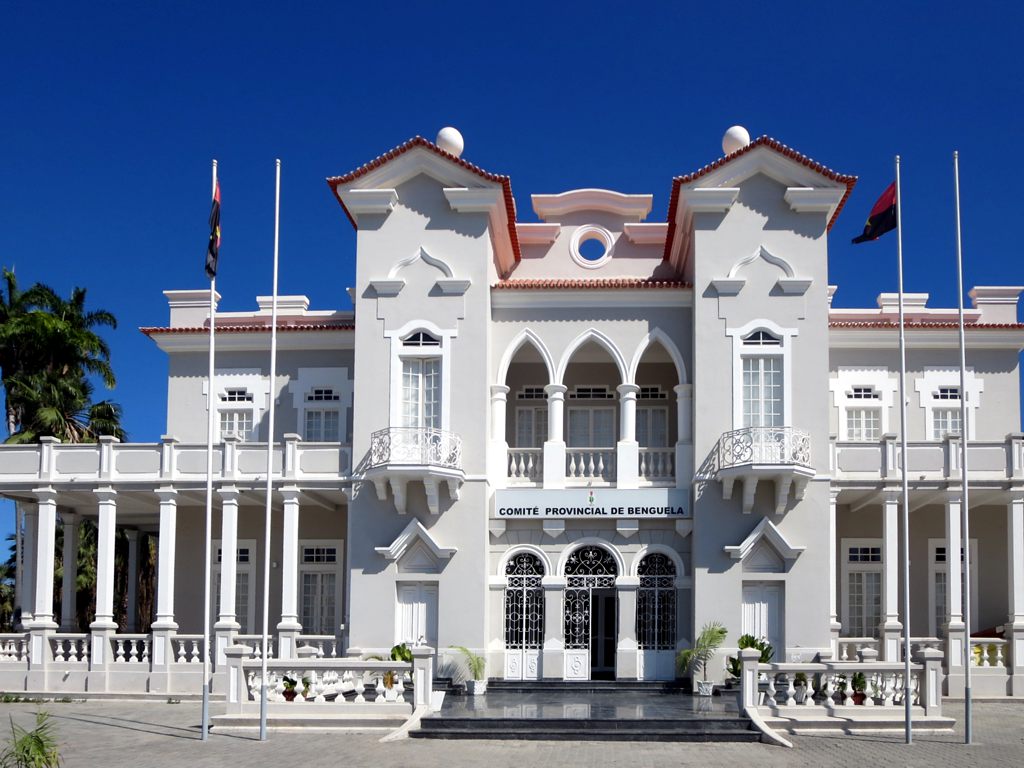
Benguela
The Umbundu people call it Luombaka. The Portuguese named it Sao Felipe de Benguela when they founded it in 1617 under Manuel Cerveira Pereira, the eighth governor of Portuguese Angola. For four centuries, this coastal city in western Angola has been defined by the same geographic fact: it sits where the Atlantic meets the routes leading deep into the African interior, toward the copper deposits of Katanga and the Zambian Copperbelt, toward the agricultural highlands of Huambo, toward everything that made colonial trade profitable and post-colonial recovery difficult. Benguela's history is the history of a doorway, and like any doorway, its story depends on which direction you are looking.
Iron Rails to the Copperbelt
The Benguela Railway transformed the city's fortunes in the early twentieth century. Built by Portugal to connect Benguela and the nearby deepwater port of Lobito to the interior, the railway achieved its greatest significance when its tracks reached the Copperbelt mining regions of Katanga in the Congo and Zambia. Suddenly, Benguela was not just a coastal settlement but a terminus for one of central Africa's most important export corridors. Copper, manganese, and agricultural products flowed west by rail. Capital, manufactured goods, and people flowed east. The city's economy expanded accordingly. Sisal plantations and fishing operations grew alongside financial services, construction, and commerce. By the mid-twentieth century, Benguela had become a thriving commercial center, its prosperity visible in the Portuguese colonial architecture that still lines parts of its historic center: the bank buildings, the municipal hall, the churches built to serve a European settler class that believed its presence would be permanent.
When the Railway Died
Independence came in 1975, a year after the Carnation Revolution in Lisbon swept away Portugal's authoritarian government and its commitment to holding overseas territories. What followed was not the peaceful transition the revolutionaries had hoped for but the Angolan Civil War, a conflict that lasted from 1975 to 2002 and devastated the country. For Benguela, the war's most consequential casualty was the railway. The Benguela line, which had given the city its economic reason for being, was reduced to a thirty-kilometer stub between Benguela and Lobito. Everything beyond that was either destroyed or rendered impassable by the fighting. In 1983, the city's population stood at 155,000. As the war continued, that number swelled with refugees from the countryside, people who had lost their farms, their villages, and their livelihoods to a conflict they had no power to stop. The colonial-era buildings remained, but the economy they had served was gone.
Rebuilding the Line
Peace arrived in 2002, and with it came the slow work of restoration. By the mid-2000s, reconstruction of the railway between Benguela and Huambo had commenced, an effort to reconnect the coast to the interior and revive the trade corridor that had once defined the city. The work was painstaking and expensive, but it represented something larger than infrastructure repair: it was an attempt to reassemble the economic logic of a city that had been severed from its purpose for a quarter century. Today, Benguela's economy rests on foundations both old and new. Coffee, corn, sisal, sugarcane, and tobacco are still grown in the interior and traded through the city. Fish processing and sugarcane milling remain significant industries. Pottery, soap, and tools are manufactured locally. But the contrast between the colonial-era city center, with its relatively solid Portuguese-built houses, and the informal settlements where war-displaced families still live tells the story of a recovery that remains incomplete.
A Coast That Remembers
Beyond Benguela lies Baia Farta, where salt was once manufactured and sulphur extracted, and the beach at Baia Azul. The Benguela Airport connects the city to the outside world, though on a modest scale. The city's notable residents suggest the range of lives it has produced: Leila Lopes, who was crowned Miss Universe in 2011; Maria Araujo Kahn, who sits on the United States Court of Appeals for the Second Circuit; and Matias Damasio, a musician whose work carries the rhythms of Angolan popular culture. Benguela endures as a city whose geography will always make it important and whose history has made recovery difficult. The railway is being rebuilt. The trade routes are being restored. But the scars of twenty-seven years of civil war do not disappear with the laying of new track. They persist in the settlements on the city's edges, in the gap between what Benguela was and what it is still working to become.
From the Air
Benguela is located at 12.55S, 13.42E on the Atlantic coast of western Angola. Benguela Airport (FNBG) serves the city with limited commercial service. The neighboring port city of Lobito, approximately 30 km to the north, is also visible from altitude with its deepwater harbor. From 3,000-5,000 feet AGL, the city's grid layout is visible along the coast, with the colonial-era center distinguishable from the more sprawling informal settlements. The Benguela Railway corridor extends inland to the east. Coastal conditions include marine haze and fog, particularly in the cooler months (June-August), due to the cold Benguela Current offshore.