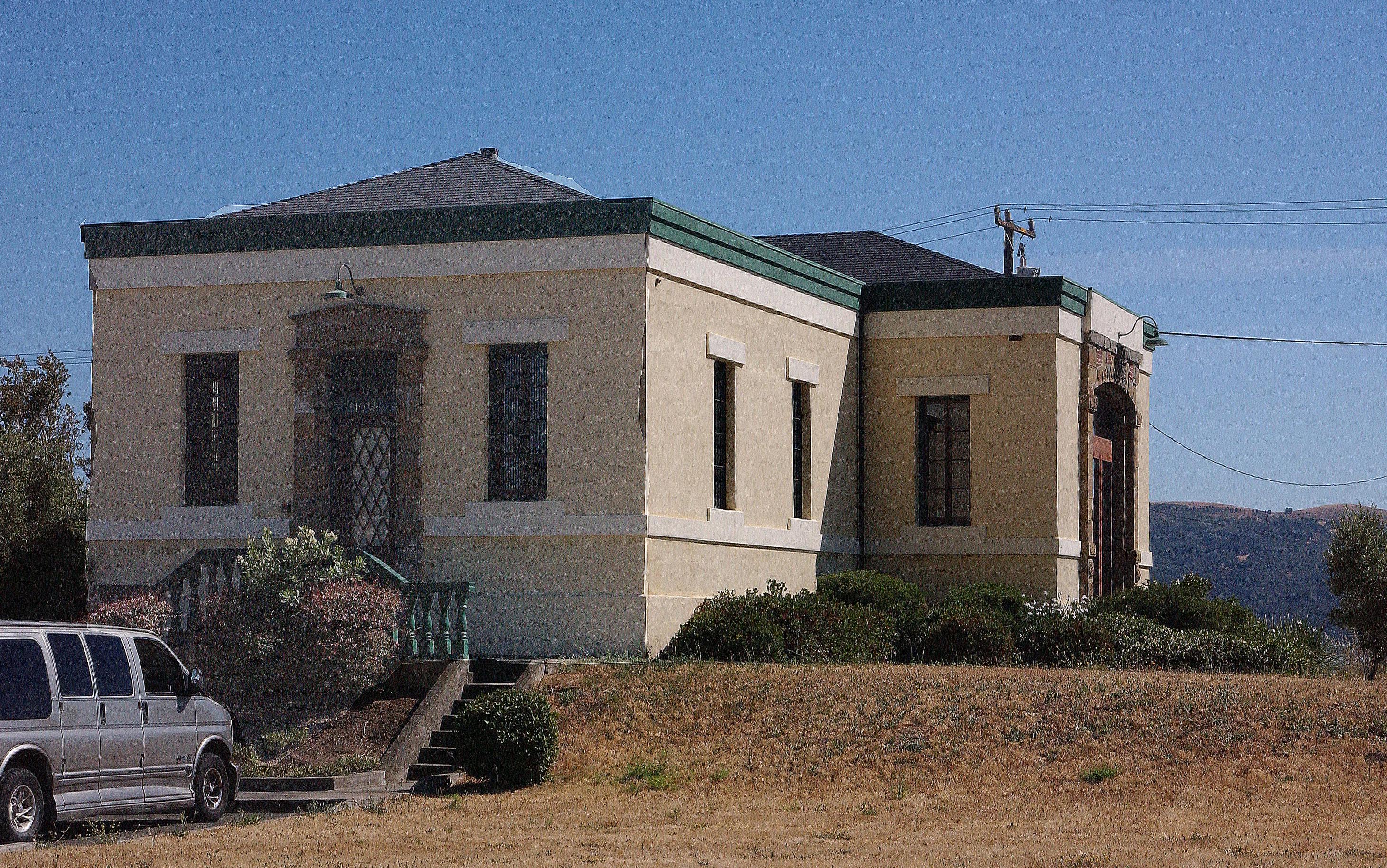
Benicia Arsenal: From Camels to Canvas
The camels arrived in 1855. The United States Army, in one of its more imaginative experiments, had imported dromedaries to test as pack animals in the arid Southwest, and several of them ended up stabled at a military post on Suisun Bay in Benicia, California. The Camel Corps lasted only eight years before the Civil War made it irrelevant, but the sandstone barns built to house those animals still stand. They are a museum now. In fact, the entire Benicia Arsenal -- the West Coast's primary ordnance facility for over a century, the place that armed soldiers from Ulysses Grant's era through the Korean War -- has become something its founders could never have imagined: an artists' colony.
The First Ordnance Depot in the West
The military reservation began in 1847, when the Army acquired 252 acres of land adjoining the Benicia city limits. Two companies of the 2nd Infantry Regiment arrived on April 9, 1849, pitching camp to establish what became Benicia Barracks. The 3rd Artillery Regiment followed. By 1851, at the urging of General Persifor F. Smith, the Army established its first Ordnance Supply Depot west of the Rockies on these grounds. A year later, it was formally designated the Benicia Arsenal. The roster of officers who passed through reads like a Civil War preview: Ulysses Grant, who would command the Union armies; Edward Ord, who would accept the surrender of Confederate forces in North Carolina; and Joseph Hooker, who would lead the Army of the Potomac at Chancellorsville. In the early 1850s, they were just junior officers stationed at a dusty post on the bay.
Arsenal of the Pacific
Every American conflict for more than a century drew on Benicia's stockpiles. During the Civil War, the arsenal staged Union troops heading to western garrisons. When the Spanish-American War erupted in 1898, its soldiers shipped out to the Philippines. In World War I, the arsenal supplied ordnance to every major Army installation in the western states and equipped American expeditionary forces in Siberia. But the arsenal's finest hour -- and most exhausting one -- came in the hours after Pearl Harbor. On December 7, 1941, the arsenal received orders to arm the Pacific Coast immediately. In the next 24 hours, workers loaded and dispatched 125 separate truck convoys, completely emptying the facility's stocks of ammunition, small arms, and high explosives. Everything the arsenal had was on the road by the following morning.
Doolittle's Munitions
The arsenal's most celebrated contribution to World War II was also one of its most secret. In early 1942, the Benicia Arsenal supplied the munitions that Lieutenant Colonel Jimmy Doolittle loaded onto sixteen B-25 bombers aboard the USS Hornet. On April 18, 1942, those bombers launched from the carrier's deck and struck Tokyo -- the first American bombing raid on the Japanese homeland. The raid inflicted modest physical damage but delivered an enormous psychological blow, demonstrating that Japan was vulnerable to attack. Back in Benicia, the arsenal's wartime workforce had swelled from 85 civilian employees before 1940 to 4,545 by October 1942. Women made up nearly half the civilian labor force. By 1944, labor shortages forced the commander to supplement his workers with 250 Italian and 400 German prisoners of war, along with 150 juveniles from the California Youth Authority.
The Workshop of War
The scale of the arsenal's wartime output defies easy summary. Throughout the war, it supplied ports with weapons, artillery pieces, spare parts, and tools bound for the Pacific Theater. The arsenal's workers overhauled 14,343 pairs of binoculars, manufactured 180,000 small components for tanks and weapons, and repaired approximately 70,000 watches -- the kind of unglamorous, essential work that keeps an army functioning. During the Korean War, civilian employment reached an all-time peak of 6,700 workers, making the arsenal one of the largest employers in the region. Italian Service Units from the 4th and 50th Italian Quartermaster Service Companies also worked at the facility during the war, part of a little-known program that employed Italian prisoners who had cooperated with the Allies.
Swords into Brushstrokes
The Benicia Arsenal was deactivated in 1963 and closed the following year, ending 113 years of continuous military use. Medal of Honor recipient John H. Foley rests in the arsenal's cemetery, one of many reminders of the facility's long martial history embedded in its grounds. But the buildings endured. The sandstone warehouses, the old guardhouse, the camel barns -- structures built to store powder and shell found new tenants. Artists and artisans moved into the former military workshops, converting ammunition storage into studios and galleries. Today, the Benicia Arsenal is one of the Bay Area's quieter cultural destinations, a place where the architecture of warfare has been repurposed for creation. The camel barns house the Benicia Historical Museum, where visitors can trace the arc from dromedaries to Doolittle. It is a peculiarly American transformation: a facility that armed every war from the frontier to Korea, turned over to painters and potters and glassblowers.
From the Air
Located at 38.05N, 122.14W on the shore of Suisun Bay in Benicia, California. The arsenal grounds are visible along the waterfront east of downtown Benicia, distinguished by their orderly rows of sandstone buildings and the adjacent Benicia Industrial Park. The Carquinez Strait and the Benicia-Martinez Bridge are prominent visual references to the southwest. Nearby airports include Buchanan Field (KCCR) approximately 12nm south and Napa County Airport (KAPC) 18nm northwest. Travis AFB (KSUU) lies approximately 20nm northeast. The arsenal is on the National Register of Historic Places.