Berenty Reserve
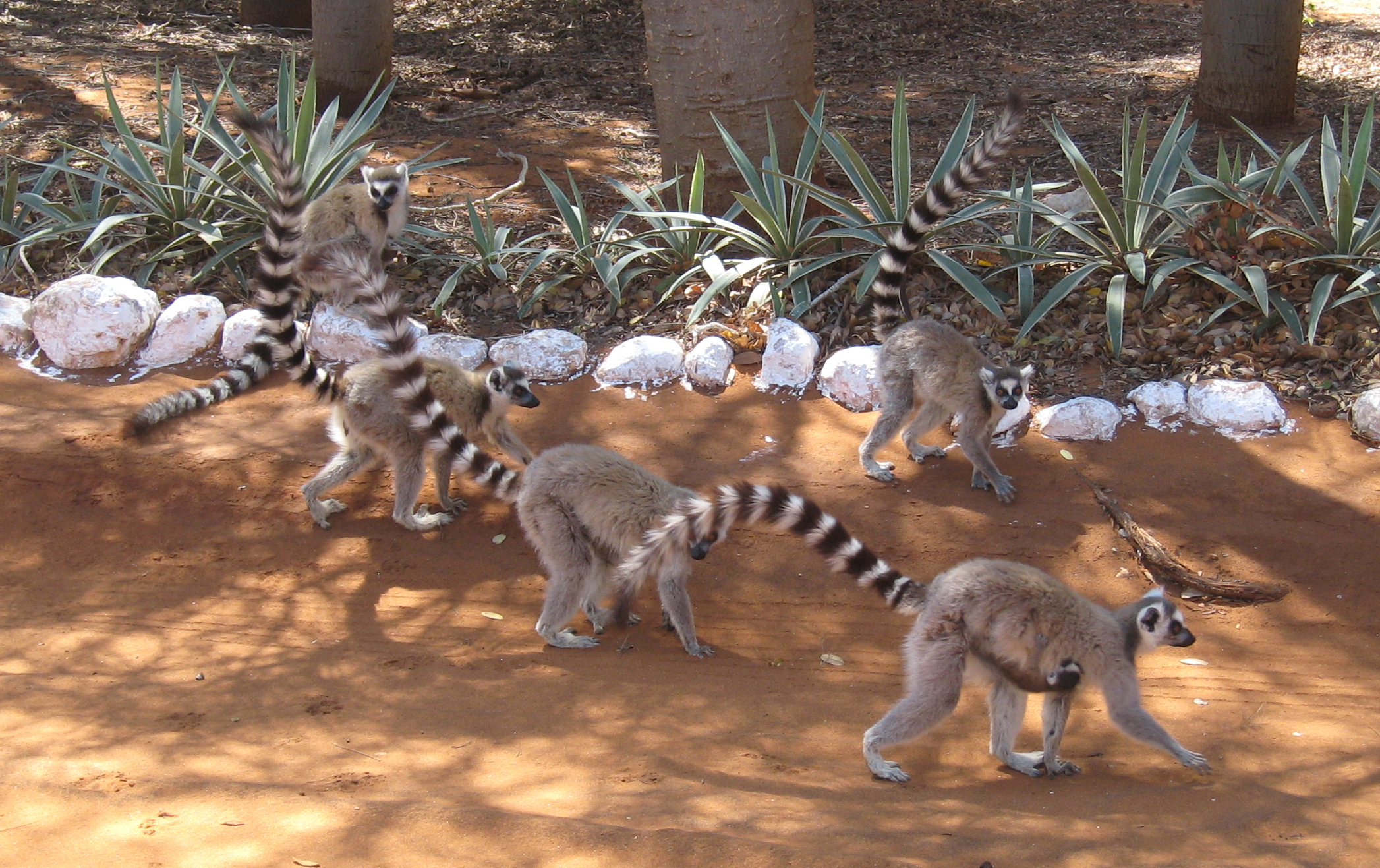
A ring-tailed lemur strolls across the breakfast table, tail held high like a question mark, utterly indifferent to the humans reaching for their coffee. This is normal at Berenty Reserve, a 1,000-hectare patch of forest in the deep south of Madagascar where six species of lemur have grown so accustomed to people that the boundary between wildlife sanctuary and open-air zoo has effectively dissolved. Founded by the de Heaulme family in 1936, Berenty is one of the oldest private nature reserves on the island, and its lemurs have become some of the most studied and filmed primates on Earth.
A Family's Vigil
For nearly a century, the de Heaulme family has protected this bend in the Mandrare River while the landscape around it has been transformed into vast sisal plantations. The reserve opened to the public in 1981, and since then it has become one of Madagascar's premier tourist destinations, often booked months in advance. That longevity matters. Where other forests in southern Madagascar have been burned or cleared, Berenty's gallery forest of tamarind trees has survived because one family decided it was worth keeping. The reserve is divided into three sections: the main Berenty Reserve at 200 hectares, a spiny forest region called Rapily, and a 100-hectare forest area named Bealoka. Together they preserve two of Madagascar's most distinctive ecosystems side by side.
The Lemurs Who Forgot to Be Wild
Three species dominate the daytime trails: ring-tailed lemurs with their iconic black-and-white tails, brown lemurs, and Verreaux's sifakas, which move through the trees in a distinctive sideways leap that looks almost like dancing. These animals are so habituated to people that they run across rooftops, wander through dining areas, and stroll within arm's reach along the reserve's wide, easy-to-follow trails. After dark, a different world emerges. Night walks with guides reveal the white-footed sportive lemur, the gray mouse lemur, and the reddish-gray mouse lemur, tiny nocturnal creatures with enormous eyes that catch torchlight like amber beads. Unlike Madagascar's national parks, visitors can roam Berenty's trails unaccompanied, though the provided naturalist guides make finding the nocturnal species far easier.
Flying Foxes and Spiny Forests
Lemurs are not the only spectacle. Berenty shelters the south's largest colony of Madagascar flying foxes, fruit bats with wingspans that can exceed a meter. Their roosting trees are cordoned off to protect the colony, but the sight of hundreds of bats hanging from branches is visible from the restricted perimeter. The reserve also hosts 103 bird species, including owls and couas, Madagascar's distinctive ground-dwelling relatives of the cuckoo. Beyond the tamarind gallery forest, Berenty protects a portion of Madagascar's spiny forest, one of the planet's strangest ecosystems. Here, plants have evolved into forms that look more like coral or cactus than anything traditionally associated with a forest. Octopus trees spread tentacle-like branches, and the Didiereaceae family produces thorny columns found nowhere else on Earth.
The Long Road South
Reaching Berenty is itself an adventure. The reserve lies 86 kilometers west of the coastal town of Taolagnaro, also known as Fort Dauphin, but the road is rough enough that the drive takes two to four hours. There is a private airstrip for small planes, though advance permission is required. The reserve offers 27 rooms, some air-conditioned, with electricity supplied by generators that run only during set hours: early morning, midday, and evening. Temperatures swing from scorching 40-degree Celsius midday highs in summer to cool 10-degree lows on winter nights. The isolation is part of the appeal. There is no other lodging in the area, no town to escape to. For the duration of your stay, you live on the lemurs' schedule, waking to their calls and falling asleep to the rustle of nocturnal species beginning their rounds. Nearby Andohahela National Park, halfway back to Taolagnaro, is one of six Malagasy parks inscribed on the UNESCO World Heritage List.
From the Air
Located at 25.01S, 46.30E in the arid south of Madagascar. The reserve sits at a bend in the Mandrare River, surrounded by lighter-colored sisal plantations that contrast with the dark green of the gallery forest. Nearest airport is Taolagnaro (FMSD/Fort Dauphin), approximately 86 km to the east. The reserve has a private airstrip visible from low altitude. Recommended viewing altitude: 3,000-5,000 ft AGL to see the forest contrast against plantations. The Mandrare River serves as a good navigation landmark.