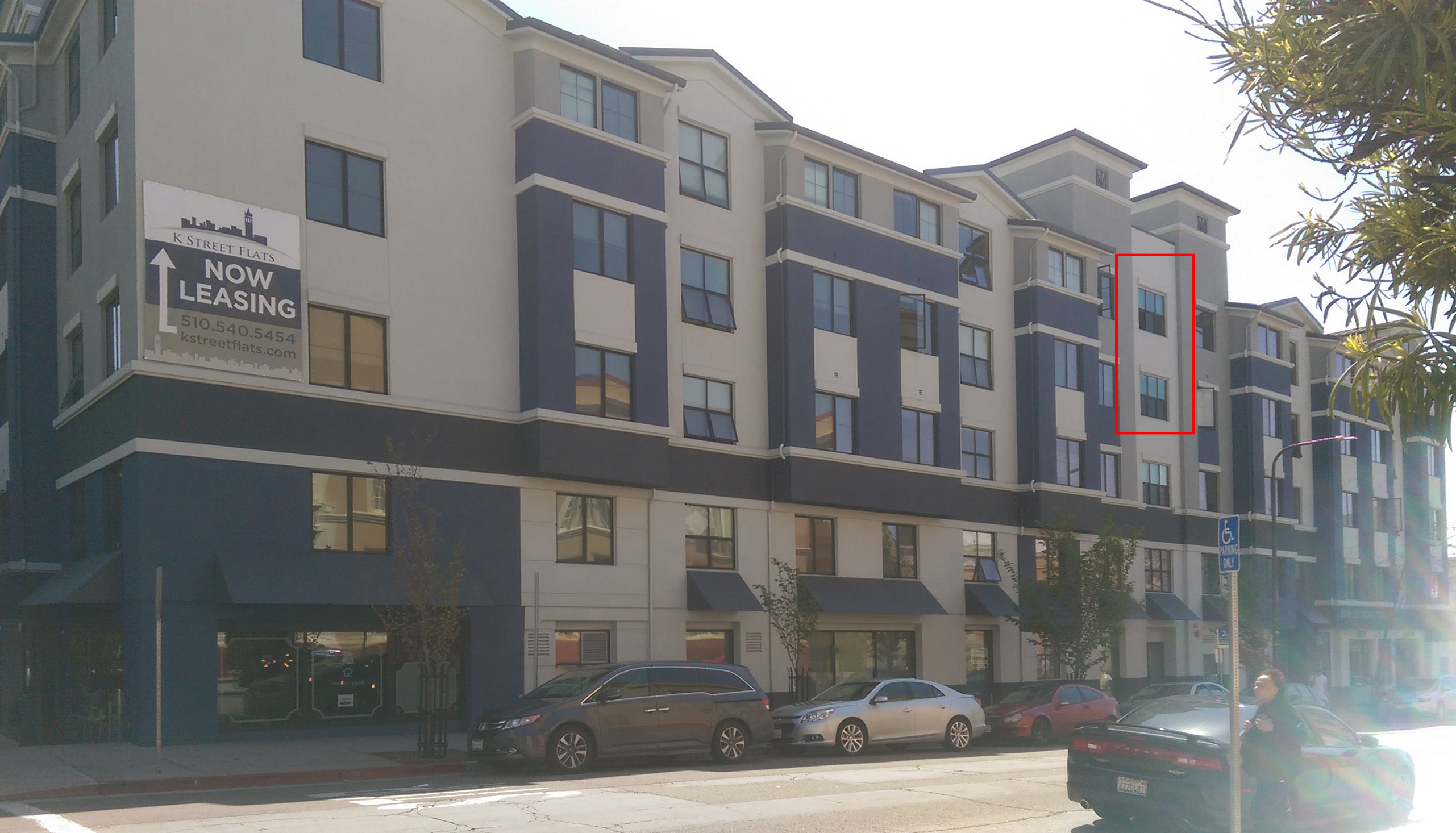
Berkeley Balcony Collapse
They were celebrating a twenty-first birthday. Shortly after midnight on June 16, 2015, thirteen young people crowded onto a fifth-floor balcony at an apartment building on Kittredge Street in Berkeley, California. Most were Irish students on J-1 visas, spending their summer in the Bay Area the way tens of thousands of young Irish men and women have done for decades - working temporary jobs, exploring America, living together in shared apartments that feel like extensions of the craic back home. The balcony gave way beneath them. Six people died that night: Ashley Donohoe, age twenty-two, an Irish-American from Rohnert Park, California, and Olivia Burke, Eoghan Culligan, Niccolai Schuster, Lorcan Miller, and Eimear Walsh, all twenty-one, all from Dublin. Seven more were seriously injured. The building was eight years old. What investigators found inside the wooden joists that had supported them was not structural failure in any exotic sense. It was dry rot - the quiet, preventable consequence of improper construction.
A Summer Ritual Shattered
The J-1 visa program has long been a rite of passage for Irish university students. Each summer, thousands travel to the United States for temporary work - lifeguarding at Cape Cod, waiting tables in San Francisco, interning in New York. The Berkeley group was part of this tradition, young people from Dublin who had crossed the Atlantic together. The birthday party on Kittredge Street was an ordinary gathering, the kind that happens in student apartments everywhere. The balcony that collapsed was a standard feature of the building, a concrete-and-wood platform extending from the fifth floor. Nothing about the evening suggested danger. The collapse, when it came, was sudden and total. The platform sheared away from the building face, dropping its occupants nearly fifty feet. Emergency responders arrived to a scene of catastrophic injuries. Six of the thirteen were killed. The seven survivors suffered injuries so severe that years later, the damage was still claiming lives.
Rot Hidden in Plain Sight
Berkeley Mayor Tom Bates initiated an investigation immediately. What it revealed was grimly straightforward: the wooden joists supporting the balcony had rotted through. Improper construction had allowed moisture to penetrate the structure, and over eight years the wood had degraded to the point of collapse. In court proceedings that December, testimony established that contractors had cut corners to save costs. But the warning signs had been visible. Students renting the apartment had complained to the building's management company, Greystar Real Estate Partners, about mushrooms growing on the balcony - a clear indicator of moisture damage and decay. The complaint was ignored. A mushroom growing from a structural surface is not ambiguous. It means water has been present long enough and consistently enough for fungi to colonize the wood. It means the wood is rotting. That this signal was dismissed as unremarkable became a central fact of the litigation that followed.
Grief Across the Atlantic
The tragedy reverberated through Ireland with an intensity that reflected how deeply the J-1 tradition is woven into Irish life. Nearly every family in Dublin seemed to know someone connected to the victims. Olivia Burke and her cousin Ashley Donohoe were buried together at a joint funeral service in Cotati, California, four days after the collapse. Funeral services for the other four victims were held in Dublin, where thousands attended. District Attorney Nancy O'Malley launched a criminal probe into the collapse. When construction company Segue Builders sought a restraining order to block examination of the evidence, the Alameda County Superior Court rejected the bid on July 3, 2015. O'Malley argued that granting the order would have interfered with her duty to investigate the tragedy. The investigation continued. On January 2, 2022, nearly seven years after the collapse, survivor Aoife Beary died of a stroke. Her doctors attributed it to injuries sustained in the fall. She was the seventh person to die.
Laws Written in Loss
The lawsuits were extensive. Multiple legal actions were filed against the building's developers, contractors, and management company. By the end of 2017, most had been settled, the terms undisclosed. But the more lasting consequence came through legislation. On September 18, 2018, California Governor Jerry Brown signed a law requiring inspection of exterior load-bearing structures with wooden supports on apartment buildings - a fifteen percent sampling every six years. The law exists because of what happened on Kittredge Street. Before the Berkeley collapse, California had no systematic requirement for inspecting the structural integrity of balconies on residential buildings. A building could age for decades, its wood quietly deteriorating behind a painted facade, and no one was obligated to look. The law does not prevent all future failures. A fifteen percent sampling leaves gaps. But it establishes the principle that someone must check, that the integrity of the structures people stand on cannot be taken entirely on faith.
From the Air
Located at 37.8682N, 122.2696W on Kittredge Street in downtown Berkeley, one block south of the UC Berkeley campus. The apartment building at 2020 Kittredge Street is a multi-story residential structure in a dense urban setting, not individually distinguishable from altitude. The UC Berkeley campus and downtown Berkeley street grid provide clear reference points. Best viewed at 2,000-4,000 feet AGL. Oakland International (KOAK) lies 9nm south. Buchanan Field (KCCR) is 12nm northeast.