Berkeley Plantation
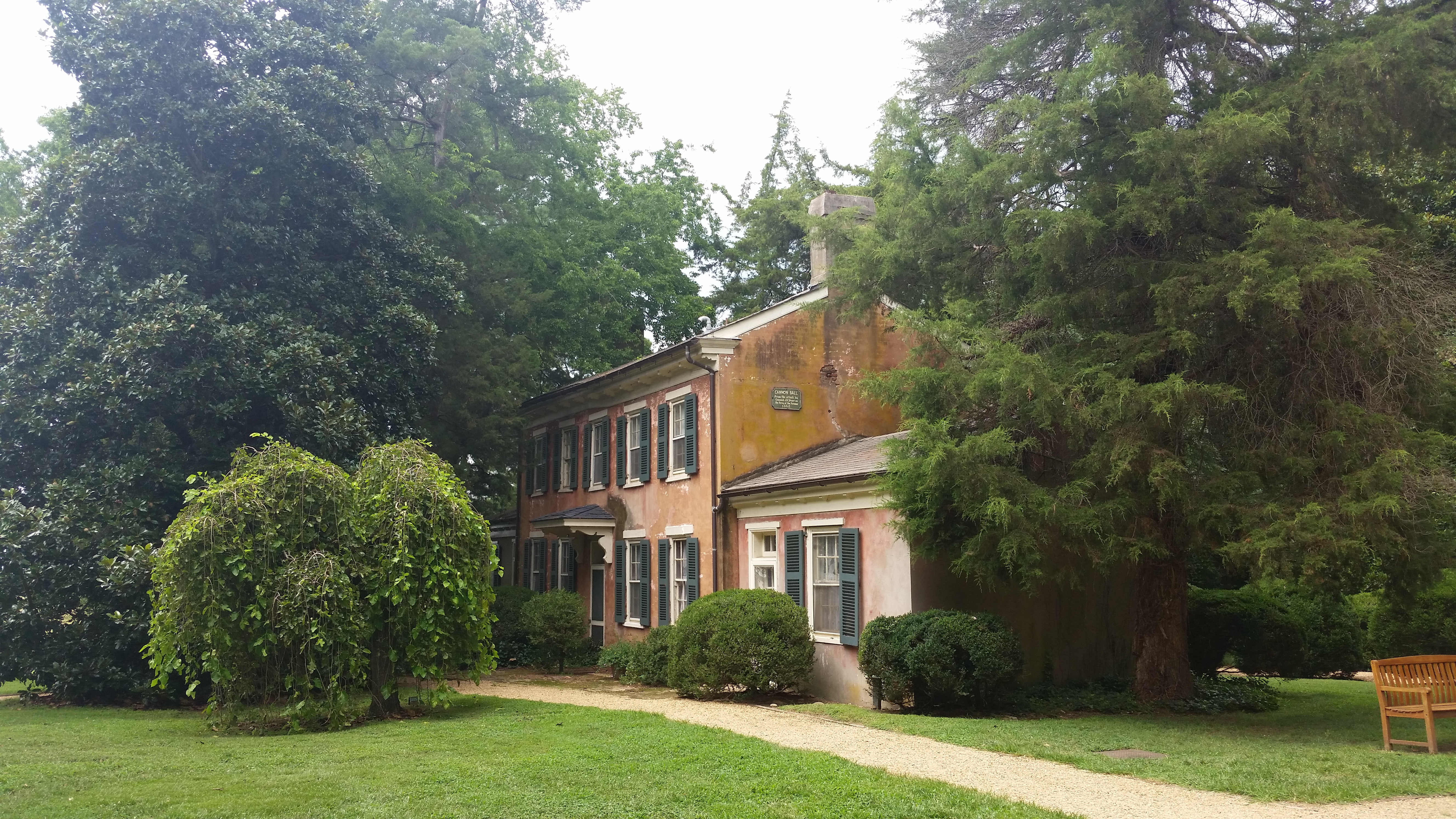
A cannonball is still lodged in the side of the guest house. In 1862, Confederate cavalry under J.E.B. Stuart fired it across the James River while the Union Army of the Potomac was camped on the plantation grounds. Nobody ever removed it. A small marker points it out to visitors today, one more layer in a place that has been accumulating American history since 38 settlers stepped off the ship Margaret on December 4, 1619, and held a day of thanksgiving - two years and 17 days before the Pilgrims arrived at Plymouth.
Before the Mayflower
The Berkeley Hundred was established through a 1618 land grant from the Virginia Company of London, named for Richard Berkeley of the Berkeley family in Gloucestershire, England. The grant placed settlers on the north bank of the James River, about 20 miles upstream from Jamestown. When Captain John Woodliffe brought 38 colonists aboard the Margaret from Bristol in 1619, their London Company charter contained a specific instruction: the day of arrival "shall be yearly and perpetually keept holy as a day of thanksgiving to Almighty God." Woodliffe held the service on December 4, 1619, establishing one of the first recorded Thanksgiving celebrations in what would become the United States. The tradition predated Plymouth's 1621 observance by more than two years. But the settlement's early promise was shattered on March 22, 1622, when Opchanacanough and the Powhatan Confederacy launched coordinated attacks along the James River. Nine colonists died at Berkeley. Across the colony, the assault killed roughly a third of all English settlers.
The Harrison Dynasty
After decades of changing hands, a portion of the Berkeley Hundred patent was purchased by Benjamin Harrison III. His son, Benjamin Harrison IV, used bricks fired on the plantation to build a Georgian-style mansion on a hill overlooking the James River in 1726 - one of the first three-story brick mansions in Virginia. The Harrisons became one of the First Families of Virginia. Benjamin Harrison V, born at Berkeley, signed the Declaration of Independence and served as governor of Virginia. His son William Henry Harrison, also born at Berkeley in 1773, became a war hero at the Battle of Tippecanoe and the ninth president of the United States. William Henry's grandson, Benjamin Harrison, became the 23rd president, making Berkeley one of only two ancestral homes to produce two American presidents - the other being Peacefield in Quincy, Massachusetts, home of the Adams family.
Taps at Harrison's Landing
The Civil War brought Union occupation to Berkeley Plantation, and the grounds became Harrison's Landing, a massive encampment for the Army of the Potomac during the Peninsula Campaign of 1862. President Abraham Lincoln visited twice that summer to confer with General George B. McClellan about the faltering campaign. Amid the fighting, General Daniel Butterfield and bugler Oliver W. Norton composed and first played "Taps" at Harrison's Landing - the mournful 24-note melody that has since been sounded at every American military funeral. Stuart's Confederate cavalry fired across the James River into the plantation during the occupation, planting the cannonball that remains in the guest house wall. After the war, the Harrisons could not recover their property. The bank rented the mansion to tenant farmers, and the grand house deteriorated until it was used as a barn, its rooms uninhabitable.
The Drummer Boy Returns
In 1907, John Jamieson purchased the ruined plantation. As a youth, Jamieson had been at Berkeley as a drummer boy in McClellan's army. His son Malcolm inherited the property in 1925 and spent over a decade restoring the mansion with his wife Grace Eggleston. The Jamiesons finally moved in during 1938. The ground floor became a museum in the 1960s, filled with antique furniture and furnishings dating to the house's original period. Today Berkeley remains a working farm, growing corn, soybeans, wheat, and tomatoes. The main house sits at the center of ten acres of formal gardens and parterres, surrounded by boxwood hedges forming allees. A small family cemetery on the property holds Benjamin Harrison V, Grace Jamieson, and Malcolm Jamieson. The architecture is original. The bricks are the same ones fired on this land three centuries ago. And that cannonball is still in the wall.
From the Air
Located at 37.32°N, 77.18°W on the north bank of the James River in Charles City County, Virginia, along State Route 5. The plantation is visible as a Georgian mansion set on a hill overlooking the river, surrounded by formal gardens and working farmland. Part of the James River Plantations corridor between Williamsburg and Richmond. Best viewed at 1,500-3,000 ft AGL. Richmond International Airport (KRIC) is 22nm northwest. Newport News/Williamsburg International (KPHF) is 25nm southeast. The James River provides a strong visual reference for navigation along the plantation corridor. Watch for restricted areas near military installations in the Hampton Roads region.