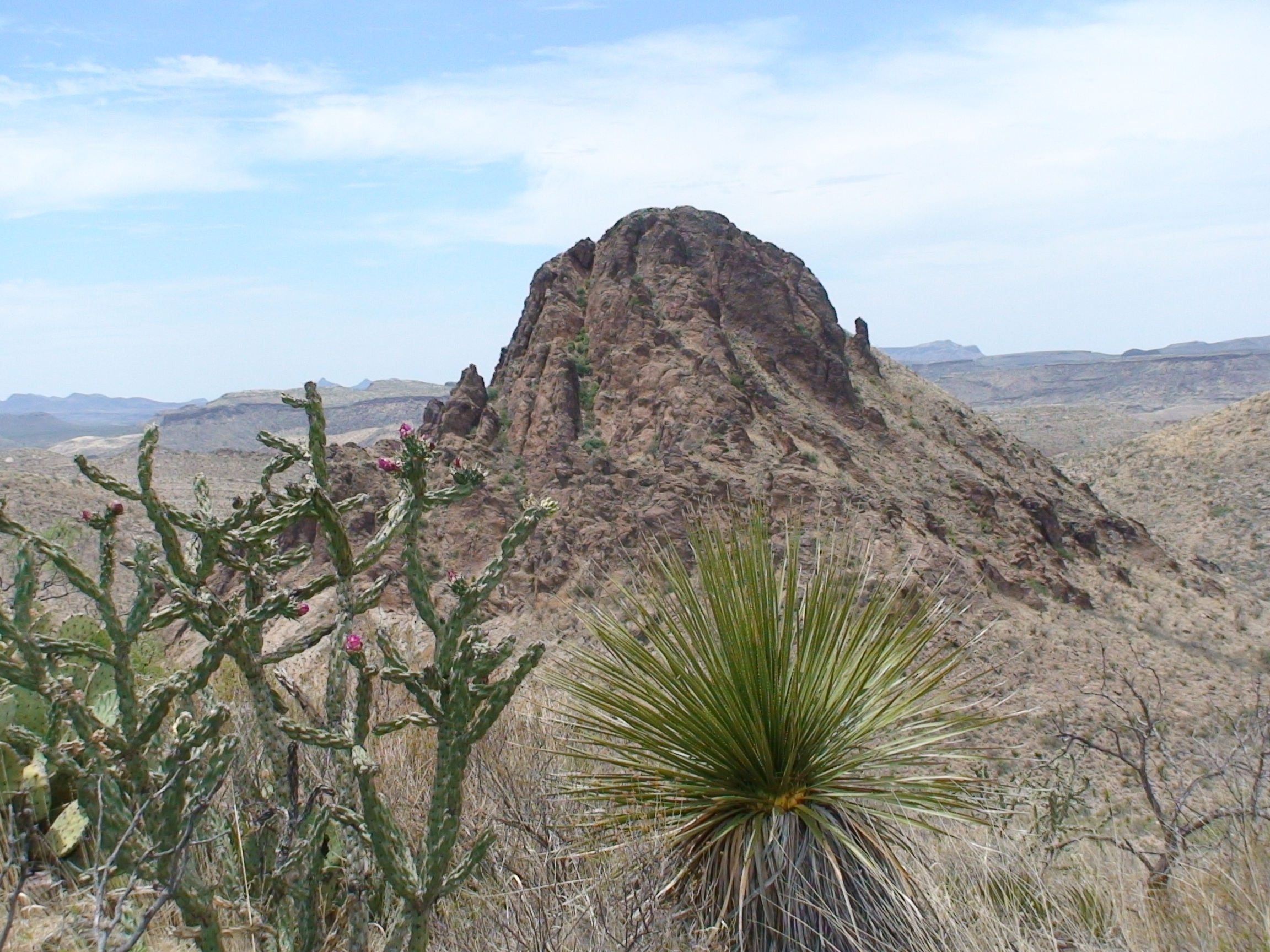
Big Bend Ranch State Park
Twice a year, the cowboys ride. The semi-annual longhorn roundup at Big Bend Ranch State Park is not a tourist attraction or historical reenactment. It is the real thing: working ranchers on horseback gathering a herd of Texas longhorns across open range, exactly as their predecessors did a century ago. This is what makes Texas's largest state park unique among protected lands. While its neighbor, Big Bend National Park, preserves the Chihuahuan Desert ecosystem in pristine isolation, Big Bend Ranch embraces a different philosophy. Here, a network of cattle ranches operates according to the principle of open range, weaving human tradition into the desert landscape along the Rio Grande.
Canyon of Fire
Colorado Canyon defies the patterns of Big Bend. Other canyons in this region were carved from limestone, their walls rising in near-vertical cliffs of pale stone. Colorado Canyon alone was carved from volcanic rock, and the difference transforms everything. The mineral-rich stone creates what observers call "a hanging garden of yuccas, cacti, and other life," vegetation clinging to the canyon walls in impossible profusion. Visitors access this most accessible of Big Bend's river canyons via FM 170, a road that hugs the Rio Grande, or by landing at an airstrip operated by Texas Parks and Wildlife. Short float trips through Colorado Canyon offer an intimate view of geology that took millions of years to create.
Where Water Falls
Madrid Falls drops through terrain so rugged that reaching it requires genuine effort. The second-highest waterfall in Texas hides within Big Bend Ranch, its remote location protecting it from casual visitors. The park manages extensive frontage along the Rio Grande, and rafting draws adventurers to these waters. Away from the river, backcountry options proliferate: hiking trails, backpacking routes, horseback riding, and mountain biking across land that still feels genuinely wild. The park is open year-round, though summer temperatures in the Chihuahuan Desert demand respect. Among the rare treasures protected here is most of the existing population of the federally threatened Hinckley oak, a species surviving in isolated pockets of this harsh landscape.
Creatures of the Desert
The wildlife inventory reads like a catalog of Chihuahuan Desert survivors. Gray foxes hunt through the scrub. Seven species of owls navigate the darkness. Greater roadrunners dash across open ground while six species of woodpeckers work the scattered trees. Mule deer, jackrabbits, and collared peccaries share the landscape with kangaroo rats and countless lizards. Rarer encounters bring cougars, golden eagles, bobcats, peregrine falcons, and the enormous western mastiff bat. A controversial chapter in the park's history involved efforts to cull a feral burro population from 2007 to 2008, when approximately 130 animals were killed. Public outcry halted the cull, and as of 2021 the burro herd remains at large, an unofficial addition to the park's fauna.
When Stars Rule
Big Bend Ranch State Park holds designation as an International Dark Sky Park, and the distinction is earned. Far from city lights, in the sparse population of far west Texas, the night sky reveals itself with breathtaking clarity. Stargazing conditions are described simply as ideal. Tour companies based in nearby Terlingua offer guided excursions that extend beyond celestial observation: rafting trips down the Rio Grande, canoe journeys, guided hikes, and backroad tours designed to teach visitors about the region's geology, history, and ecology. In 2008, the Nature Conservancy of Texas purchased the Fresno Ranch, a well-watered inholding within the park boundaries, for $2.6 million, planning to transfer the land for integrated management and eventual public enjoyment.
From the Air
Located at 29.53°N, 104.15°W in far west Texas, spanning Brewster and Presidio counties along the Rio Grande. The park covers over 300,000 acres, making features visible from high altitude. Colorado Canyon and the Rio Grande are the primary visual landmarks. FM 170 (the River Road) traces the northern bank of the Rio Grande through the park. Texas Parks and Wildlife operates an airstrip within the park (3T9, Big Bend Ranch State Park Airport). Nearest commercial airport is Midland International (KMAF), approximately 200 miles northeast. Best viewed at 5,000-10,000 feet AGL. The Chisos Mountains of Big Bend National Park rise to the east as a prominent landmark.