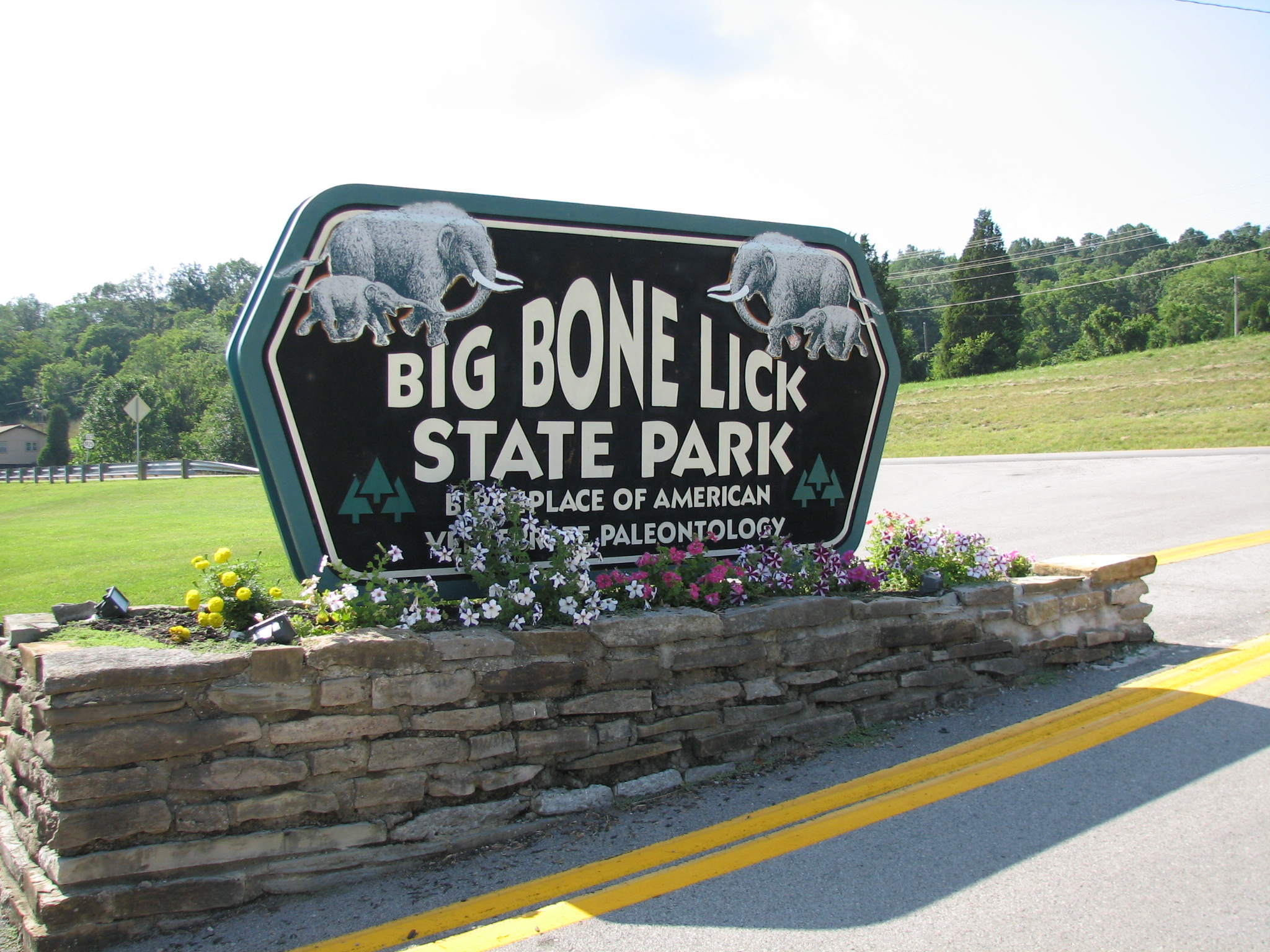
Big Bone Lick: The Birthplace of American Paleontology
In northern Kentucky, where salt seeps from the earth, generations of Ice Age megafauna came to lick minerals and get stuck in the mud. Mammoths, mastodons, giant ground sloths, and creatures with no modern equivalent bogged down in the swampy ground and died, their bones preserved in the muck. When European colonists arrived, they found a landscape littered with enormous bones - tusks taller than men, teeth the size of fists, leg bones too heavy to lift. They had no framework for extinction; they assumed these were giant humans or biblical creatures. Big Bone Lick became America's first paleontological site - the place where Benjamin Franklin pondered mastodons, where Thomas Jefferson hunted for living specimens, and where Americans first confronted the fact that their continent had once hosted monsters.
The Bones
French-Canadian explorer Charles Le Moyne discovered Big Bone Lick in 1739 and found a scene from a prehistoric nightmare: enormous bones scattered everywhere, tusks jutting from the earth, skulls too large to have belonged to any living animal. Subsequent expeditions collected more bones - mastodons, mammoths, ground sloths, horses, bison, and at least seven extinct species. The salt lick had acted as both attractant and trap: animals came for minerals, got stuck in boggy ground, and died. Over thousands of years, bones accumulated. The site became famous across Europe; specimens ended up in Paris, London, and private collections. Scientists debated what the bones meant - and whether these creatures might still live somewhere in the American interior.
The Presidents
Big Bone Lick obsessed the founding fathers. Benjamin Franklin examined bones and speculated about the creatures they came from. Thomas Jefferson was convinced that extinction was impossible - God wouldn't create animals only to destroy them. He believed mastodons and mammoths still roamed the unexplored West, and he instructed Lewis and Clark to watch for living specimens. In 1807, Jefferson sent William Clark (yes, that Clark) specifically to Big Bone Lick to collect bones for the new nation. Clark's specimens filled a room at the White House before transferring to museums. Jefferson never found his living mammoth, but Big Bone Lick helped establish American science.
The Science
Big Bone Lick is considered the birthplace of American vertebrate paleontology. The bones forced Americans to confront extinction - to accept that species could vanish entirely, that the past held creatures with no modern equivalents. Georges Cuvier, the French naturalist who established extinction as scientific fact, worked partly from Big Bone Lick specimens. The site demonstrated that North America had its own deep natural history, separate from Europe, full of monsters and mysteries. Modern excavations continue to find bones; the site hasn't been exhausted. The salt still seeps, the mud still preserves, and somewhere below the surface, more bones wait.
The Park
Big Bone Lick State Historic Site preserves the salt lick and interprets its paleontological significance. A museum displays fossils, explains the science, and tells the story of discovery. A small bison herd lives on the grounds - the closest living relative to some of the Ice Age megafauna. The original salt lick is accessible via trail; interpretive signs explain the geology. It looks peaceful now - a marshy area in Kentucky hills - but ten thousand years ago, mammoths died here. The transition from death trap to tourist attraction took millennia; the scientific importance remains unchanged.
Visiting Big Bone Lick
Big Bone Lick State Historic Site is located in Boone County, Kentucky, south of Cincinnati, Ohio. The park is open year-round; the museum has seasonal hours. Trails lead to the salt lick and bison viewing areas. The museum displays mammoth and mastodon fossils, including specimens from the site. Camping, picnicking, and fishing are available. Cincinnati is 25 miles north; Lexington is 80 miles south. The nearest airport is Cincinnati/Northern Kentucky International. The park is modest in scale but significant in history - this is where America met its prehistoric past, where bones raised questions that science eventually answered.
From the Air
Located at 38.88°N, 84.75°W in northern Kentucky, near the Ohio River. From altitude, Big Bone Lick State Historic Site appears as a small park in the hills south of Cincinnati - look for the bison enclosure, visible as a fenced area of grassland. The terrain is rolling Kentucky hills, forested and agricultural. The Ohio River is visible to the north; Cincinnati spreads along its banks. The salt lick itself is invisible from altitude - just a wet spot in a valley - but the bones beneath have changed how humans understand their continent. The interstate highway running nearby would have been a mammoth trail once, following the same corridors through the same valleys.