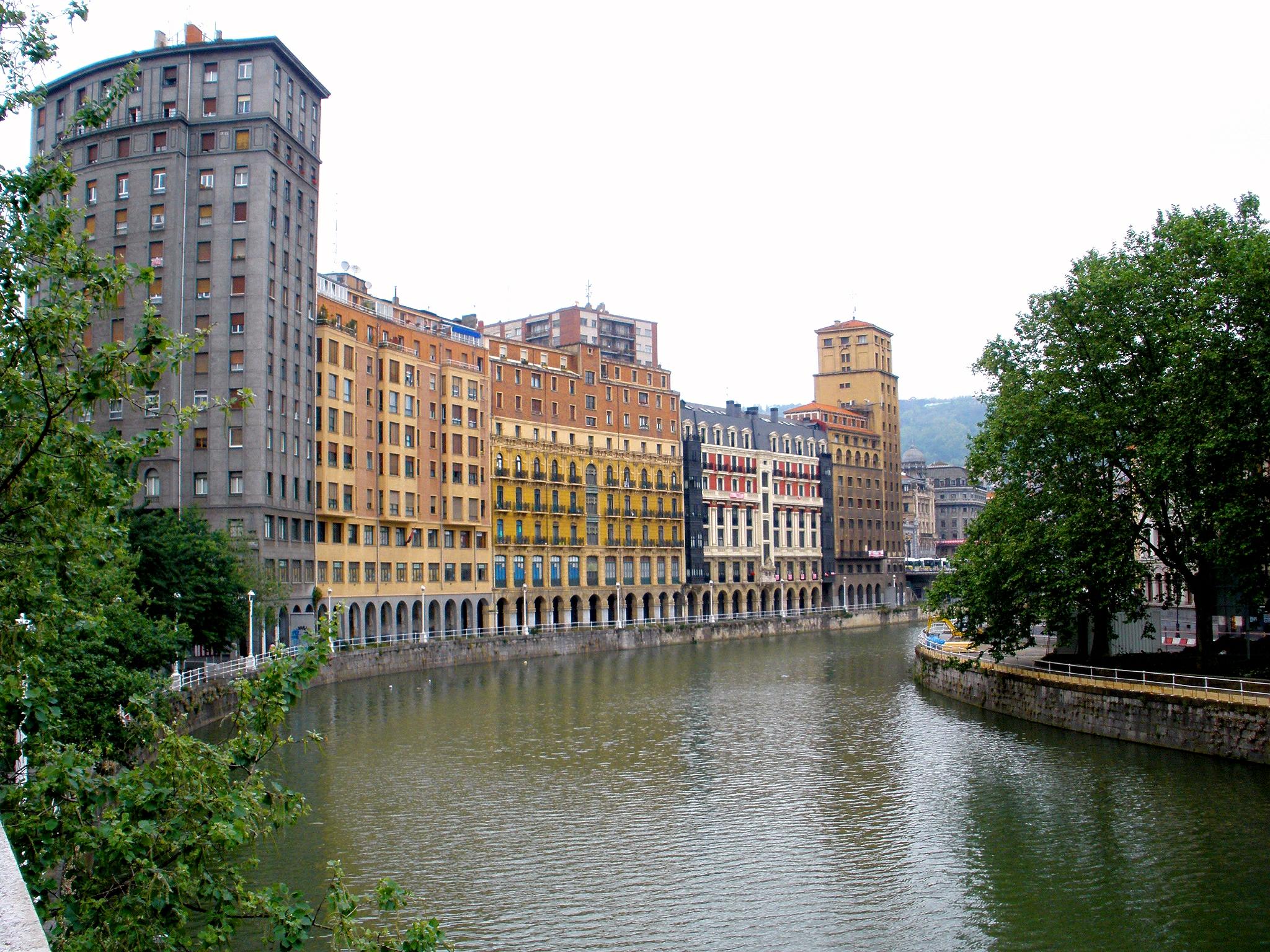
Bilbao
A museum saved this city. Bilbao, the Basque industrial capital of 350,000, was a declining steel town until Frank Gehry's Guggenheim opened in 1997 and turned it into a cultural destination overnight. Urbanists now invoke the 'Bilbao Effect' to describe their belief that iconic architecture can regenerate cities, and this is where it began - titanium curves rising along the Nervion River, drawing visitors who had never heard of Bilbao before. Yet the city is far more than its famous museum. Basque identity runs deep here, forged in a language and culture Spain's government once tried to suppress. Pintxos crowd every bar counter, cider pours from height, and Spain becomes something else entirely.
The Guggenheim
Frank Gehry's titanium-clad Guggenheim Museum made architectural pilgrimage mainstream. Its curves seemed impossible when they first rose along the Nervion in the mid-1990s. Light shifts across the building's skin hour by hour, and the river's reflections transform it again - this is sculpture containing museum, a structure secondary to nothing.
No one predicted the scale of impact. Visitors flooded in, development followed, and Bilbao's identity shifted fundamentally. Other cities raced to replicate the 'Bilbao Effect,' but few succeeded because the conditions here were specific: political will, strategic investment, a city hungry for reinvention. The Guggenheim is what Bilbao shows the world. What it contains matters less than what it is.
The Basque Identity
Bilbao is the largest city in the Basque Country, a region whose language predates every Indo-European tongue on the continent. Franco's dictatorship tried to erase Basque identity entirely. It failed. Street signs now display Basque alongside Spanish, cultural institutions promote traditions once banned, and a nationalism that sometimes turned violent before peace continues to shape politics.
Tourists notice the difference immediately. They cannot read the language. They don't recognize the sports. Traditions here belong to no other part of Spain. Athletic Club fields only Basque players - a policy maintained since its founding. Pelota courts host matches of a game most visitors have never seen. This is not performance for outsiders but daily practice for residents.
The Pintxos
Pintxos are Basque tapas: small plates lined along bar counters, waiting for customers to point and choose. Bilbaoans spend their evenings crawling from bar to bar, eating one or two plates at each stop. Competition among bars drives quality relentlessly upward. Tradition gives chefs room to create. Every evening, the social ritual of eating becomes the city's main event.
In the old town, pintxos tradition holds strongest - counters groaning under rows of skewered bites, regulars elbowing through crowds. Modern restaurants nearby reinvent the form with foams and tweezers. Both ends of the spectrum reflect a food culture that takes eating with dead seriousness. Ask anyone who has visited Bilbao what they remember most. Architecture fades; the tastes stay.
The Transformation
Bilbao's transformation extends far beyond one museum. Norman Foster designed the metro system. Santiago Calatrava gave the airport a soaring white canopy. Along the waterfront, regeneration reclaimed land from shuttered industry and turned it into public space. Decades of work and billions of euros reshaped what this city fundamentally is.
But the transformation remains incomplete. Some neighborhoods have yet to feel regeneration's reach. Tourism creates inequality even as it creates jobs, and cultural institutions cannot replace the industrial employment they displaced. Call the Bilbao Effect a success story - it is one - but acknowledge the complications woven through it.
The River
Until regeneration, the Nervion River was an industrial sewer. Shipyards lined its banks. The same waterway that made Bilbao's industrial wealth possible had been poisoned by the industries it fed. Now the Nervion is Bilbao's transformation made visible - cleaned, reclaimed, celebrated.
Walk the riverbank promenades and bridges connecting neighborhoods, and watch how the Guggenheim relates to the water it sits beside. The river is both spine and symbol of a city that once turned its back on its greatest natural feature. Bilbao faces the Nervion again, and the view has changed completely.
From the Air
Bilbao (43.26N, 2.93W) sits in a valley along the Nervion River, 14km from the Bay of Biscay in Spain's Basque Country. Bilbao Airport (LEBB/BIO) lies 9km north with one runway 10/28 (2,600m) and Calatrava's distinctive terminal. From above, the city fills the narrow valley and the Guggenheim stands out on the riverbank. The Nervion winds through the city center while surrounding mountains rise steeply on both sides. Expect oceanic weather - mild year-round but frequently rainy, with cloud and fog common. The Bay of Biscay drives much of the weather pattern. Rainfall keeps the landscape green in every season.