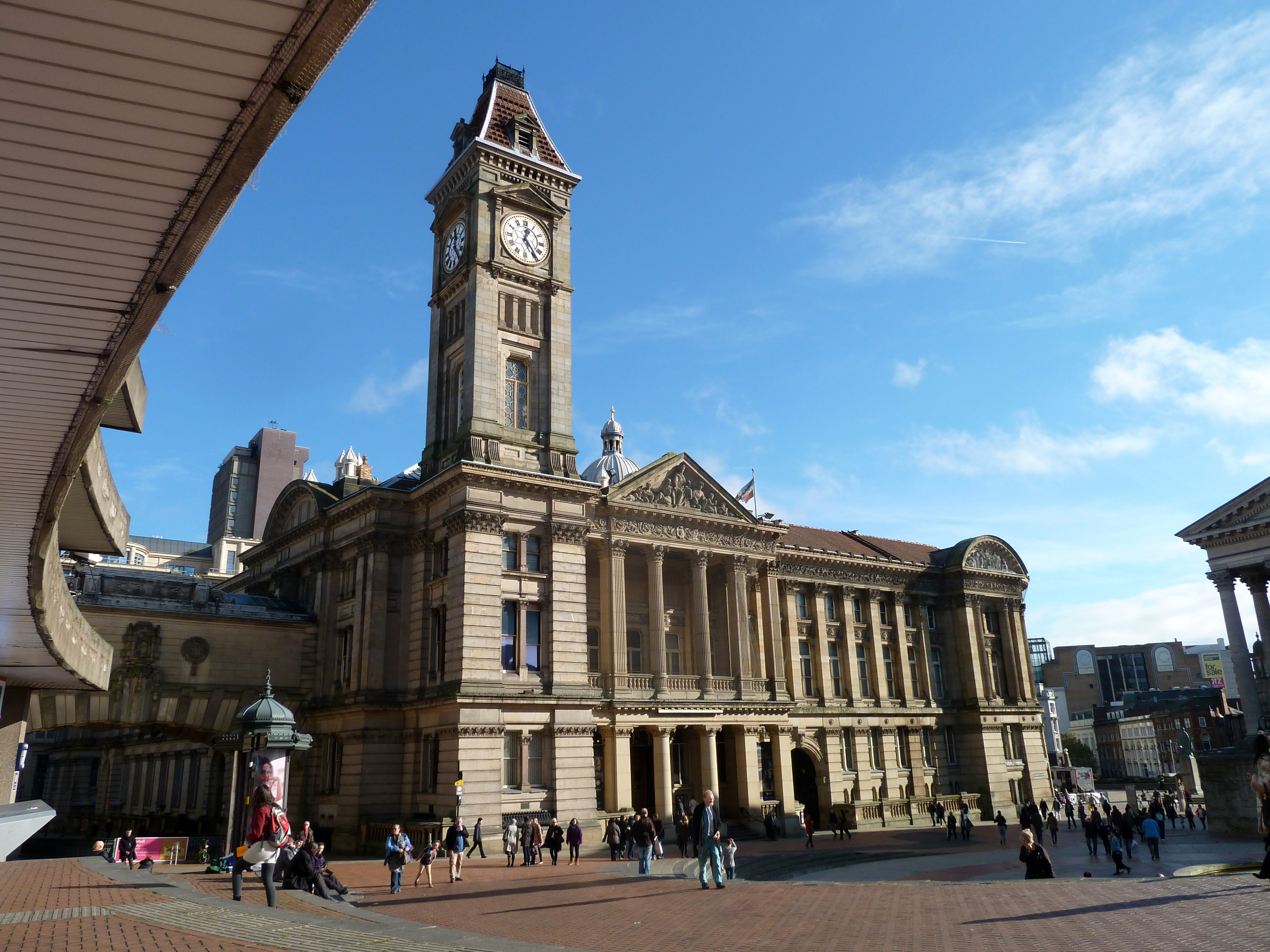
Birmingham Museum and Art Gallery
The inscription above the entrance sets the terms: "By the gains of Industry we promote Art." Birmingham Museum and Art Gallery was born from a distinctly Victorian conviction -- that the wealth generated by factories and foundries carried an obligation to elevate public taste. When Sir Richard and George Tangye donated 10,000 pounds to kickstart an art gallery in the 1880s, and the city council matched it with 40,000 more, the funding came not from arts budgets but from the municipal Gas Department, whose offices shared the building. It was a creative circumvention of laws limiting public spending on the arts, and it produced one of the finest collections in Britain.
A Gallery Above the Gas Works
The museum opened on November 28, 1885, when the Prince of Wales cut the ribbon on a building designed by Yeoville Thomason. It occupied an upper floor of the Council House, deliberately positioned above the Gas Department offices -- the revenue from gas effectively subsidizing the art above. The exterior announced civic ambition: a lofty portico topped by a pediment sculpted by Francis John Williamson, allegorizing Birmingham's contribution to the fine arts, and a clock tower that locals quickly dubbed "Big Brum." The metalwork throughout was produced by the Birmingham firm of Hart, Son, Peard & Co., including the distinctive cast-iron columns in the main gallery. By 1900, the Magazine of Art declared the collection "one of the finest and handsomest" in Britain. Until 1946, when property taxes were first directed toward acquisitions, every painting, every artifact, every sculpture entered the collection through the generosity of private donors.
The Pre-Raphaelite Treasury
The gallery's greatest distinction is its Pre-Raphaelite collection -- the largest in the world. This is not coincidental. Edward Burne-Jones was born in Birmingham in 1833, and the city's connection to the Brotherhood runs deep. The collection holds works spanning the movement's full trajectory: Dante Gabriel Rossetti's Proserpine, Ford Madox Brown's The Last of England, William Holman Hunt's The Finding of the Saviour in the Temple. The paintings span from the 14th century to the 21st, with holdings from the English, Dutch, Flemish, French, Italian, and Spanish schools. You can walk past a Botticelli, a Canaletto, a Rubens, and a Francis Bacon in the same afternoon. The range reflects Birmingham's self-image as a city that deserves to stand alongside London and Edinburgh in cultural ambition, even if its route to that collection ran through foundries rather than royal patronage.
Anglo-Saxon Gold
In 2009, a metal detectorist named Terry Herbert walked across a plowed field near the village of Hammerwich in Staffordshire and made the most significant Anglo-Saxon discovery since Sutton Hoo. The Staffordshire Hoard -- the largest collection of Anglo-Saxon gold ever found -- included elaborately decorated sword fittings, helmet pieces, and Christian crosses, many deliberately bent or broken. A dedicated gallery opened in November 2014 to display the hoard, shared between Birmingham and the Potteries Museum in Stoke-on-Trent. The museum also holds 28 pieces of Nimrud ivories from ancient Assyria, coins spanning from antiquity through the Middle Ages, and artifacts from ancient India, Egypt, Cyprus, and the Roman Empire.
Industry's Museum
Birmingham Museum and Art Gallery is run by Birmingham Museums Trust, the largest independent museums trust in the United Kingdom, which also operates eight other venues across the city. Entrance remains free -- honoring the original Victorian principle that art should be accessible to the workers whose labor funded it. The museum closed for extensive renovations and partially reopened in October 2024, with galleries including the Round Room, the Industrial Gallery, and the Bridge Gallery once again welcoming visitors. In the Round Room, Jacob Epstein's monumental sculpture The Archangel Lucifer stands guard -- a fitting sentinel for a collection that has always been about the tension between industrial power and artistic beauty. The museum stands as proof that a city built on metal and manufacturing can produce something as refined as anything born from courtly patronage.
From the Air
Located at 52.48N, 1.90W in Birmingham city center, adjacent to Chamberlain Square. The building is part of the Council House complex, identifiable by its clock tower 'Big Brum.' Nearest airports: EGBB (Birmingham, 6nm E), EGBO (Wolverhampton Halfpenny Green, 15nm W). Best viewed at 2,000-3,000 ft AGL within the city center context.