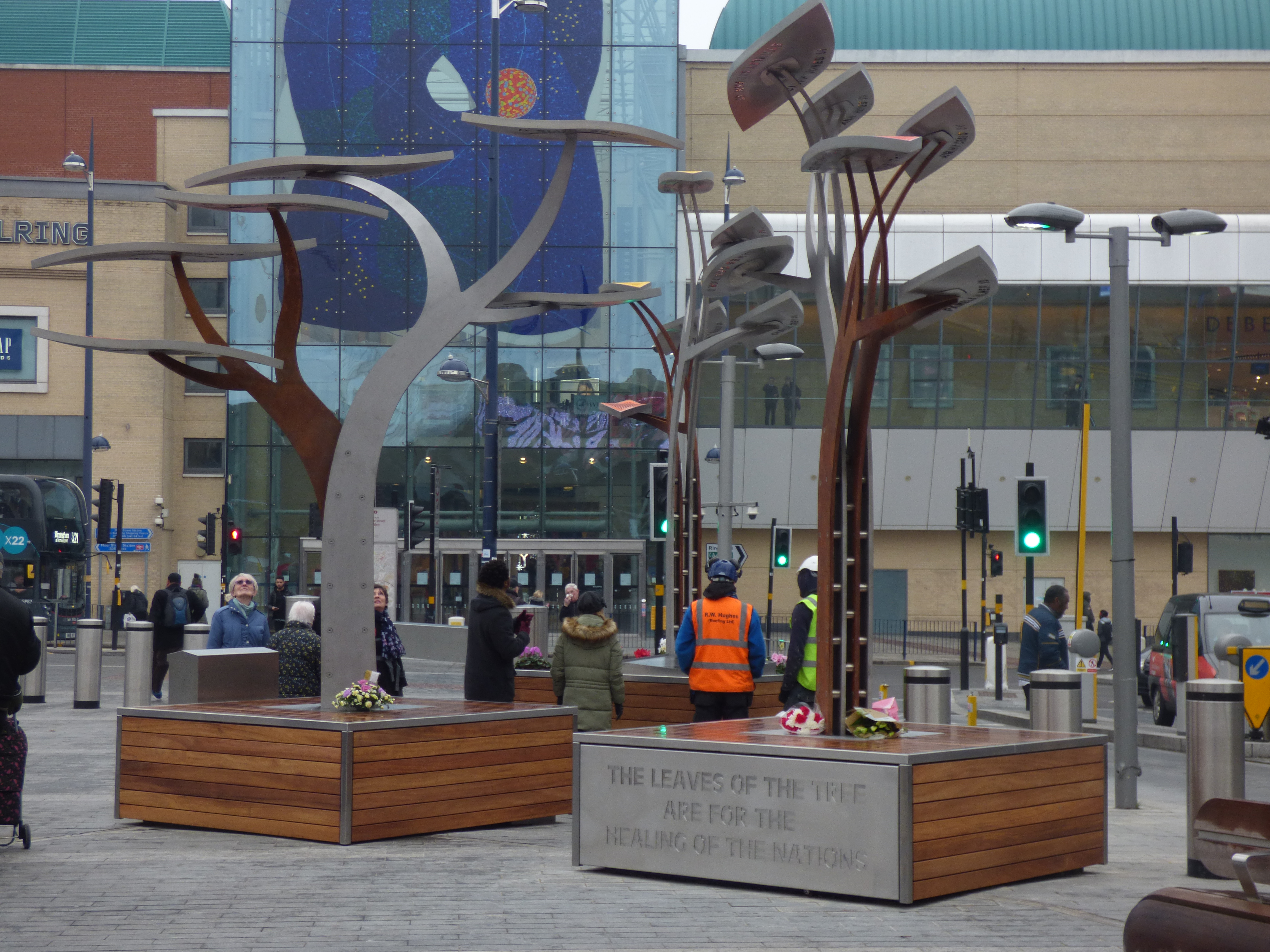
Birmingham pub bombings
At 8:17 on the evening of November 21, 1974, a bomb detonated in the Mulberry Bush pub on the ground floor of the Rotunda building in Birmingham's city center. Ten minutes later, a second bomb exploded in the Tavern in the Town, a basement bar on New Street. Twenty-one people died -- the youngest was seventeen, the oldest fifty-one. One hundred and eighty-two others were injured, many catastrophically. It was a Thursday evening. The pubs were full of young people starting their weekends. The Provisional IRA never officially claimed responsibility, though a former senior officer confessed to their involvement in 2014.
Six Minutes of Warning
A warning call was made to the Birmingham Post newspaper at approximately 8:11 p.m. -- just six minutes before the first bomb detonated. The caller used a recognized IRA code word, but the message was garbled and failed to specify the exact locations of the devices. The police had no time to evacuate. In 2017, one of the alleged perpetrators, Michael Hayes, claimed the bombings were never intended to kill civilians and that the deaths resulted from a delay in delivering the telephone warning. Whether that claim holds any truth does nothing for the families of the 21 people who died in those two ordinary pubs on an ordinary Thursday evening. The victims included factory workers, office clerks, students, and a young couple who had just gotten engaged.
The Birmingham Six
Within hours of the explosions, police arrested six Irish men at Heysham port as they were traveling to Belfast for the funeral of an IRA member. Hugh Callaghan, Patrick Joseph Hill, Gerard Hunter, Richard McIlkenny, William Power, and John Walker were charged with the bombings. In 1975, all six were convicted and sentenced to life imprisonment. They maintained their innocence from the start, insisting that police had coerced them into signing false confessions through severe physical and psychological abuse. For sixteen years, the British justice system refused to reconsider. Appeal after appeal was denied. The men's claims of abuse were dismissed, their alibis ignored.
Justice Undone
The case against the Birmingham Six slowly unraveled under public and legal pressure. Forensic evidence that had seemed conclusive at trial was discredited -- the Griess test used to detect explosives was shown to give positive results for substances as common as lacquer and old playing cards. In 1991, the Court of Appeal finally declared the convictions unsafe and unsatisfactory, and all six men walked free after sixteen years in prison. The episode is now recognized as one of the worst miscarriages of justice in British legal history, a case that damaged public trust in the police, the courts, and the criminal justice system itself. No one has ever been successfully prosecuted for the actual bombings. In 2016, an inquest was reopened into the deaths of the 21 victims; the jury returned its conclusions in April 2019, finding the 21 were murdered, that the bombs were planted by the IRA, and that an inadequate warning call contributed to the deaths.
A City's Wound
The Birmingham pub bombings were one of the deadliest acts of the Troubles, and the deadliest act of terrorism to occur in England between the Second World War and the 2005 London bombings. The immediate aftermath saw a surge of anti-Irish sentiment across Birmingham and beyond. The Prevention of Terrorism Act was rushed through Parliament within days, granting police sweeping new powers. A permanent memorial to the 21 victims stands in Birmingham's New Street, near the site of the Tavern in the Town. The families of the dead have spent decades seeking accountability -- not just for the bombings themselves, but for the failures of the investigation and the suffering of six innocent men who were made to pay for crimes they did not commit. The pub bombings left Birmingham with two wounds: the atrocity itself, and the injustice that followed.
From the Air
Located at 52.48N, 1.90W in Birmingham city center. The Rotunda, where the Mulberry Bush pub was located, is a distinctive cylindrical tower visible from altitude. New Street, the location of the Tavern in the Town, runs through the heart of the commercial district. Nearest airports: EGBB (Birmingham, 6nm E), EGBO (Wolverhampton Halfpenny Green, 15nm W). Best viewed at 2,000-3,000 ft AGL.