Bisbee: The Copper Town That Refused to Die
Bisbee was built on copper. From 1880 to 1975, the Copper Queen Mine and its successors extracted $6 billion worth of copper, gold, and silver from the Mule Mountains - making Bisbee, for a time, the largest city between St. Louis and San Francisco. The wealth built Victorian architecture up canyon walls, created a cosmopolitan community of immigrants from 20 countries, and eventually generated labor conflicts that culminated in the infamous Bisbee Deportation of 1917. When the copper ran out, Bisbee didn't die. Artists, retirees, and seekers of affordable picturesque filled the houses miners abandoned. The copper town became an art town, its Victorian buildings saved by poverty then valued by taste.
The Copper
The Copper Queen Mine began operations in 1880 and ran continuously for nearly a century. The ore body proved massive - copper, gold, silver, lead, and zinc in quantities that justified a city. Phelps Dodge Corporation dominated the industry, employing thousands in underground mines and, later, in the enormous Lavender Pit open-pit operation. By 1910, Bisbee was the largest city in Arizona. The wealth was real: grand buildings, theaters, hotels, and the infrastructure of permanent settlement. The extraction was equally real: tunnels honeycombed the mountains, and the Lavender Pit consumed an entire hill.
The Deportation
On July 12, 1917, Bisbee's sheriff and 2,000 vigilantes rounded up 1,286 miners - members of the Industrial Workers of the World and suspected sympathizers - loaded them into cattle cars, and shipped them to the New Mexico desert. The Bisbee Deportation was labor suppression at gunpoint, justified by wartime hysteria and mining company interests. The deportees were abandoned without food or water; the Army eventually rescued them. No one was ever convicted for the kidnapping. The incident became a landmark in American labor history, a reminder of how far capital would go to suppress organizing.
The Decline
Copper prices fluctuated; ore grades declined; the Lavender Pit reached its limits. Phelps Dodge ended operations in Bisbee in 1975, and the town that had reached 25,000 residents shrank to a few thousand. The houses built for miners stood empty. The commercial district hollowed. Bisbee seemed destined for ghost town status, another Arizona mining camp returning to desert. But the architecture remained - Victorian structures climbing canyon walls, built to last, now available for pennies on the dollar to anyone willing to live in a dying town.
The Rebirth
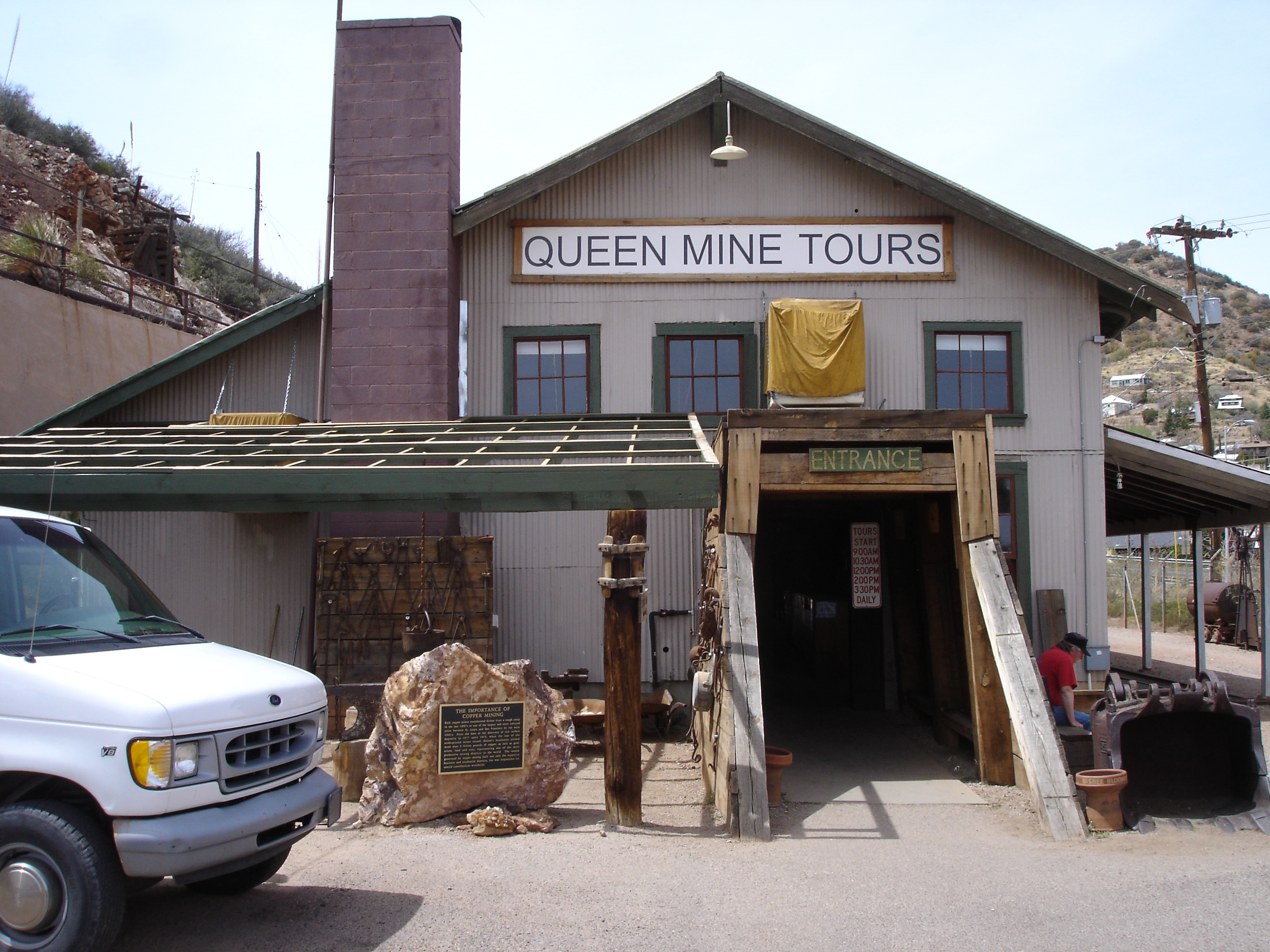
Artists came first. The cheap rents, dramatic setting, and surviving architecture attracted painters, sculptors, and craftspeople in the 1970s and 1980s. Galleries opened in abandoned storefronts. Restaurants followed. The town that corporate mining had built became an art colony, its working-class history preserved in buildings now housing cafes and studios. LGBT residents found Bisbee welcoming; the community became one of Arizona's most liberal. Today Bisbee is tourism and art, its mining past visible in the Lavender Pit and Queen Mine tours but no longer defining the economy. The copper town survived by becoming something else entirely.
Visiting Bisbee
Bisbee is located in southeastern Arizona, roughly 90 miles southeast of Tucson via Interstate 10 and Highway 80. The town is walkable but hilly - very hilly. The historic district features Victorian architecture, galleries, shops, and restaurants. The Queen Mine Tour descends into the underground workings that built the town. The Lavender Pit overlook provides views of the open-pit operation. The Bisbee Mining and Historical Museum covers the copper era. Lodging includes historic hotels and bed-and-breakfasts. The town is cooler than the surrounding desert, at 5,300 feet elevation. Allow a full day to explore; the charm reveals itself gradually.
From the Air
Located at 31.45°N, 109.93°W in the Mule Mountains of southeastern Arizona, 90 miles southeast of Tucson. From altitude, the Lavender Pit dominates - a massive open-pit mine visible as a terraced bowl in the mountains. The town itself clings to canyon walls, Victorian buildings visible as dense clusters in narrow valleys. The Mexican border is 10 miles south. The high desert terrain extends in all directions, with Bisbee an island of development in otherwise empty country. The contrast between the Lavender Pit's industrial scale and the town's Victorian charm is visible from any altitude - what extraction did to the mountains, what humans built with the proceeds.