Bisbee Massacre
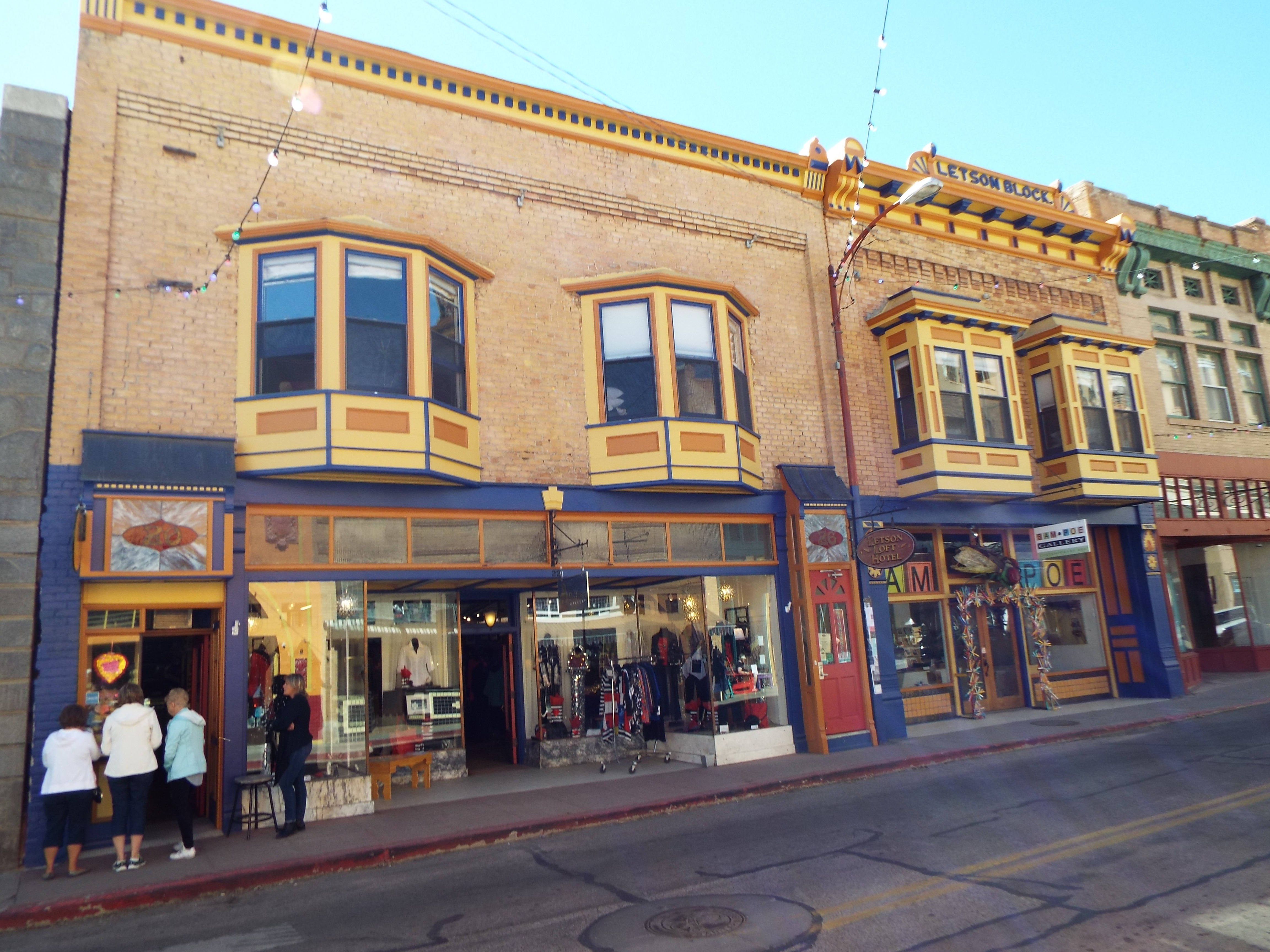
On the evening of December 8, 1883, John Heath opened his new dance hall behind the Goldwater & Castaneda Mercantile store in Bisbee, Arizona. It was no coincidence. Heath knew that the Copper Queen Mine's $7,000 payroll was supposed to arrive at that store the same day, and he had arranged for five members of the Cochise County Cowboys to rob it. They timed the heist wrong. The payroll had not yet arrived. What followed was a bloodbath that netted the outlaws less than $3,000 and cost five innocent people their lives, launching one of the Old West's most dramatic pursuits of justice.
Death on Main Street
"Tex" Howard made a critical mistake: he forgot to wear a mask. With "York" Kelly and "Billy" Delaney, he entered the mercantile while "Red" Sample and "Big Dan" Dowd stood guard outside with Winchester repeating rifles. Inside, they forced open the safe only to find the payroll absent. They took what cash they could, perhaps $800, perhaps $3,000, along with a gold watch. Outside, the situation unraveled. When assayer J.C. Tappenier emerged from the Bon Ton Saloon and refused orders to retreat, they shot him in the head. Deputy Sheriff D. Tom Smith, eating dinner across the street, ran out and identified himself as a lawman. "Then you are the one we want!" someone shouted, and killed him. Annie Roberts, pregnant and standing in the doorway of her restaurant, took a bullet that shattered her spine. Freighter John A. Nolly fell with a chest wound. By night's end, five people, including Roberts' unborn child, were dead.
The Hunt
Howard's bare face made identification easy. Deputy Sheriff William "Billy" Daniels pieced together the other names and began tracking. Daniel "York" Kelly was caught near Deming, New Mexico. Howard and Sample blundered by returning to their old haunts in Clifton, Arizona, where a bartender named Walter Bush turned them in. The pursuit crossed international borders: Dan Dowd was captured in Los Corralitos, Sonora, Mexico, while William Delaney was picked up in Minas Prietas after getting into a brawl with a mine foreman. Mexican authorities happily surrendered both for the reward. John Heath, the alleged mastermind, remained in Bisbee, attempting to misdirect the posse by pointing out where the outlaws' horse tracks had split.
Two Trials, Two Verdicts
The trial in Tombstone moved with frontier efficiency. Beginning February 17, 1884, it lasted three days. Four of the five robbers had been recognized during the crime. The jury deliberated one hour and returned guilty verdicts for first-degree murder. Daniel Kelly reportedly remarked, "Well boys, hemp seems to be trumps." They were sentenced to hang. John Heath requested a separate trial, which began February 12. The prosecution had no eyewitness placing him at the robbery. County Attorney Marcus Aurelius Smith found a prisoner named Sergeant L.D. Lawrence willing to testify that he had overheard Heath discussing the crime. The jury, split between conviction and acquittal, compromised: second-degree murder, life in prison at Yuma Territorial. Lawrence, three months later, received only two years for his own killing of two men, represented by Smith's private law firm.
Mob Justice at the Telegraph Pole
Life imprisonment did not satisfy Cochise County. On February 22, 1884, a lynch mob of 50 to 150 men removed John Heath from jail. They marched him down Toughnut Street and hanged him from a telegraph pole at the corner of Second and Toughnut. Heath strangled slowly until he stopped moving, then hung for half an hour before being cut down. Someone nailed a placard to the pole. Dr. George E. Goodfellow, the county coroner who had witnessed the hanging, delivered his verdict with characteristic frontier wit: Heath died from "emphysema of the lungs which might have been, and probably was, caused by strangulation, self-inflicted or otherwise." Heath's body was shipped home to Terrell, Texas, buried in an unmarked grave.
The Grandstand and the Gallows
The execution of the remaining five outlaws on March 28, 1884, became a public spectacle. Sheriff Ward sent formal invitations. A local businessman built a grandstand outside the jailyard and sold tickets for $1.50 per seat. Nellie Cashman, a local philanthropist, found this ghoulish commerce disgusting. When the sheriff refused to act, she and her recruits chopped down the grandstand the night before, injuring seven people in the melee. The next morning, about 1,000 people watched as the five men, dressed in matching black suits and having converted to Catholicism in jail, walked to a specially built gallows. "Let her go!" called Daniel Kelly through his hood. At 1:18 p.m., all five dropped together. Most died quickly. Big Dan Dowd strangled for several minutes. Cashman was not finished: learning that a medical school planned to exhume the bodies, she hired miners to guard the graves for ten days. Today, a joint gravestone marks their resting place in Tombstone's Boothill Graveyard, a tourist attraction where visitors photograph the final chapter of the Bisbee Massacre.
From the Air
Located at 31.44°N, 109.92°W in Bisbee, Arizona. The historic mercantile building where the robbery occurred still stands as the Letson Loft Hotel on Main Street. Tombstone, where the trials and executions took place, lies 25nm northwest. Nearest general aviation: Bisbee Municipal Airport (P04), 3nm south. Commercial: Tucson International (KTUS), 90nm northwest. Boothill Graveyard with the outlaws' graves is visible at the edge of Tombstone from low altitude.