Bishop Museum
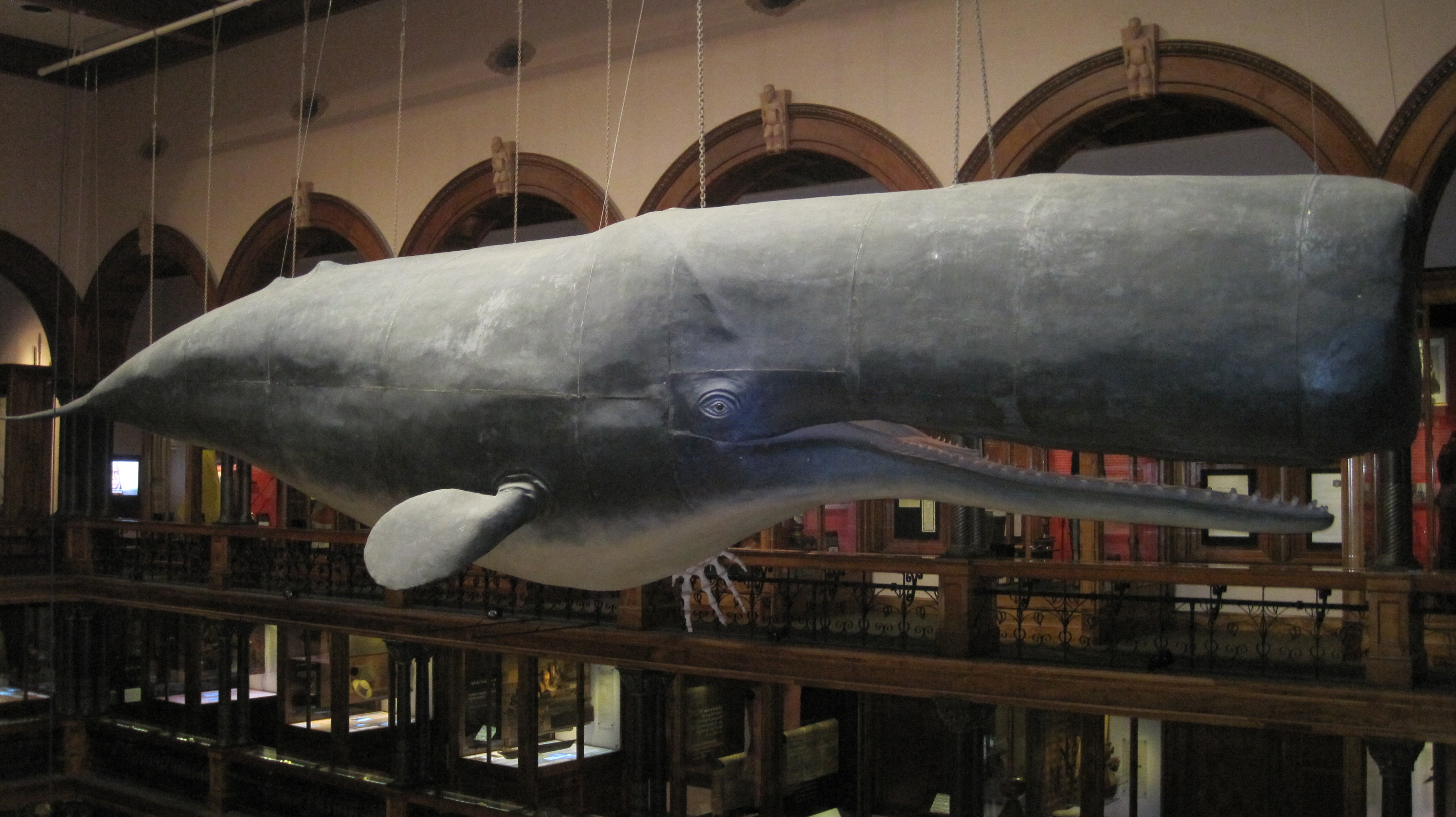
The koa wood display cases lining Hawaiian Hall are now worth more than the buildings that house them. That detail says something essential about the Bernice Pauahi Bishop Museum: what began as one man's memorial to his wife has become irreplaceable, a repository of Polynesian heritage so vast and so deep that no dollar figure captures it. Founded in 1889 in Honolulu's Kalihi district, the museum holds over 24 million natural history specimens and the world's largest collection of Polynesian cultural artifacts. A sperm whale skeleton hangs above the central gallery. Feathered royal cloaks glow behind glass. And somewhere in its archives rest the personal papers of Hawaiian queens.
A Love Letter in Stone
Charles Reed Bishop built the museum for a woman who could not see it. His wife, Princess Bernice Pauahi Bishop, was the last legal heir of the Kamehameha Dynasty, the royal line that had ruled the Kingdom of Hawaii from 1810 to 1872. She died in 1884, leaving behind a will that created Kamehameha Schools for Native Hawaiian children and a collection of royal heirlooms that her husband needed a building to protect. Bishop chose the boys' campus of those very schools as the site and hired William Tufts Brigham as the first curator. By 1898, Hawaiian Hall and Polynesian Hall rose in Richardsonian Romanesque splendor, and the Pacific Commercial Advertiser called them "the noblest buildings of Honolulu." Both are now listed on the National Register of Historic Places. The museum opened to the public in June 1891, its library consisting of just a few shelves of books in what is today the Picture Gallery.
Voyages of Discovery
In 1924, the museum sent scientists to sea aboard the Kaimiloa, a four-masted barquentine outfitted by millionaire Medford Ross Kellum. The vessel was a floating laboratory, stocked with bottles, crates, and gallons of preservatives for the insects and plant specimens the team would collect across the Pacific. Botanist Gerrit P. Wilder, ethnologist Kenneth Emory, and writer Armstrong Sperry joined the expedition, which aimed to trace the origins and migrations of the Polynesian people, chart ocean currents, and catalog the natural history of remote island groups. A decade later, the museum sponsored the 1934 Mangarevan expedition to the farthest southeastern islands of Polynesia. These voyages embedded the Bishop Museum in the scientific fabric of the Pacific, transforming it from a family memorial into a research institution with global reach.
Fourteen Million Wings
Pauahi Hall is closed to the public, but behind its doors lives one of the largest insect collections on Earth. The J. Linsley Gressit Center for Research in Entomology houses roughly 14 million prepared specimens of insects and arthropods, including over 16,500 primary types -- specimens that define what a species is. It ranks as the third-largest entomology collection in the United States and the eighth-largest in the world. The museum's broader natural history holdings exceed 24 million specimens in total. Since 1992, the Hawaii Biological Survey has operated as a program of the museum, cataloging every plant and animal found in the Hawaiian Islands and maintaining a reference collection of more than 4 million specimens. The Jhamandas Watumull Planetarium, also on campus, holds the distinction of being the oldest planetarium in Polynesia.
Bringing the Gods Home
In November 2017, Christie's Paris auctioned a 20-inch wooden ki'i described as depicting Ku ka'ili moku, the Hawaiian war god, dating to roughly 1780 to 1820. Salesforce CEO Marc Benioff purchased it for $7.5 million, far exceeding the estimate of $2.3 to $3.4 million, and donated it to the Bishop Museum in May 2018. "It belonged in Hawaii for the education and benefit of its people," Benioff said. The gesture captured something the museum has always represented: the idea that Hawaiian cultural heritage belongs in Hawaiian hands. Queen Liliuokalani deposited her personal papers here. Royal genealogical records fill the archives alongside 50,000 library volumes. The museum's collection of published diaries, narratives, and memoirs from eighteenth- and nineteenth-century Hawaii constitutes an irreplaceable record of a kingdom that no longer exists in political form but persists powerfully in cultural memory.
Still Growing
When Kamehameha Schools moved to its new campus in Kapalama in 1940, the museum expanded across the original site. The Castle Memorial Building, dedicated in 1990, brought traveling exhibitions from institutions worldwide. The Richard T. Mamiya Science Adventure Center, which opened in 2005, turned marine science and volcanology into hands-on experiences for children. From 1988 until 2009, the museum also administered the Hawaii Maritime Center in downtown Honolulu, built on a former royal pier where artifacts of the Pacific whaling and steamship industries once drew visitors from across the Pacific Rim. On the Big Island, the Amy B.H. Greenwell Ethnobotanical Garden specializes in indigenous Hawaiian plant life. Since 1920, the museum has served as the secretariat of the Pacific Science Association, anchoring its role as a hub not just for Hawaiian culture but for scientific inquiry across the entire Asia-Pacific region.
From the Air
Located at 21.333N, 157.871W in the Kalihi district of Honolulu, Oahu. The museum campus is visible from low altitude as a cluster of historic buildings northwest of downtown Honolulu. Nearest airport is Daniel K. Inouye International (PHNL), approximately 3 nm to the west. Hickam Field (PHIK) is also nearby. Best viewed from 2,000-3,000 ft AGL on approach from the south or west.