The Arrival of the Black Death: When Ships Brought the Apocalypse
In October 1347, twelve Genoese galleys limped into the harbor of Messina, Sicily. Most of the sailors were dead. The survivors were dying - covered in black boils oozing blood and pus, delirious with fever, dead within days. The people of Messina tried to drive the ships away, but it was too late. The rats had already come ashore. The plague had arrived in Europe. Over the next five years, the Black Death would kill between 75 and 200 million people - perhaps a third to half of Europe's population. It was the most devastating pandemic in human history, and it began with twelve ships returning from the Black Sea.
The Origin
The Black Death originated in Central Asia - probably modern-day Kyrgyzstan, where cemetery records show a spike in deaths from 'pestilence' around 1338-1339. It spread along the Silk Road trade routes, reaching Crimea by 1346.
Genoese merchants had a trading post at Caffa (modern Feodosia) in Crimea. When Mongol forces besieged the city, they catapulted plague-infected corpses over the walls - perhaps the first use of biological warfare in recorded history. The Genoese fled by ship, carrying the plague with them. Wherever they stopped, the plague followed.
The Ships
The death ships reached Messina in early October 1347. The Sicilians were horrified - the sailors were already dying, covered in black buboes that gave the disease its name. Authorities ordered the ships to leave, but the rats and fleas that carried the disease had already gone ashore.
Within days, Messina was dying. The plague spread through the city like fire through dry grass. People fled, carrying the infection with them. By winter, the plague had reached mainland Italy. By spring, it was in France. By summer, it had crossed to England. The apocalypse moved faster than people could run.
The Death
The Black Death killed in three forms. Bubonic plague attacked the lymph nodes, causing the characteristic black swellings. Pneumonic plague attacked the lungs, spreading through coughs and breath. Septicemic plague attacked the bloodstream, killing within hours. All three were almost always fatal.
The death toll was staggering. Entire villages were wiped out. Cities lost half their population. Social order collapsed. Bodies piled in the streets because there was no one to bury them. Chronicles describe streets silent except for the sound of carts collecting the dead. The living envied the dead.
The Search
The medieval world had no understanding of contagion. The plague was blamed on divine punishment, planetary alignment, earthquakes releasing poisonous vapors, and, notoriously, on Jews - who were massacred across Europe despite papal condemnation. Flagellants roamed the countryside, whipping themselves bloody to appease God.
Doctors were helpless. The famous plague masks with bird-like beaks were filled with herbs and flowers, based on the belief that bad smells caused disease. Nothing worked. The only effective strategy was quarantine - Venice began isolating ships for 40 days, giving us the word 'quarantine' from the Italian 'quaranta giorni.'
The Aftermath
By 1353, the first wave of the Black Death had passed, leaving perhaps 50 million dead in Europe alone. But the plague returned again and again over the following centuries, killing millions more. It didn't truly end until the 18th century.
The social and economic effects were revolutionary. With so many dead, labor became valuable. Serfdom weakened. Wages rose. The church's authority declined - God's representatives had been helpless against the plague. Some historians argue the Black Death created the conditions for the Renaissance and the rise of modern Europe. A third of the continent died, and the survivors built a new world.
From the Air
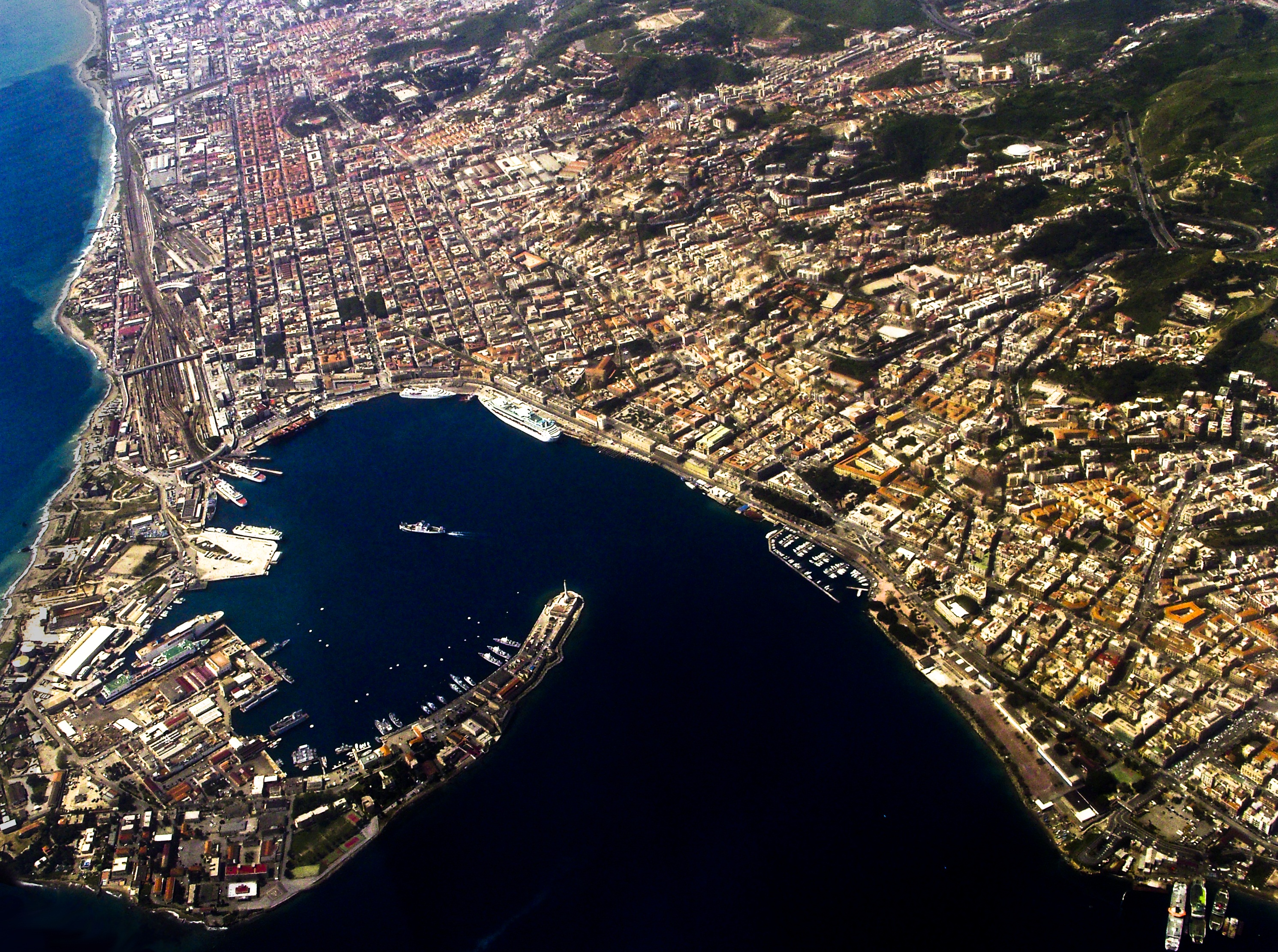
Messina (38.19N, 15.56E) lies on the northeast tip of Sicily, across the strait from mainland Italy. Catania Fontanarossa Airport (LICC) is 90km south. The harbor where the plague ships landed is still the city's main port. The terrain is hilly, with the Strait of Messina visible. Weather is Mediterranean - hot dry summers, mild wet winters.