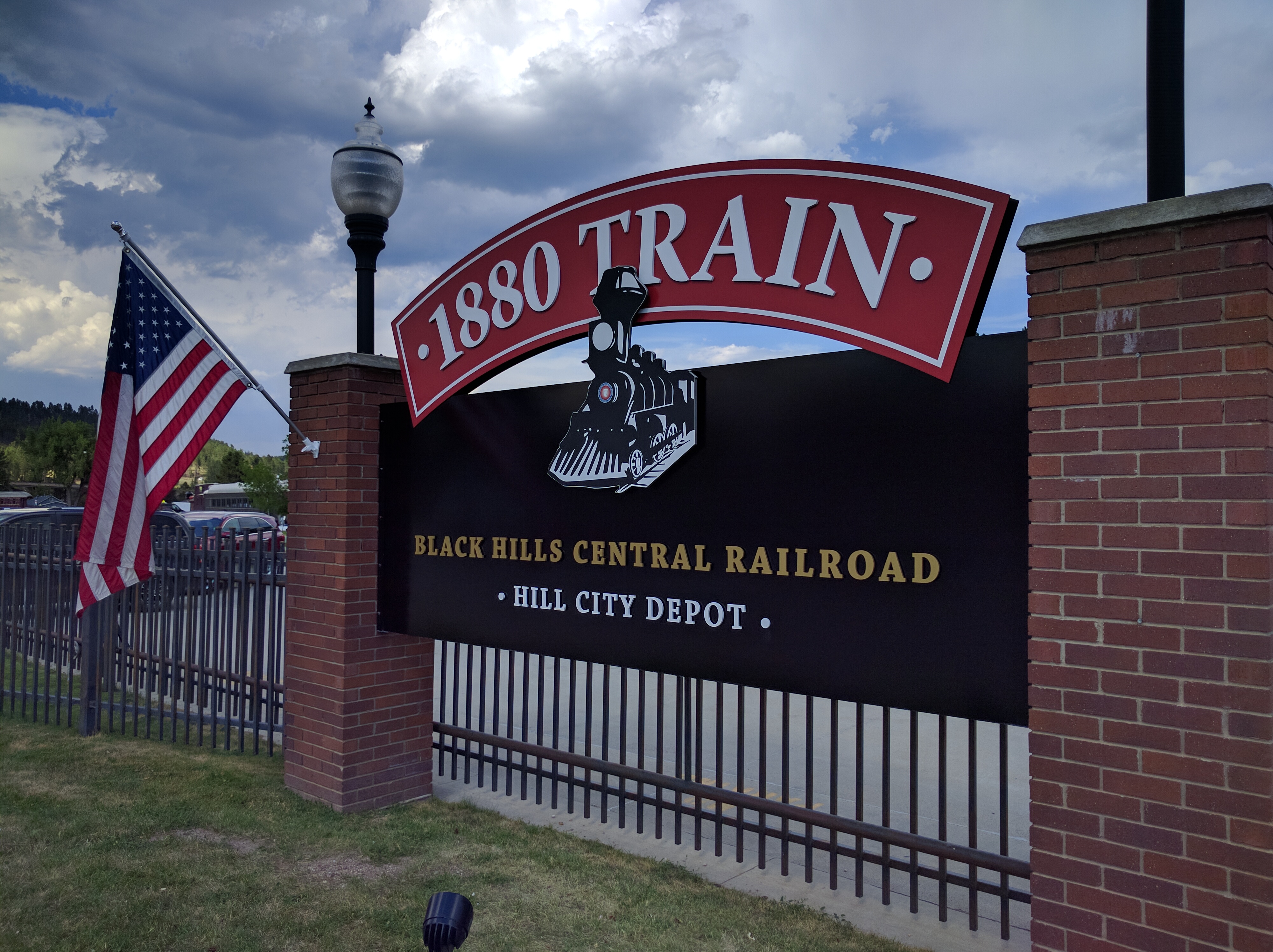
Black Hills Central Railroad
The whistle echoes through the pines like a ghost from 1880. In the Black Hills of South Dakota, steam locomotives that rolled off the Baldwin Locomotive Works assembly line nearly a century ago still haul passengers through mountain scenery, their rhythmic chuffing a living connection to the age when railroads built the American West. The Black Hills Central Railroad runs between Hill City and Keystone, just miles from Mount Rushmore, and it exists because two men in 1956 believed that the steam locomotive was too important to let die.
Born from Nostalgia
William Heckman and Robert Freer were steam enthusiasts with a vision. In 1956, as diesel locomotives replaced steam across America, they promoted having at least one working steam railroad for, as they put it, boys of all ages who share America's fondness for the rapidly vanishing steam locomotive. They chose the Keystone Branch of the Burlington Railroad, adjacent to Mount Rushmore, the nation's most patriotic landmark. Their concept was specific: summer steam train operations with 1880-period equipment. The railroad they created would eventually be added to the National Register of Historic Places in 2003.
Narrow Gauge Dreams
Heckman and Freer proposed something unusual: a three-foot narrow gauge line, built by laying a third rail on five miles of standard gauge track. The Chicago, Burlington and Quincy Railroad supported the idea and contributed something remarkable, a complete 1880s-styled Deadwood Central trainset that had been assembled for the Chicago Railroad Fair of 1948-49. This gave the new heritage railroad authentic vintage equipment from the start. The dual-gauge line ran from Hill City to a new terminus with a wye, which they named Oblivion, a fitting name for a place dedicated to preserving what the modern world was leaving behind. When Burlington Northern relocated the line in the 1970s, the railroad temporarily ran trains out of Custer, 15 miles south, before returning to the Keystone branch in 1977. In 1981, the railroad acquired the trackage from Burlington Northern after freight traffic disappeared. The last mile was extended into Keystone itself in 2001.
Iron Horses Still Running
The railroad maintains a fleet of Baldwin steam locomotives, each with its own story. Engine 110, built in 1928, and Engine 108, built in 1926, remain operational, their boilers still producing the steam that turns their wheels. Engine 104, also from 1926, awaits service, while Engine 103 from 1922 is stored awaiting restoration. Engine 7, built in 1919, stands on display at the Hill City depot, where the South Dakota State Railroad Museum occupies adjacent land. A 1956 GP9 diesel locomotive handles backup duties when needed, and a 1940 Whitcomb diesel provides switching work, but steam remains the star of the show. The Black Hills Central has appeared on television, including the Gunsmoke episode Snow Train and General Hospital, as well as the TNT miniseries Into the West and the film Orphan Train. From May through early October, the trains run their scenic route through the pines, and the smell of coal smoke and hot oil fills the mountain air.
The High Country Line
From above, the railroad traces a thin line through dense ponderosa pine forest, climbing through terrain that challenged the original railroad builders. Hill City sits in a valley at 5,000 feet, and Keystone nestles in the canyon below Mount Rushmore. The route follows the old Keystone Branch, which once carried gold ore and timber but lost its freight traffic over the decades. Today, passengers ride open-air cars and vintage coaches through the same scenery that prospectors saw during the Black Hills Gold Rush. The stone faces of Rushmore are visible from parts of the route, four presidents carved into granite watching as trains powered by century-old technology climb past.
From the Air
Located at 43.93N, -103.57W in the Black Hills of South Dakota. The railroad runs between Hill City and Keystone, just west of Mount Rushmore. Nearest major airport is Rapid City Regional (KRAP), approximately 25nm east. Elevation along the route is 5,000-5,500 feet. From altitude, look for the clearing at Hill City and trace the rail line southwest toward Keystone. Mount Rushmore is visible to the east. The dark green of the Black Hills National Forest surrounds the route.