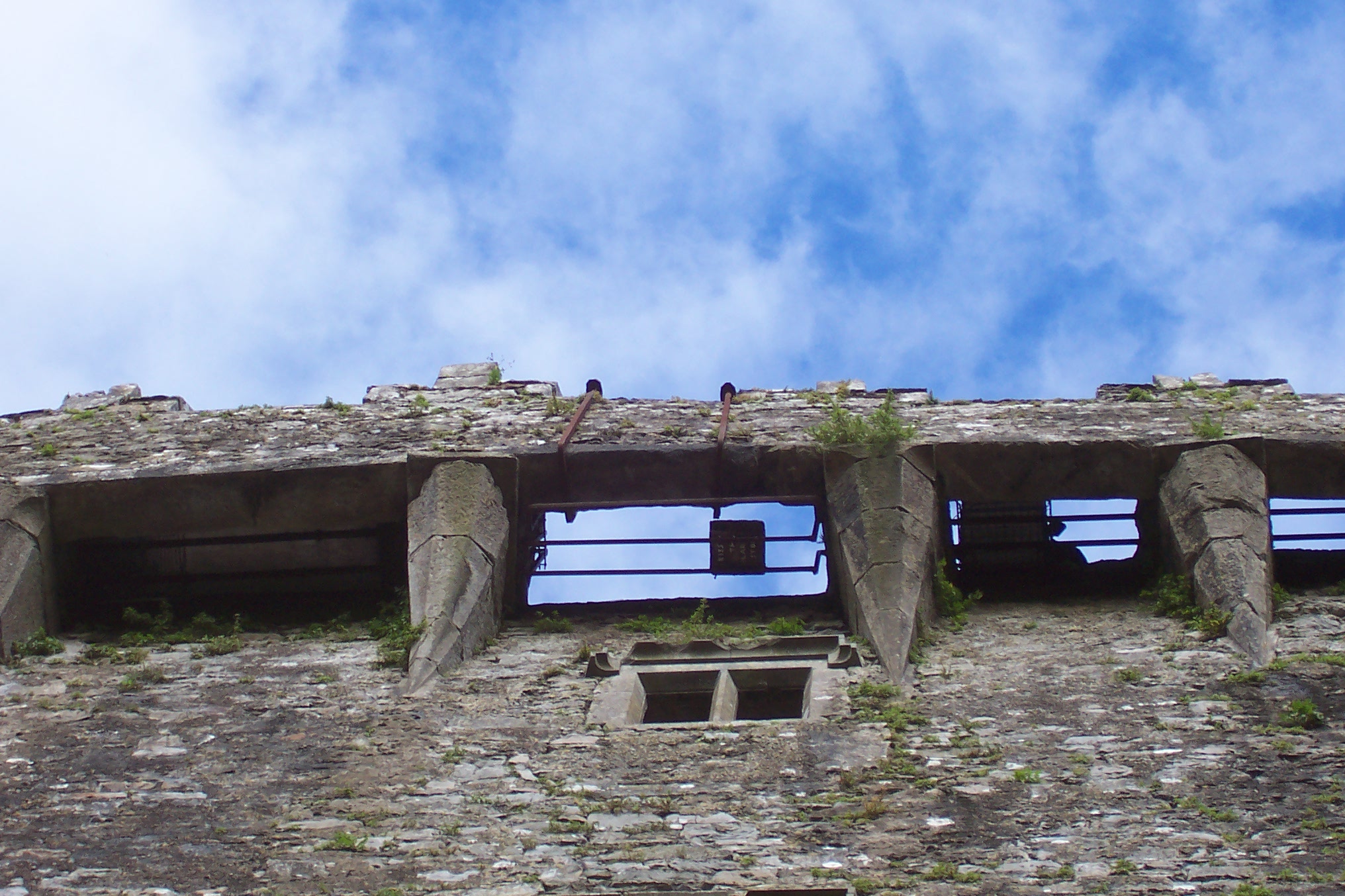
Blarney Stone
To kiss it, you have to lie on your back, lean out over a sheer drop, and press your lips to the underside of a castle battlement while someone holds your legs. Millions of people have done this. The Blarney Stone, a block of Carboniferous limestone built into the parapet of Blarney Castle in County Cork, has been promising visitors the gift of eloquent speech since at least the late eighteenth century. Whether the magic works is debatable. That people keep coming -- bending backward over a void for a legend they half-believe -- says something about the human appetite for a good story, which may be the most Irish thing about the whole enterprise.
A Goddess and a Lawsuit
The most enduring origin story involves Cormac Laidir MacCarthy, who built the current Blarney Castle and found himself entangled in a fifteenth-century lawsuit he feared losing. He appealed to Cliodhna, a goddess from Irish mythology, who told him to kiss the first stone he encountered on his way to court. He did, argued his case with sudden eloquence, and won. MacCarthy then set the stone into the castle parapet, where it has remained since 1446. The tale gives the Blarney Stone its defining characteristic: not merely the gift of speech, but specifically "the ability to deceive without offending." In a country where language has always been both weapon and shield, that particular talent carries weight.
The Queen's Exasperation
A rival legend places the stone's fame in Elizabethan politics. Queen Elizabeth I demanded that Cormac MacDermot MacCarthy, Lord of Blarney, surrender his traditional land rights. MacCarthy traveled to court, certain he would fail -- he was not, by his own estimation, a persuasive speaker. An old woman along the road told him to kiss a particular stone in the castle. He returned to court, spoke with such charm that Elizabeth relented, and kept his lands. The word "blarney" itself entered the English language as something richer than flattery. As Irish politician John O'Connor Power defined it: "Blarney is something more than mere flattery. It is flattery sweetened by humour and flavoured by wit."
Local Limestone, Not Scottish Import
Various folk legends claim the stone was originally the Stone of Scone or the Stone of Jacob, brought from Scotland to Ireland. These stories are colourful but geologically wrong. In 2014, geologists at the University of Glasgow analysed the stone's chemical signature and found it matches Carboniferous limestone native to the Blarney area. The stone never traveled anywhere. It is, quite literally, a local product. The legend itself is younger than many visitors assume. Writer William Henry Hurlbert noted in 1888 that the tradition seemed less than a hundred years old at that time, and the earliest known written reference appears in Francis Grose's A Classical Dictionary of the Vulgar Tongue, printed in 1785.
Pop Culture and Strange Pilgrimages
The stone's fame has traveled far beyond County Cork. Texas Tech University has displayed what it claims is a fragment of the Blarney Stone on its campus since 1939, though how this was verified remains a mystery. In a 1946 Sherlock Holmes radio dramatisation, a man attempting to kiss the stone falls to his death -- his boots had been surreptitiously greased. Chuck Palahniuk's Fight Club includes a scene where the narrator urinates on the stone during a post-college trip to Ireland. Traditional Irish folk song "The Blarney Stone" has been recorded by artists from Margaret Barry to Tom Lenihan, while the American rock band Ween borrowed the title for a track on their 1997 album The Mollusk. The stone, it seems, inspires irreverence as readily as eloquence.
The Castle on the Hill
Blarney Castle itself deserves attention beyond its famous stone. The present tower house, built in 1446, rises from extensive gardens about eight kilometres northwest of Cork city centre. The keep's surviving walls are thick enough to withstand siege, and the battlements where visitors lean backward over the gap offer sweeping views of the Blarney countryside. Below, the gardens include a poison garden, a fern garden, and the druidic Rock Close with its ancient trees and wishing steps. The castle receives visitors from around the world year-round, making it one of Ireland's most-visited heritage sites. Most come for a kiss. Many leave with something better: a story worth telling.
From the Air
Blarney Castle and the Blarney Stone are located at 51.93N, 8.57W, approximately 8 km northwest of Cork city centre. From the air, look for the prominent tower house surrounded by extensive wooded gardens along the Martin River. Cork Airport (EICK) is 15 km to the south. Best viewed at 1,500-3,000 feet for castle detail.