Blue Hole of Santa Rosa
In the high desert of eastern New Mexico, a hole in the ground glows impossible blue. The Blue Hole of Santa Rosa is an artesian pool 80 feet in diameter and over 80 feet deep, filled by an underground spring that replaces the entire volume every six hours. The water is crystal clear, with visibility exceeding 100 feet, and maintains a constant 62°F year-round. In the days of Route 66, this was a swimming hole for road-trippers seeking relief from the desert heat. Today, the Blue Hole is one of America's top inland scuba diving destinations - a bell-shaped underwater cavern where divers descend through perfect blue water to explore formations and a submerged platform at 80 feet. The desert has no business containing such water; the Blue Hole seems like an error in the landscape.
The Geology
The Blue Hole sits above an artesian aquifer - underground water under pressure that naturally rises to the surface. The spring produces approximately 3,000 gallons per minute, completely replacing the pool's water every six hours. This constant flow keeps the water clear and cold regardless of season or weather. The hole itself is bell-shaped: the surface opening is about 80 feet across, but the underwater chamber widens as it descends, reaching over 130 feet wide at depth. The deepest point is approximately 81 feet, though cave passages extend deeper into the rock. The geology results from dissolution of limestone - water slowly carving chambers over thousands of years.
The Route 66 Era
During Route 66's heyday, the Blue Hole was a beloved swimming spot. Motorists crossing the desert stopped in Santa Rosa to cool off in the improbable pool. The water was (and is) cold - 62°F feels refreshing in summer but bracing in winter. The crystal-clear blue water and the novelty of swimming in a deep hole in the desert made it a natural attraction. When Interstate 40 bypassed Santa Rosa in 1972, Route 66 traffic declined, but the Blue Hole remained. The town developed the site with facilities and parking, transitioning from casual swimming hole to managed attraction.
The Diving
The Blue Hole's clear water and consistent conditions make it ideal for scuba training and recreation. Visibility regularly exceeds 100 feet - better than most ocean diving. The constant temperature eliminates seasonal variation. The depth is significant enough to require proper training but shallow enough for recreational diving. A submerged platform at 25 feet provides a gathering spot; the bottom platform at 80 feet marks the main chamber's floor. Dive shops in Santa Rosa offer equipment rental, air fills, and certification courses. Divers come from across the Southwest; the Blue Hole has certified thousands of new divers over the decades.
The Dangers
The Blue Hole has also claimed lives. Several divers have died exploring the cave passages that extend from the main chamber, and others have succumbed to the cold or depth in the main pool. A grate installed in 1976 closed access to the deeper cave system after a series of fatalities. The cold can be insidious - divers comfortable at the surface become hypothermic at depth. The Blue Hole is not inherently dangerous, but its accessibility means inexperienced divers sometimes exceed their limits. Proper training, equipment, and respect for the environment are essential. The clear blue water is beautiful; it doesn't forgive mistakes.
Visiting the Blue Hole
The Blue Hole is located at 1085 Blue Hole Road in Santa Rosa, New Mexico. The site is open daily; swimming and diving fees are charged. Changing facilities, restrooms, and picnic areas are available. Dive shops nearby offer equipment rental and air fills. The water is cold year-round - wetsuits are recommended even in summer. Swimming is permitted in designated areas; divers should check current regulations. Santa Rosa is on Interstate 40, approximately 120 miles east of Albuquerque. Albuquerque International Sunport provides commercial service. The town has motels, restaurants, and Route 66 nostalgia attractions. Allow 1-2 hours for swimming; divers typically spend longer. The blue color is most vivid at midday with overhead sun.
From the Air
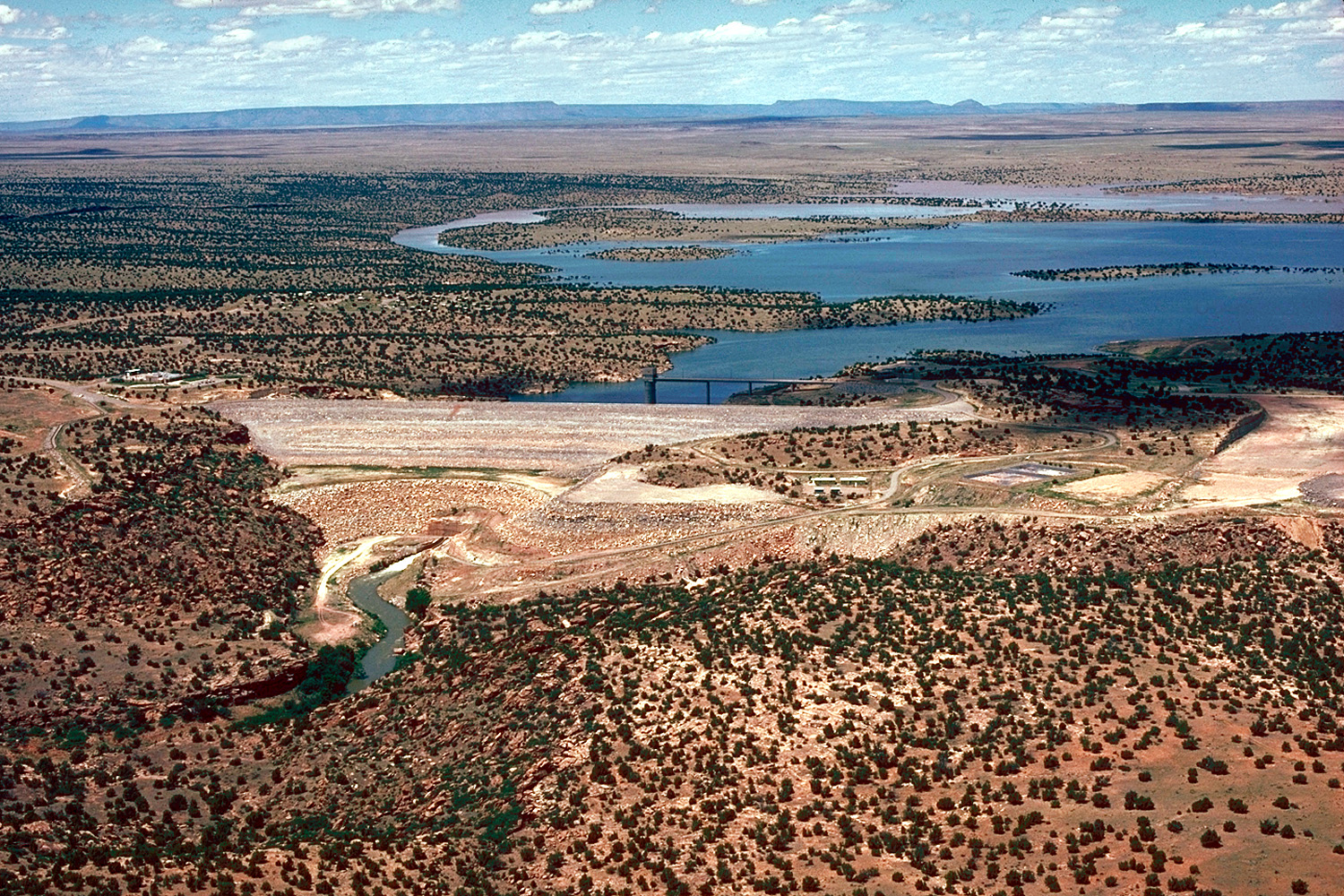
Located at 34.94°N, 104.67°W in Santa Rosa, New Mexico. From altitude, the Blue Hole appears as a small bright blue circle in the desert landscape - its color is distinctive even from considerable height. Santa Rosa is visible as a small town along Interstate 40. The Pecos River valley runs through the area. The terrain is high desert - mesas, dry washes, and grassland. Albuquerque is 120 miles west. The Texas border is 60 miles east. Route 66 and I-40 pass through Santa Rosa; the town's Route 66-era character is visible in the strip of motels and businesses along the old highway.