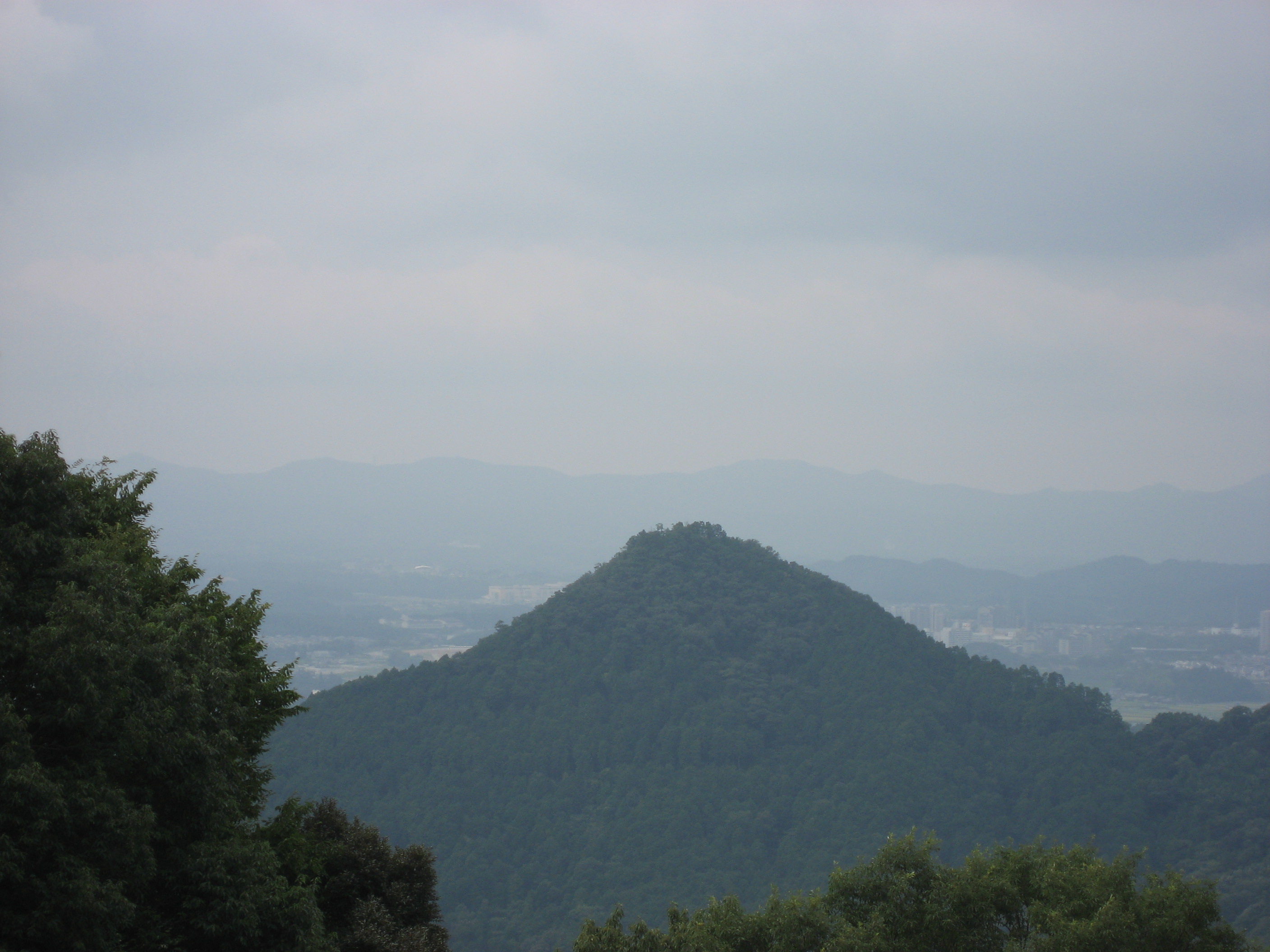
Bodai-ji: The Emperor's Mountain Retreat
Around the year 992, the cloistered Emperor Kazan was climbing through the temple complex of Banshu Kiyomizu-dera when he noticed something strange: a light shining from a mountaintop to the east. He decided to investigate. What he found, after making the trek through the forested hills of Harima Province, was a small temple perched on the south face of Mount Tokozan, roughly 395 meters above sea level. The emperor stayed for fourteen years. Whatever drew him to that mountainside -- spiritual calling, political exile, or simple exhaustion with court life in Heian-kyo -- the temple he chose became inseparable from his name. Today Bodai-ji, formally known as Tokozan Kazan-in Gankei-ji, is still called Kazan-in after the emperor who made it famous. It sits six kilometers north of central Sanda City in Hyogo Prefecture, a "bangai" -- a supernumerary stop -- on the Saigoku Kannon Pilgrimage, placed between the 24th and 25th stations of that ancient route.
The Empty Bowl Sage
Like many temples in eastern Hyogo, Bodai-ji traces its legendary origins to Hodo, an Indian mystic whose story is recorded in the Kamakura-period Genko Shakusho. According to that text, Hodo arrived in Japan by flying on a purple cloud from India through Tang China and the Korean kingdom of Baekje. He found a mountain in Kamo County shaped like an eight-petaled lotus flower, named it Mount Hokke after the sacred mountain of the Lotus Sutra, and established himself as a holy figure. His nickname -- the Empty Bowl Sage -- came from his supposed ability to send bowls soaring through the air to collect rice offerings from villagers. Whether Hodo was a real person remains unresolved. Temples claiming his patronage cluster throughout eastern Hyogo, suggesting that some kernel of historical truth -- perhaps an actual Indian traveler -- lies beneath the supernatural embroidery.
Fourteen Years on the Mountain
Emperor Kazan reigned from 984 to 986 before abdicating at the age of seventeen, supposedly tricked into entering Buddhist orders by the politically ambitious Fujiwara no Kaneie. As a cloistered emperor, Kazan turned to religion. He is credited with reviving the Saigoku Kannon Pilgrimage, walking the route himself and restoring its temples. It was during this pilgrimage, around 992, that he spotted the mysterious light from Banshu Kiyomizu-dera and followed it to what was then called Shiunzan Kannon-ji. The temple was renamed Tokozan -- "Eastern Light Mountain" -- in reference to the radiance that had guided him there. Kazan made it his retreat for approximately fourteen years before eventually returning to Kyoto in his later years. The temple buildings were later completed with donations from Minamoto no Yorimitsu, the renowned Heian-period warrior better known in Japanese folklore as Raiko, the demon slayer.
The Nuns at the Foot of the Mountain
The village below the temple is called Niiji, meaning "nunnery," and its name carries a story of devotion and exclusion. According to legend, eleven ladies-in-waiting to the retired emperor traveled to Mount Tokozan carrying the memorial tablet of Fujiwara no Yoshiko, the emperor's beloved consort. When they arrived, they were refused entry. The mountain maintained the nyonin kinsei -- the prohibition against women entering sacred Buddhist precincts -- and the ladies could not climb to their emperor's retreat. Rather than return to the capital, all eleven took the tonsure and settled at the mountain's base. The village that grew around them still contains twelve large and small tombs attributed to the nuns, with the central monument believed to be the memorial stupa of Fujiwara no Yoshiko herself. Nearby, on Kotohikizaka Hill, a stone monument marks the spot where the koto was played in admiration of the retired emperor above.
Lightning and Excavation
In the eleventh century, the Tada Genji clan -- a powerful branch of the Seiwa Genji based at the nearby Tada estate -- became devoted patrons of the temple, funding the construction of halls and pagodas. But the mountain took back what was built. Lightning destroyed the clan's buildings, and the temple endured centuries of obscurity. Modern archaeological excavations on Mount Tokozan have uncovered the foundation stones of those lost structures, confirming that the temple compound was once considerably larger than what stands today. The current temple, the head of the Kazan-in branch of Shingon Buddhism, houses a statue of Yakushi Nyorai -- the Medicine Buddha -- as its honzon, or primary sacred image. Seven kilometers northeast of Shin-Sanda Station on the JR Fukuchiyama Line, Bodai-ji rewards the effort of reaching it with silence, elevation, and a view that an emperor once found worth fourteen years of his life.
From the Air
Located at 34.940N, 135.241E on the south slope of Mount Tokozan (421 meters), approximately six kilometers north of Sanda City center in Hyogo Prefecture. The temple sits at roughly 395 meters elevation amid dense forest. Osaka Itami Airport (RJOO) lies approximately 15 nautical miles to the south-southeast. Kobe Airport (RJBE) is about 20 nautical miles to the south-southwest. The surrounding terrain is mountainous and forested, with Sanda's urban area visible to the south. Best viewed at 2,000-3,000 feet AGL in clear weather; the temple compound is small and set into the mountainside.