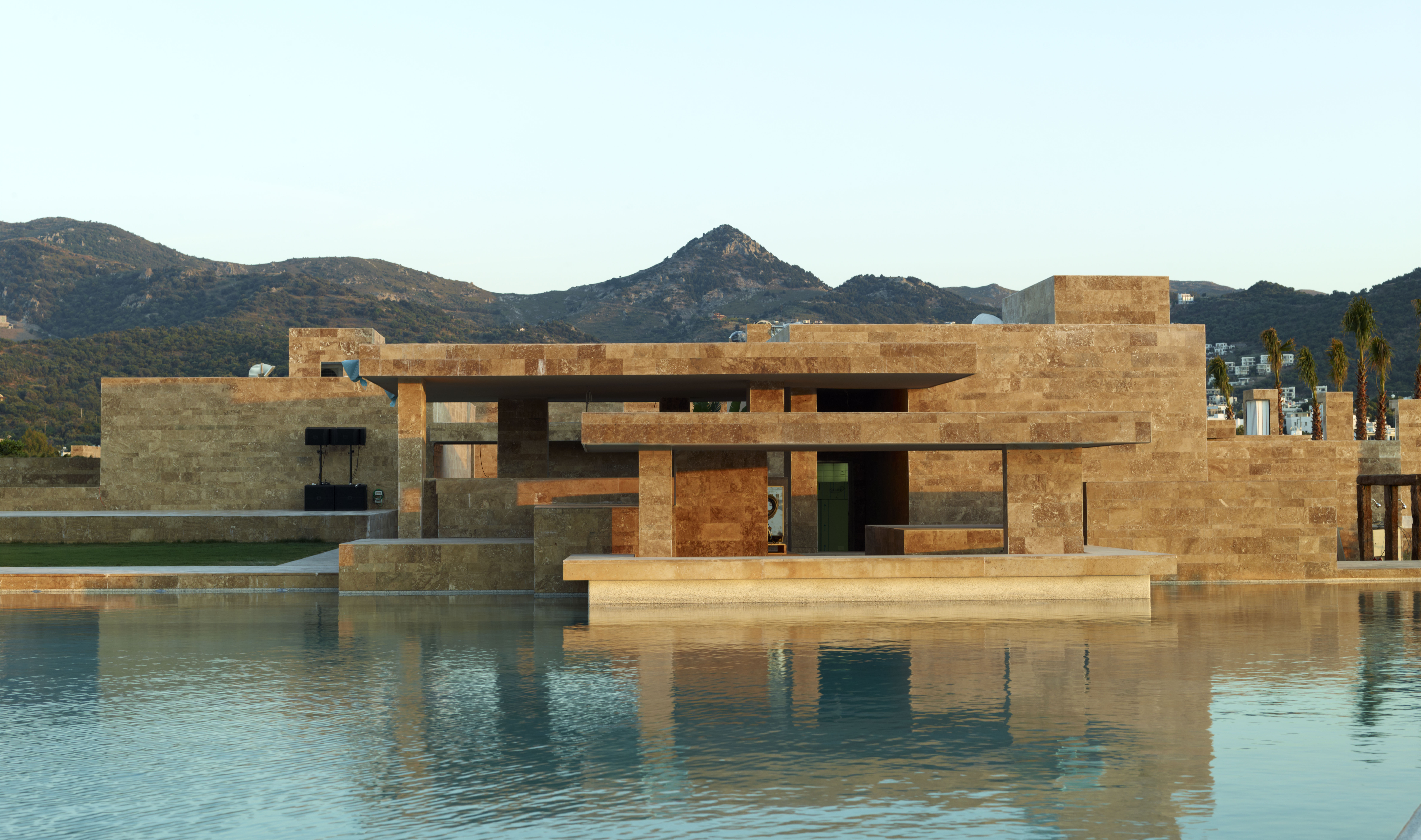
Bodrum
Every summer, Bodrum transforms. This Aegean resort town of 180,000 permanent residents swells with yachts, celebrities, and sun-seekers until the population triples. The Greeks knew it as Halicarnassus, home to the Mausoleum that gave us the word - one of the Seven Wonders of the Ancient World. Crusaders later built a castle in its harbor. Now whitewashed houses climb the hillsides under strict architectural regulations, a marina hosts international wealth, and nightclubs pulse with Turkish pop stars. Turkish seaside aspires to be Bodrum. For many visitors, it already is.
The Castle
In the 15th century, the Knights of St. John fortified Bodrum by building the Castle of St. Peter - and they did it by dismantling the Mausoleum for building material. Today the castle houses the Museum of Underwater Archaeology, where recovered shipwrecks illuminate ancient Mediterranean trade routes. It stands as Bodrum's landmark and historical anchor.
Climb its ramparts for the postcard views. Wander its galleries for the archaeological depth. This is what separates Bodrum from a thousand other beach towns: a castle gives it weight beyond the marina.
The Mausoleum
Mausolus ruled Caria in the 4th century BCE, and when he died, his widow Artemisia II commissioned a tomb so magnificent it became an ancient wonder. More than that, it gave all grand tombs their name. Earthquakes weakened the structure over the centuries. Then the Crusaders quarried what remained. Today only foundations, fragments, and the word "mausoleum" survive.
Visiting the site can feel modest given its former glory - foundation outlines hint at the scale, and museum displays attempt reconstruction. Ancient history buffs make the pilgrimage here. Everyone else comes for the beaches.
The Marina
Turkish wealth and international yachting converge in Bodrum's harbor, where vessels worth more than entire villages rock at anchor. Waterfront restaurants set tables along the quay. Bars cater to yacht owners. A particular scene takes shape each summer, fueled by money and Mediterranean light.
Bodrum's marina represents what this town has become: a destination for travelers who want Turkey's beaches paired with European sophistication. Not everyone can afford what Bodrum's reputation promises, and the marina makes no apology for that.
The White Houses
Regulations mandate white exteriors in Bodrum, and aesthetics celebrate the result. Cubist forms draw on Aegean architectural tradition while enforcing a modern visual discipline. Whitewash reflects the fierce summer heat. Blue trim echoes sea and sky. From any angle, the town is instantly recognizable.
Step back and consider the achievement: visual coherence across an entire resort town, preserved while unregulated development has wrecked the character of so many coastal competitors. Planning made this possible. Tourism revenue justifies the restriction.
The Nightlife
Turkey's most famous nightlife scene unfolds here. Clubs stay open until dawn. Bars line the waterfront, spilling music across the harbor. Summer in Bodrum means beaches by day and dancing by night - a combination resort towns live and die by.
Not everyone embraces it. Residents endure the noise, and quiet-seekers learn quickly to avoid the waterfront strip. But for a certain kind of visitor, Bodrum's nightlife is the entire point. Others simply find the quieter corners this peninsula also holds.
From the Air
Bodrum (37.04N, 27.43E) occupies a peninsula on Turkey's southwestern Aegean coast. Milas-Bodrum Airport (LTFE/BJV) sits 36km to the northeast, with one runway designated 04/22 at 2,998m. From the air, the Castle of St. Peter stands out clearly in the harbor, and white houses spread across the peninsula in striking contrast to the blue water. Greek islands are visible to the west. The climate is Mediterranean - hot dry summers and mild wet winters. Sea breezes moderate summer heat, though Meltemi winds can buffet the Aegean coast during summer months. This is one of Turkey's most popular warm-season destinations.