Boekentoren
On top of Ghent's Book Tower, looking east toward the rising sun, sits a bronze dog. It is a smooth-haired fox terrier, life-size, posture upright, ears alert, gazing out over the city as if it has been waiting for something. The artist Greta Van Puyenbroeck modeled it from a real terrier. The writer Michiel Hendryckx put it up there on November 12, 2018. From the Sint-Pietersplein you can see it clearly: a small dark silhouette at the top of the 64-meter modernist tower, a private joke from the city of Ghent that is also somehow a perfect monument to itself.
A Tower for Books
When the architect Henry van de Velde got the commission in 1933, Ghent already had its three medieval towers. Saint Nicholas Church, the Belfry, and Saint Bavo's Cathedral had marked the skyline for seven centuries. The 1913 World's Fair had introduced a phrase: the parade of towers. The town wanted a fourth, and it wanted it to be modern, and the university needed a library. Van de Velde drew a Greek cross in plan - four arms radiating from a center, symbolizing in his own words the connection of time and space, the merging of heaven and earth. Twenty floors above ground. Four below. Built in poured concrete using sliding shuttering, a technique that was itself a small architectural revolution. The result was the Boekentoren, the Book Tower, completed in 1942. It is not for bells. It is, as the Flemings sometimes call it, the Tower of Wisdom.
Forty-Six Kilometers of Books
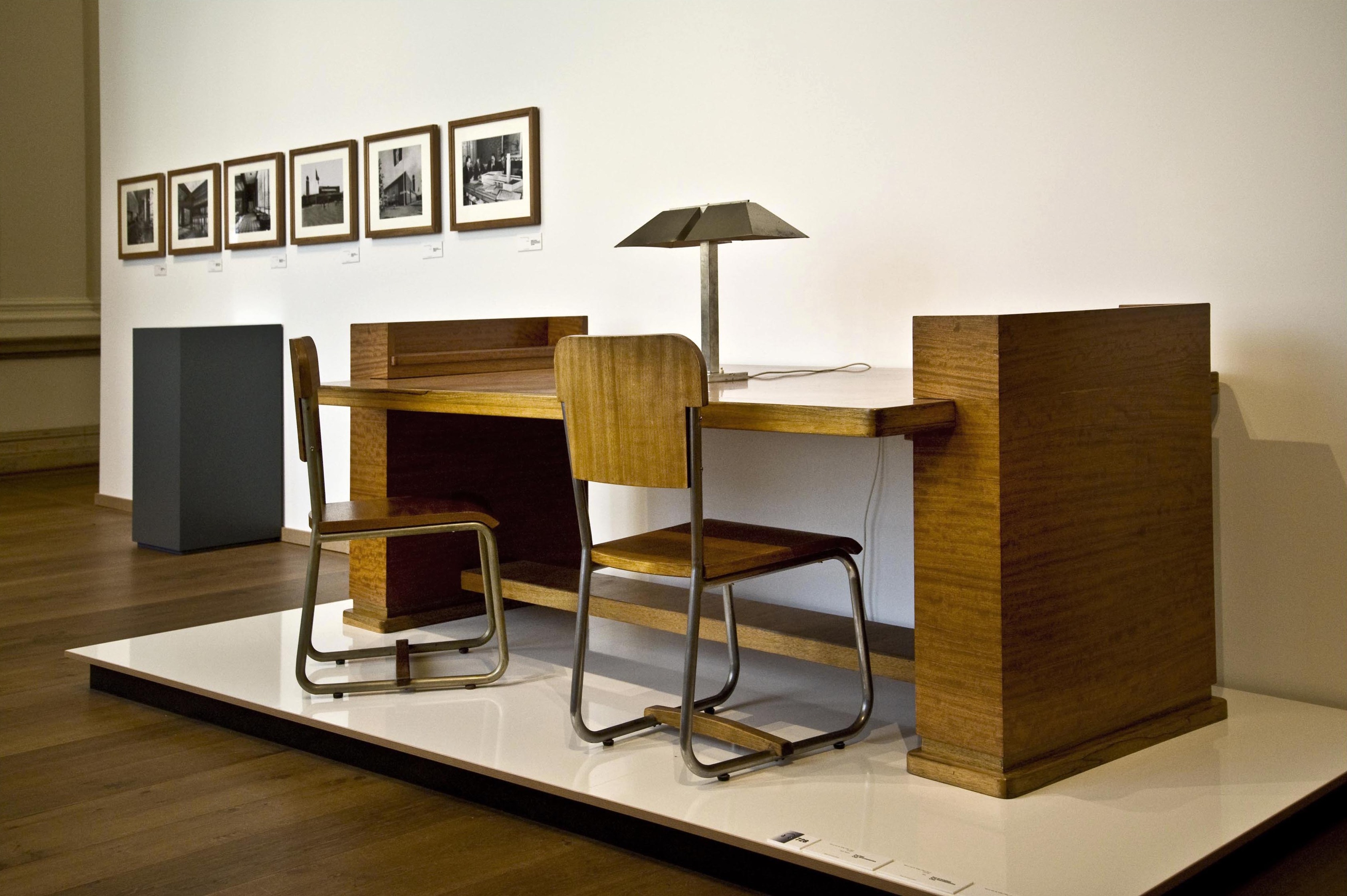
Inside this tower live three million books, laid out along forty-six kilometers of shelving. The reading room runs in horizontal contrast to the vertical of the tower, long tables stretching across rectangular space that takes its light from a glazed courtyard. Manuscripts are housed separately on the north side, shielded from sunlight that would fade them. Van de Velde designed the furniture as well as the building - the chairs and tables that students still sit at are themselves classified objects of Belgian design. The library opened in 1942, was recognized as a monument in 1992, and by the early 2000s was crumbling. The concrete skin had reached the end of its life. Half a century of weather had eaten through the original surface. The library would have to be dismantled to be saved.
Restoration as Resurrection
The campaign began with one man. A private citizen named Andre Singer started lobbying the university about the building's architectural value. The rector Andre De Leenheer found the money. The architects Robbrecht and Daem won the commission in 2007, after an international open call from the Flemish Government Architect. Physical restoration construction began in 2012. They dug three new underground floors beneath the inner garden to hold the books, moved the entire collection down into them, and then replaced the concrete shell of the tower from the inside out. Twelve years of work followed. The study landscape and reading room reopened in summer 2021. The east wing came back in early 2024. The west wing, the last piece, was still in progress when this was written. What was a memorial to one architect's vision has been reborn as something stranger: an exact recreation of his design in materials chemically identical to but actually newer than the original. The tower you climb in 2026 is and is not the one Van de Velde built.
Wartime Eyes
During the Second World War, the German Army recognized exactly what the Boekentoren was good for. They took the tower over and used it as an observation post - the same panorama that drew architects and tourists also gave the Wehrmacht a clear sight line across the Flemish plain. Two years before the war ended, in 1942, the tower had finally been inaugurated as a library. Within months it became a piece of military infrastructure. The story of any modernist landmark in occupied Europe involves this moment somewhere: the moment when the building's beauty becomes a tactical asset. The Boekentoren survived. The collection survived. The German observers came down again in 1944 when the British 7th Armoured Division - the Desert Rats - liberated Ghent on September 6.
The Dog Faces East
Henry van de Velde was one of the founding figures of the Belgian Art Nouveau movement before he became a pioneer of modernism. On April 3, 2013, on what would have been his 150th birthday, the Boekentoren appeared in the Google homepage logo. The Flemish public broadcaster VRT had already nominated its belvedere as a candidate for restoration on a Belgian version of the BBC's Restoration program. The tower has been famous, modestly, for being itself. Then in 2018, a single bronze dog appeared on the roof, watching the sunrise, and people understood that the building had needed exactly this. There was no good reason for it. There was no historical justification. There was just a writer's idea, an animalier's skill, and a sense that something on top of the tower had always been missing, and only now was found.
From the Air
Located at 51.045 N, 3.726 E atop the Blandijnberg, the small rise that forms the southern edge of Ghent's center. At 64 meters, the Boekentoren reads as the southernmost of Ghent's four-tower skyline - distinctly modernist in concrete contrast to the limestone Gothic of the three medieval towers to the north. Best viewed at 1,500-3,000 ft in clear weather. The bronze fox terrier on the roof is visible from the south at low altitude. Closest international airport: Brussels (EBBR), 60 km southeast.