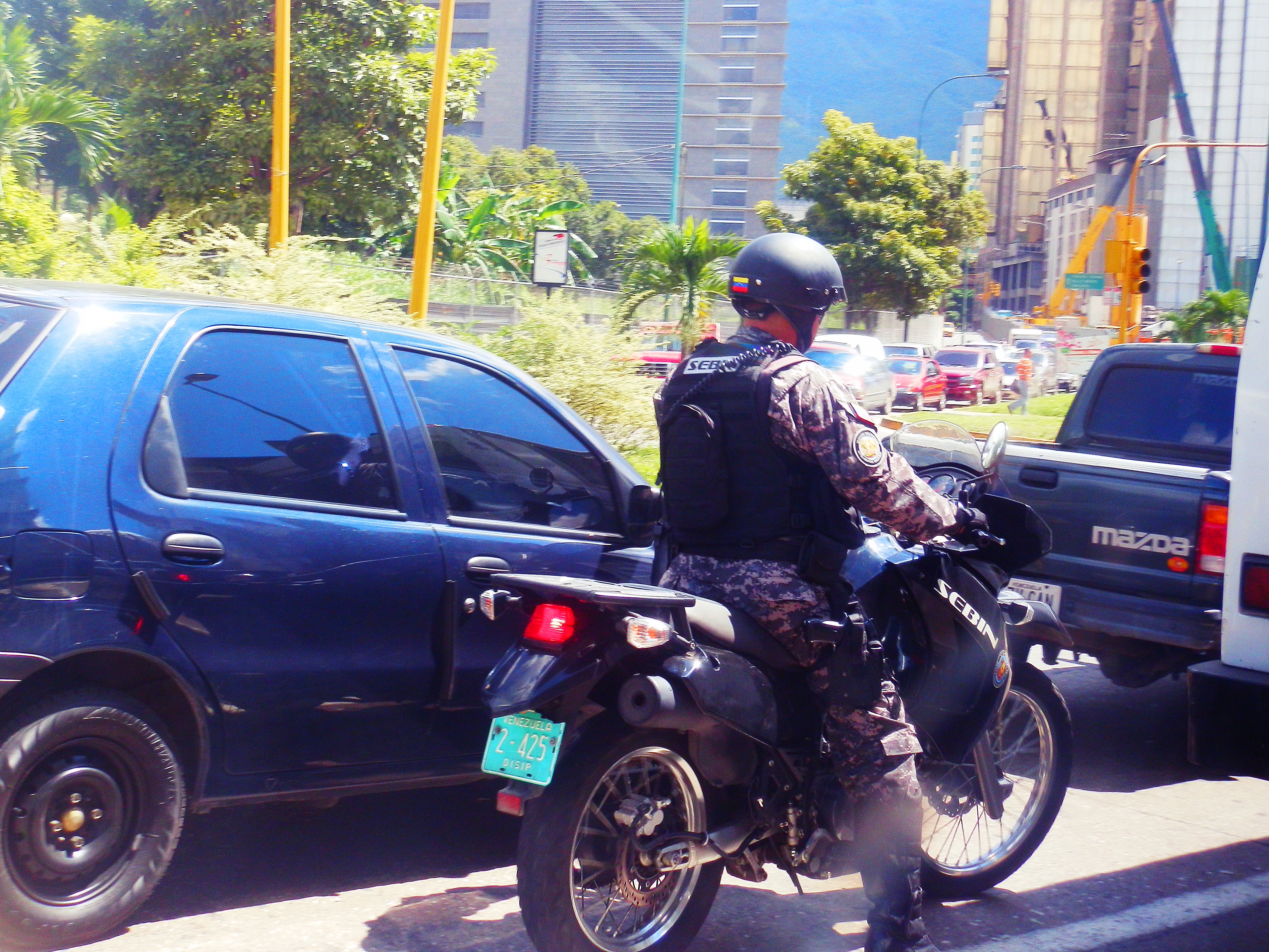
Bolivarian National Intelligence Service
Five stories below the SEBIN headquarters in Caracas, there are cells measuring two meters by three. No ventilation, no daylight, freezing temperatures. The prisoners call it La Tumba — The Tomb. Above ground, the agency that runs these cells presents itself as Venezuela's premier intelligence service, a federal entity combining functions of counterterrorism, counterintelligence, and executive protection. Below ground, according to the United Nations Independent International Fact-Finding Mission on Venezuela, its director personally placed plastic bags over the heads of detained protesters.
From DISIP to SEBIN
Venezuela's intelligence apparatus did not begin with SEBIN. Its predecessor, DISIP, was established in March 1969 under President Rafael Caldera, replacing the earlier Dirección General de Policía. From the start, the agency drew scrutiny. Human Rights Watch wrote in 1993 that DISIP targeted political dissenters using abusive tactics. Amnesty International's 1997 and 1998 reports documented unlawful detention of human rights activists. When Hugo Chávez came to power in 1999, he restructured DISIP, selecting commanders and analysts for their political loyalty rather than their professional qualifications. A retired SEBIN commissioner later described the consequence: "biased and incomplete reports, tailored to the new ears," proliferated, eroding the institution's capacity to process reality. The agency was formally reconstituted as SEBIN in December 2009, subordinate to the Vice President of Venezuela.
The Architecture of Surveillance
SEBIN operates from two Caracas headquarters. The first is El Helicoide, a sprawling spiral-shaped building originally designed in the 1950s as a futuristic drive-through shopping mall. Never completed as intended, it became one of the most recognizable buildings in Caracas and, eventually, a detention facility. The second, more modern headquarters sits at Plaza Venezuela, where La Tumba is located underground. According to former SEBIN officials interviewed by El Nuevo Herald, the Venezuelan government spent millions of dollars on Italian and Russian surveillance technology to monitor emails, keywords, and phone conversations — particularly through the state-controlled telecommunications provider CANTV. The system created a database of "persons of interest": anyone who publicly disagreed with the Bolivarian Revolution could find themselves flagged, tracked, and eventually visited.
February 12, 2014
The 2014 Venezuelan protests brought SEBIN's methods into international view. On February 12, seven SEBIN agents opened fire on unarmed, fleeing protesters, killing Bassil Da Costa and Juan Montoya. Five days later, armed agents raided the headquarters of the opposition party Popular Will in Caracas, holding everyone inside at gunpoint. The killings prompted U.S. President Barack Obama to invoke the Venezuela Defense of Human Rights and Civil Society Act of 2014, freezing the assets of SEBIN's Director General, Gustavo Enrique González López, and his predecessor, Manuel Gregorio Bernal Martínez. In 2014, eight Venezuelans were arrested for tweets critical of the government — though leaked documents showed the state telecommunications agency had been tracking their IP addresses since June, months before the arrests in October.
Reaching Beyond Borders
SEBIN's operations have not stayed within Venezuela. In 2012, at least ten agents allegedly operated under diplomatic cover in the United States, until a Univision documentary exposed cultural attaché Livia Acosta Noguera's meetings with individuals posing as hackers planning cyberattacks on the White House, the FBI, and the Pentagon. The State Department declared her persona non grata. In February 2024, SEBIN allegedly kidnapped Venezuelan dissident and former army member Ronald Ojeda from his apartment in Santiago, Chile, where he had received political asylum the previous year. Reporters have also faced SEBIN's attention directly: agents followed journalists in unmarked vehicles, watched their homes and restaurants, and sent threatening text messages. One detained reporter was told during interrogation that agents would behead her, an explicit reference to the murder of journalist James Foley by ISIL.
The Agency Nobody Sees
Unlike conventional police forces, SEBIN does not patrol roads, arrest civilians for ordinary crimes, or participate in joint law enforcement operations. Its officers are rarely seen in public wearing their full black uniforms. The agency's mandate covers counterterrorism, intelligence gathering, government investigations, background checks, and the protection of high-ranking officials. Yet the documented record — compiled by Human Rights Watch, Amnesty International, the Organization of American States, and the UN fact-finding mission — tells a story of an institution whose primary function has become the suppression of political dissent. In La Tumba, prisoners sit in cells with cement beds, security cameras, and barred doors aligned so that no one can communicate with the person in the next cell. The people detained there are not criminals. They are, overwhelmingly, people who disagreed with the government out loud.
From the Air
Located at 10.495°N, 66.883°W in Caracas. El Helicoide, the original SEBIN headquarters, is a distinctive spiral-shaped building visible from the air on a hillside in the Roca Tarpeya area. The second headquarters at Plaza Venezuela is in the urban core. Nearest major airport: Simón Bolívar International Airport (SVMI/CCS), approximately 21 km northwest. Caracas sits in a narrow valley below El Ávila mountain, making the city identifiable on approach from the coast.