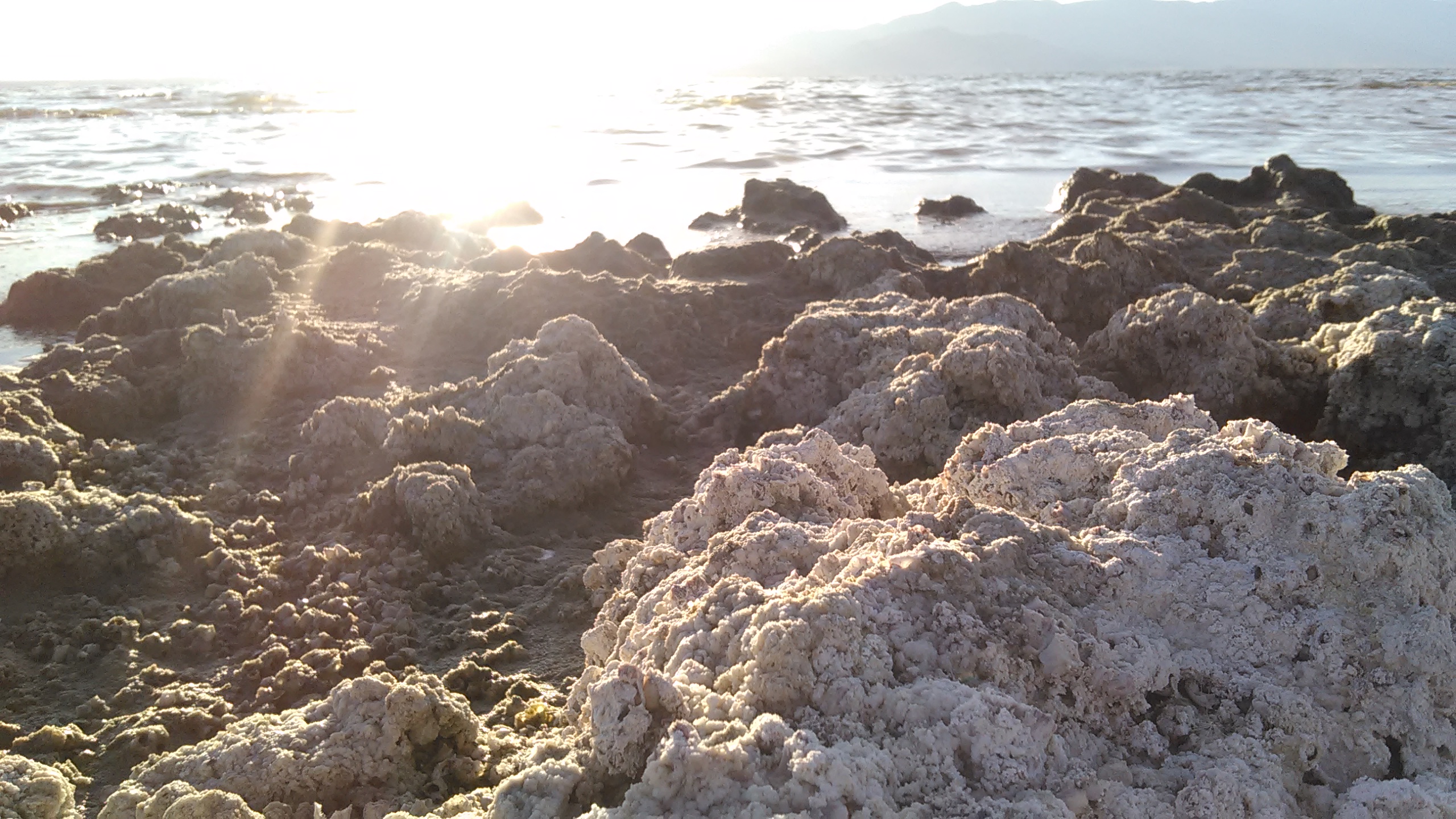
Bombay Beach
On the eastern shore of the Salton Sea, a town is dying in slow motion. Bombay Beach was once a resort destination, when the Salton Sea was California's most popular recreational lake in the 1950s. Then the sea began to shrink. Then it began to die. The water grew saltier than the Pacific, killing the fish that drew anglers. The shoreline retreated, leaving abandoned boats on dry land. The town's population crashed from thousands to a few hundred hardy souls and artists who found beauty in the decay. Today, Bombay Beach is a pilgrimage site for photographers and urban explorers - a ready-made set for post-apocalyptic films, where abandoned motels rust beside salt-crusted shores and art installations transform the ruins into something almost beautiful. The Salton Sea is California's largest lake and its biggest environmental disaster. Bombay Beach is where that disaster becomes visible.
The Accident
The Salton Sea exists by accident. In 1905, engineers diverting Colorado River water for irrigation lost control of the canal. For two years, the entire flow of the Colorado poured into the Salton Sink, a below-sea-level depression in the desert. By the time the breach was closed, a lake 45 miles long and 20 miles wide had formed - California's largest body of water, created by engineering failure. For decades, agricultural runoff kept the lake full. Fish were introduced; birds arrived; resort towns grew. Bombay Beach, on the eastern shore, became a vacation destination. By the 1970s, the Salton Sea was California's most popular recreational area.
The Collapse
The Salton Sea has no outlet. Water enters from agricultural runoff and evaporates, leaving minerals behind. Over decades, the sea has grown saltier than the Pacific Ocean. Agricultural chemicals have concentrated. Periodic die-offs kill millions of fish, whose rotting bodies line the shore. The smell, at times, is overpowering. As the sea shrank, shoreline resorts found themselves stranded inland. Property values collapsed. Population fled. Bombay Beach went from vacation destination to census tract with the lowest per capita income in California. The few hundred remaining residents live amid the ruins of a former resort community.
The Art
Into this decay came artists. The Bombay Beach Biennale, started in 2016, brings installations, performances, and sculptures to the abandoned town. Artists work with the existing decay - rusted cars become sculpture, abandoned buildings become galleries. Drive-in movie screens play films to empty lots. A swing set faces the retreating sea. The art doesn't prettify Bombay Beach; it amplifies its strangeness. The result is a landscape that functions as both environmental warning and aesthetic experience. Photographers and filmmakers come constantly, drawn by the ready-made apocalypse. Bombay Beach has become famous for its ruin.
The Future
The Salton Sea continues to shrink. As it does, exposed lakebed releases toxic dust - arsenic, selenium, pesticides accumulated over decades. The Imperial Valley's agricultural industry depends on the sea to absorb irrigation runoff; without it, the water table rises. California has proposed various restoration plans, all expensive and politically contentious. Meanwhile, Bombay Beach persists. A handful of new residents have arrived, drawn by cheap land and creative possibilities. Art installations accumulate. The town hovers between death and transformation - too strange to abandon, too damaged to save.
Visiting Bombay Beach
Bombay Beach is located on Highway 111 on the eastern shore of the Salton Sea, about 60 miles north of the Mexican border. The town is free to explore; drive slowly through the streets to see abandoned structures and art installations. The shoreline is accessible but unpleasant - dead fish, salt crust, and smell. Salvation Mountain is 30 miles south; the International Banana Museum is nearby. El Centro (40 miles south) and Palm Springs (70 miles north) have services. The nearest commercial airports are in Palm Springs or San Diego. Visit in cooler months (October-April); summer temperatures exceed 110°F. Bring water, sunscreen, and low expectations.
From the Air
Located at 33.35°N, 115.73°W on the eastern shore of the Salton Sea in California. From altitude, Bombay Beach appears as a small grid of streets at the sea's edge, with the irregular white shoreline of salt deposits visible. The Salton Sea spreads to the west and north - a large saline lake in the Imperial Valley. The sea's shrinking is visible as bathtub-ring marks on the surrounding terrain. El Centro is 40 miles south. Palm Springs is 70 miles northwest. The terrain is below sea level, part of the Salton Trough. The decay is visible from altitude - this is not a thriving community.