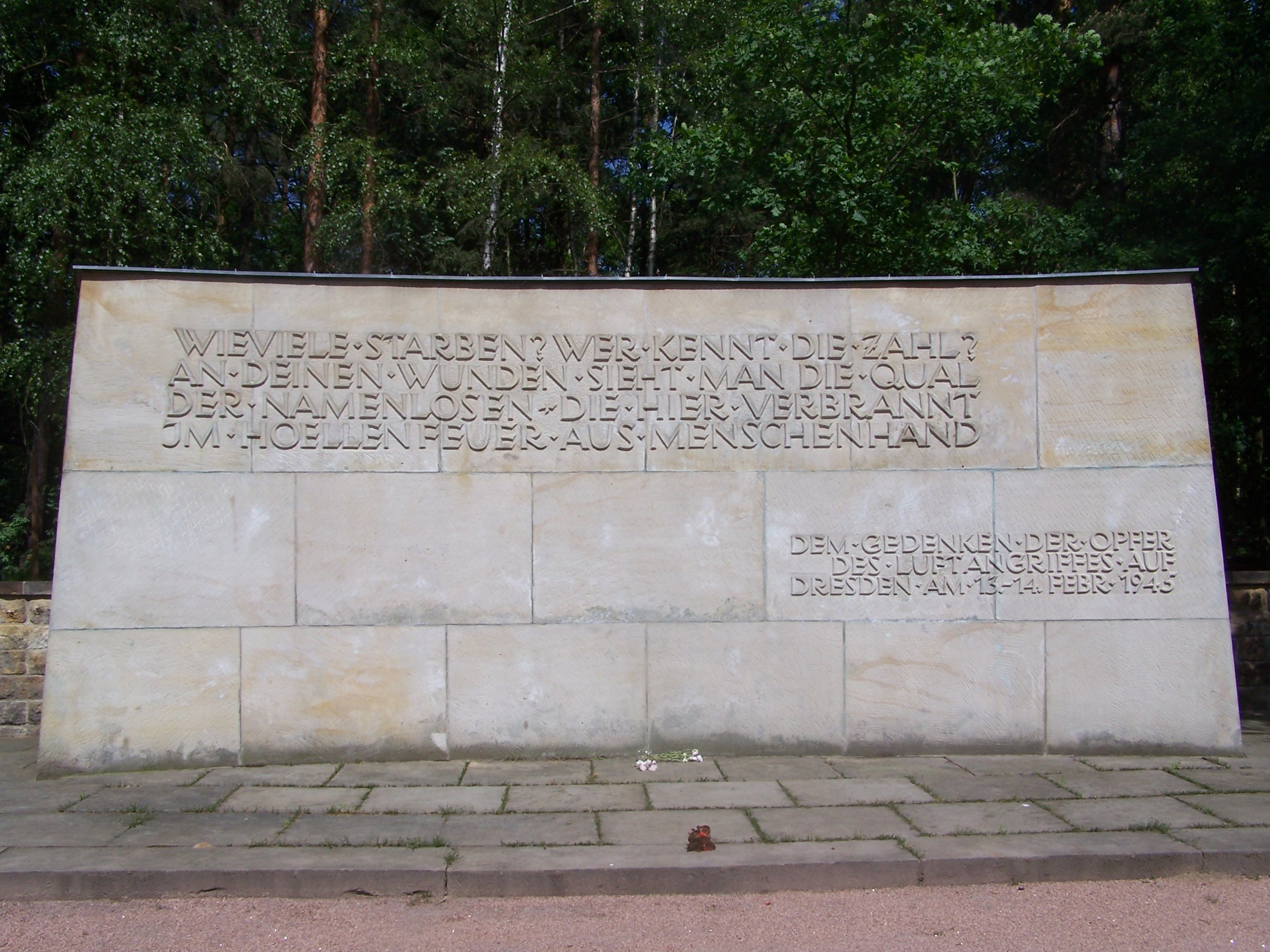
Bombing of Dresden
The sirens in Dresden began at 21:51 on the night of 13 February 1945. The first British Lancasters released their bombs twenty-two minutes later. By 22:28, two hundred forty-four heavy bombers had dropped 881 tons of high explosive and incendiaries on the medieval Altstadt — the timber-framed center of one of Europe's most beautiful cities, swollen that winter with refugees fleeing the Red Army's advance from the east. Three hours later a second wave of 529 Lancasters arrived; the city was already burning so brightly that the Pathfinders could see the fires from 200 kilometers away. The next morning, 316 American B-17s came over in daylight to bomb again. Most of the people killed in those raids — somewhere up to 25,000 — were civilians, and many were not even Dresdeners.
The Decision Above the Elbe
Dresden became a target because of where the Eastern Front was in February 1945. The Red Army had crossed the Oder. Berlin was 80 kilometers away. British intelligence feared a 'Nazi redoubt' in southern Germany; Allied planners wanted to disrupt German troop movements between fronts and to throw the eastern German rail system into chaos at the moment of Soviet breakthrough. Churchill pressed Sir Archibald Sinclair, his air minister, on January 26 for plans to attack 'large cities in east Germany.' Air Marshal Arthur 'Bomber' Harris recommended Chemnitz, Leipzig, and Dresden. The Soviets were notified of the operation in advance at the Yalta Conference. Whether they specifically requested Dresden's destruction is still disputed by historians; what is clear is that the bombing was conceived as a Western strategic action in support of the Soviet advance.
The Firestorm
The mix of bombs was designed to kill a city. High-explosive 'cookies' weighing two tons each blew off roofs, ruptured water mains, and shattered windows. Then the incendiaries — 200,000 of them in the first raid alone — fell into buildings whose interiors were now exposed to the air. The fires fed each other. Convection columns drew hurricane-force winds inward. The temperature inside the firestorm reached an estimated 1,500 degrees Celsius. People who had taken shelter in cellars suffocated as the oxygen was sucked out of the air above them. Those who fled into the streets were caught by the wind. Stone melted. Iron warped. The fan-shaped area that burned was approximately four kilometers long. By the next morning, more than 1,600 acres of the city center no longer existed.
Counting the Dead
The dead were not all soldiers, not even mostly. Dresden in February 1945 was crowded with refugees from East Prussia and Silesia, civilians fleeing the Soviet advance, who had piled into the supposedly safe baroque city to wait out the war. Forced laborers from across occupied Europe — Poles, Soviet POWs, French civilians — worked in the city's factories. Women, children, and the elderly made up the bulk of those killed. The casualty figures became a battleground of their own. Nazi propaganda inflated the toll to 200,000 in March 1945 and the figure grew further in postwar far-right and Soviet propaganda — David Irving's 1963 book claimed up to 135,000 dead. After 2005, a commission of independent German historians, working with the Dresden city authorities, completed a forensic study. Its 2010 report concluded the total was up to 25,000. That number is now broadly accepted by serious historians.
The Argument That Did Not End
Was Dresden a war crime? The question has been asked continuously since the smoke cleared. The Allies argued, with declassified U.S. Air Force assessments to back them, that the city was a major rail hub with 110 factories and 50,000 workers contributing to the German war effort. Critics — including some Allied officers at the time — pointed out that most of the industry lay outside the bombed area, that the marshalling yards were missed in the main raids, and that a 40% incendiary mix was the signature of an area attack on civilians, not a precision strike. Kurt Vonnegut, an American POW imprisoned in a Dresden meatpacking cellar called Schlachthof-Fünf, survived because the cellar was deep. Twenty-four years later he turned the experience into Slaughterhouse-Five. The book did not settle the moral argument. No book has.
Frauenkirche, 60 Years Later
The Church of Our Lady — Dresden's great Baroque masterpiece, completed in 1743 — survived the raids on the night of 13 February only to collapse the next morning when its overheated sandstone gave way. The pile of stones sat in the city center for the entire GDR era as a deliberate war memorial. After reunification, an international initiative including British and American donors funded the church's reconstruction; the original stones, blackened by fire, were sorted, identified, and rebuilt into the new structure wherever they fit. The church reopened in 2005, sixty years and three months after its destruction. The cross on its dome was crafted by an English silversmith whose father had been an RAF Lancaster pilot in February 1945. The reconstruction is among the most powerful acts of reconciliation in postwar Europe — and a quiet refusal of the easy moral framings that dominate the politics of the bombing in every direction.
From the Air
Dresden's old town, the area destroyed in February 1945, sits at 51.050°N, 13.738°E along the Elbe River in southeastern Germany. Dresden Airport (EDDC) is 9 km north. The Frauenkirche dome and the Zwinger palace complex are the most visible landmarks of the rebuilt Altstadt; from cruising altitude the meandering Elbe and the broad green spaces of the Großer Garten to the southeast are easy reference points. The city is roughly 190 km south of Berlin and about 110 km north of the Czech border.