Bombing of Naples in World War II
On the morning of December 7, 1942, every school in Naples closed and the city began to empty. Families streamed out of neighborhoods that had become kill zones, clutching what they could carry, while others descended into the ancient tunnels beneath the city -- the same geothermal caverns that Romans had carved centuries earlier as aqueducts and cisterns. Above ground, Allied bombers were arriving with increasing frequency. Below, in the subterranean dark, tens of thousands of Neapolitans waited for the shaking to stop. Between 1940 and 1944, Naples endured approximately 200 air raids that killed an estimated 20,000 to 25,000 civilians. Only Milan suffered more attacks among Italian cities.
A City in the Crosshairs
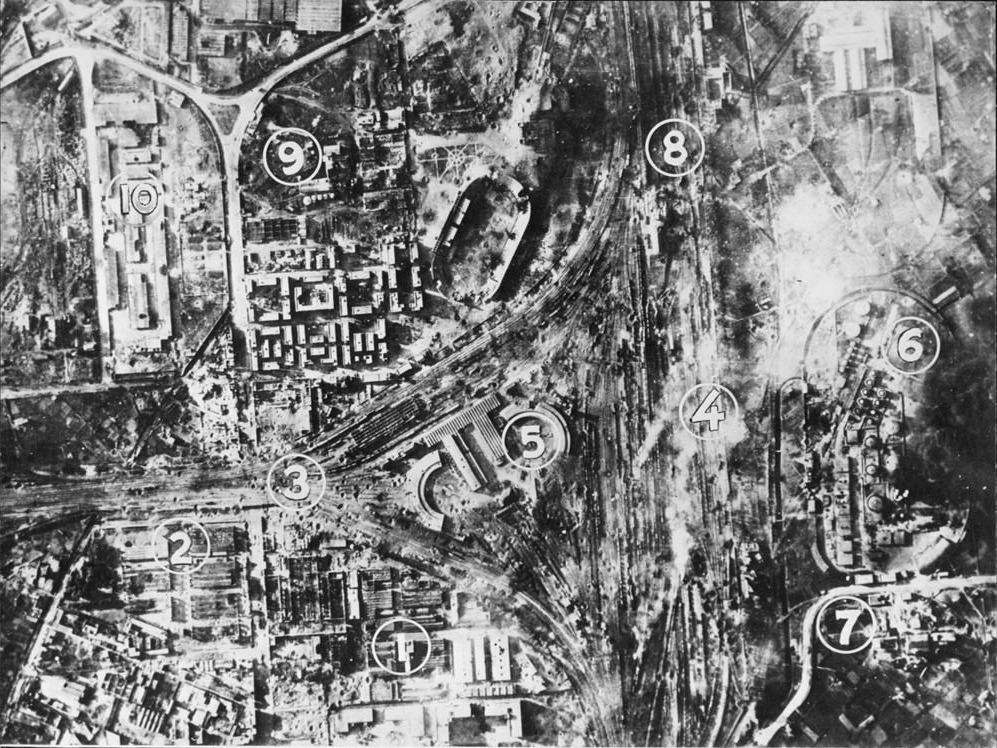
Naples was no accidental target. Its port was the principal Italian trading connection to Africa and a hub of industry, communication, and naval power. The city harbored a military fleet alongside the ports of Taranto and La Spezia, and as the first major Italian city in the path of the Allies' Operation Avalanche, its strategic value only grew as the war progressed. The primary targets were the port facilities at the eastern end of the harbor, the rail yards, petroleum refineries, and the steel mill at Bagnoli to the west. But Naples in 1940 was almost entirely unfortified against aerial attack -- it had few air raid shelters, and the only anti-aircraft defenses were ship-mounted cannons in the harbor. The first British bombardment came on November 1, 1940, between 4:20 and 6:20 in the morning, when Bristol Blenheim light bombers flew from Malta to strike the Zona Industriale and the area around the Napoli Centrale railway station.
When Strategy Gave Way to Terror
In 1942, Allied bombing doctrine shifted. The raids moved from targeting military objectives to carpet bombing designed to break civilian morale and provoke revolt. Bombs fell uniformly across neighborhoods that had nothing to do with the war effort. When American B-24 Liberators joined the campaign on December 4, 1942, daytime raids began. That first American sortie struck three Italian cruisers -- the Muzio Attendolo, Eugenio di Savoia, and Raimondo Montecuccoli -- but also houses, churches, hospitals, and the Palazzo delle Poste near Porta Nolana. Days later, another attack destroyed the hospital Santa Maria di Loreto and killed 900 people. Citizens dug their own shelters or found refuge in metro stations and tunnels. The ancient Naples underground, carved from the volcanic tuff that the city sits upon, became the last defense of a population with nowhere else to go.
The Year the Bombs Never Stopped
By January 11, 1943, daily bombing had become routine, and it would not relent for five months. After each bombing run, planes descended to strafe the streets below. On February 21, in what became known as La strage di via Duomo, the entire Via dei Tribunali -- one of the oldest streets in Naples, laid out on the grid of the ancient Greek city -- was destroyed. On March 28, a bomb struck the passenger ship Caterina Costa in the harbor, killing 600 people and wounding 3,000 more. The largest single raid came on August 4, 1943, when 400 American B-17 Flying Fortresses of the Northwest African Strategic Air Force targeted the Axis submarine base. The medieval Church of Santa Chiara, a masterpiece of Gothic architecture, was destroyed in the firestorm, though it would later be painstakingly rebuilt.
Four Days of Defiance
The Armistice of Cassibile was signed on September 3, 1943, but Naples did not learn this until September 8 -- hours after what proved to be the last Allied bombardment of the city. German forces occupied Naples for twenty more days until the population rose up in the Four Days of Naples, a spontaneous insurrection that drove out the Nazi garrison. Yet liberation did not bring peace from the sky. As Naples became the rearguard of the Allied Winter Line, the Luftwaffe began its own bombing campaigns against the city. The heaviest German raids struck on the nights of March 14 and 15, 1944, killing 300 people. For the Neapolitans who had survived years of Allied bombs, the grim irony was complete: the city had changed hands, but the explosions continued.
What the Rubble Remembers
The harbor that Allied strategists had fought so hard to destroy proved remarkably resilient. Within a single week of Allied ground forces occupying the city in early October 1943, the port was made functional again. Naples became a vital supply hub for the push northward through Italy. But the cost to the city's people and fabric was staggering. Entire neighborhoods had been leveled, churches and palaces reduced to shells, and between 20,000 and 25,000 civilians had perished -- people who had no part in the military calculations that made their city a target. The rebuilt Church of Santa Chiara stands today as both a monument and a reminder: reconstruction was possible, but the lives lost in the Zona Industriale, in Piazza Concordia, along the Via dei Tribunali, and in the harbor cannot be rebuilt.
From the Air
Located at 40.83°N, 14.25°E on the Bay of Naples in southern Italy. The city's port and industrial zones -- primary bombing targets -- are visible along the eastern waterfront. Nearby airports include Naples International (LIRN). Mount Vesuvius rises prominently to the southeast. Best viewed at 5,000-8,000 feet to appreciate the harbor layout and surrounding neighborhoods.