Bombing of Rangoon in World War II
The morning of December 23, 1941, was clear over Rangoon. A light breeze blew from the south, and the golden spire of Shwedagon Pagoda gleamed in the winter sun. Japanese bomber crews, inbound from airfields in Thailand and Indochina, used that same pagoda as their navigation mark. General Michio Sugawara had planned a devastating strike against both Mingaladon airfield and the city's downtown districts. Eighty bombers and thirty fighters were converging on a capital that had barely two dozen fighters to defend it.
Scramble Over Mingaladon
Just before ten in the morning, the operations room at Mingaladon airfield reported two waves of approaching aircraft. A dozen Curtiss P-40 Tomahawks of the American Volunteer Group and fifteen Brewster Buffalos of the Royal Air Force scrambled, their pilots climbing for every foot of altitude they could gain in the forty minutes before the Japanese arrived. The defenders were outnumbered roughly three to one. A squadron of twin-engine Mitsubishi Ki-21 bombers from the 62nd Sentai bore down on the airfield while two more bomber squadrons, the 60th and 98th, peeled off toward downtown Rangoon. A pair of Buffalos already on routine patrol attacked the Mingaladon-bound formation first. Tomahawks soon joined, peeling off in line astern to rake the bombers with machine-gun fire. AVG pilot Chuck Older forced one bomber out of formation trailing smoke. Another crashed on the waterfront. But the defense came at a cost: Hank Gilbert's Tomahawk was shot down by return fire from the bomber formation, making him the American Volunteer Group's first combat death.
Fire Over Downtown
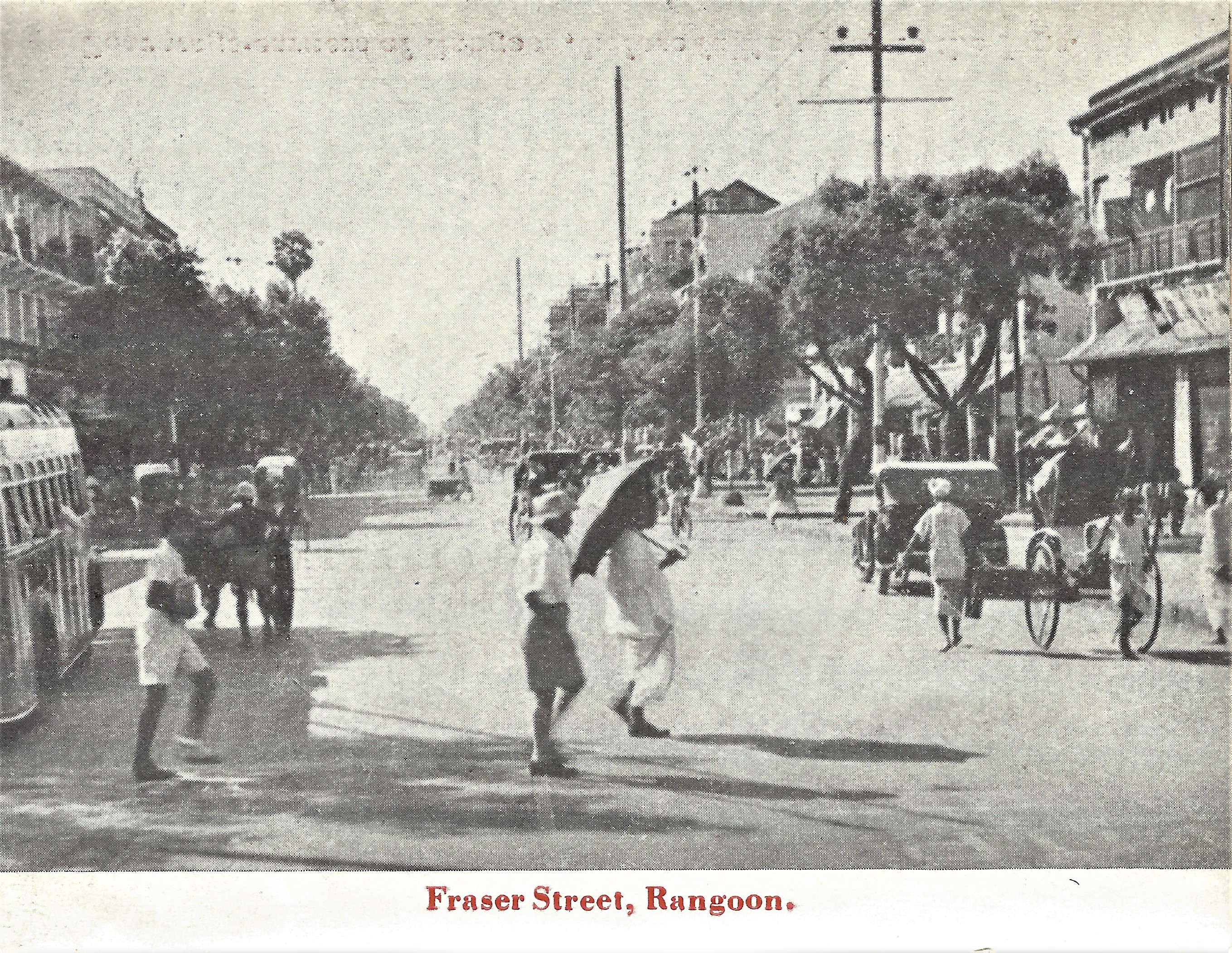
While the air battle raged over Mingaladon, two full squadrons of Japanese bombers reached Rangoon's center. Six Tomahawks circling over Syriam, downriver, spotted eighteen bombers of the 98th Sentai approaching at 17,000 feet in tight formation. Colonel Shigeki Usui commanded the squadron from the co-pilot's seat. The Tomahawks attacked in sections of three, knocking two bombers out of formation, but machine-gun fire from the formation killed one American pilot and struck Usui dead at his station. Twenty minutes after the 98th dropped its payload, twenty-seven bombers of the 60th Sentai arrived over downtown with almost no opposition. High-explosive and incendiary bombs leveled more than three-fifths of the wooden buildings in the target area. Flying glass and collapsing structures triggered a stampede through the narrow streets.
The Human Cost
An Indian shopkeeper who survived described what he saw: women with disheveled hair clutching infants, running blindly through smoke-filled streets, and children clinging to strangers they mistook for their parents. Between 1,000 and 2,000 civilians died in the bombing of downtown Rangoon that morning. Seventeen Allied military personnel were killed at Mingaladon. The docks, Rangoon's economic lifeline, were paralyzed as workers fled. Public transport stopped. Smoke rose in columns over the city that could be seen for miles. Civil defense services collapsed when much of the staff simply ran. The firemen, to their credit, stayed. Governor Dorman-Smith toured the wreckage that afternoon. The dead still lay uncollected in the tropical heat.
A Christmas Encore
The losses suffered by the 62nd Sentai on December 23 -- five of fifteen bombers destroyed, every survivor damaged -- made Sugawara furious rather than cautious. He planned an immediate follow-up raid but lacked the resources to launch it the next day. On Christmas Day, December 25, he struck again. The pattern would repeat through the following months. From December 1941 through March 1942, Rangoon endured a sustained aerial campaign that served as the opening act of Japan's invasion of Burma. The city that had been a jewel of the British Empire in Southeast Asia became a shattered transit point for refugees streaming north toward Prome, hoping that distance from the coast might buy them safety from the skies. For the American Volunteer Group pilots who defended it, the battle over Rangoon was the beginning of a legendary chapter. For the people who lived below the flight paths, it was something far less romantic.
From the Air
Located at 16.78°N, 96.17°E over central Yangon (formerly Rangoon), Myanmar. Mingaladon airfield, the primary military target, is now Yangon International Airport (VYYY), approximately 15 km north of downtown. The Shwedagon Pagoda, which Japanese bomber crews used as a visual navigation landmark, remains the dominant aerial feature at 321 feet tall with its gilded stupa. The Yangon River runs along the southern edge of downtown, where the docks were a secondary target. Recommended viewing altitude: 3,000-5,000 feet AGL to appreciate the scale of the raid zone.