Operation Meetinghouse: The Night Tokyo Burned
The bombers came back streaked in ash. When the B-29 Superfortresses of XXI Bomber Command landed at their bases in the Mariana Islands on the morning of March 10, 1945, the soot of an entire city district clung to their fuselages. Behind them, across more than fifteen square miles of eastern Tokyo, almost nothing stood. More than 90,000 people -- possibly over 100,000 -- were dead, the vast majority civilians. A million more were homeless. In a single night, Operation Meetinghouse had become the most destructive air raid in human history, exceeding even the atomic bombings that would follow five months later at Hiroshima and Nagasaki.
A Gamble at Low Altitude
Major General Curtis LeMay had been given command of XXI Bomber Command in January 1945 with an unspoken ultimatum: produce results or be relieved, just as his predecessor had been. Months of precision bombing from high altitude had failed. The jet stream over Japan scattered bombs wildly, cloud cover obscured targets, and mechanical failures plagued the B-29s. LeMay made a decision that stunned his own officers. He ordered the bombers to fly at night, individually rather than in formation, at altitudes between five thousand and nine thousand feet -- squarely within range of Japanese anti-aircraft guns. He stripped the aircraft of nearly all their defensive guns and gunners to save weight. His intelligence officers predicted seventy percent losses. LeMay did not formally seek approval from his superiors, later explaining he wanted to protect General Henry H. Arnold from blame if it failed. These radical weight reductions allowed each Superfortress to carry twice its usual bomb load.
The Shitamachi Inferno
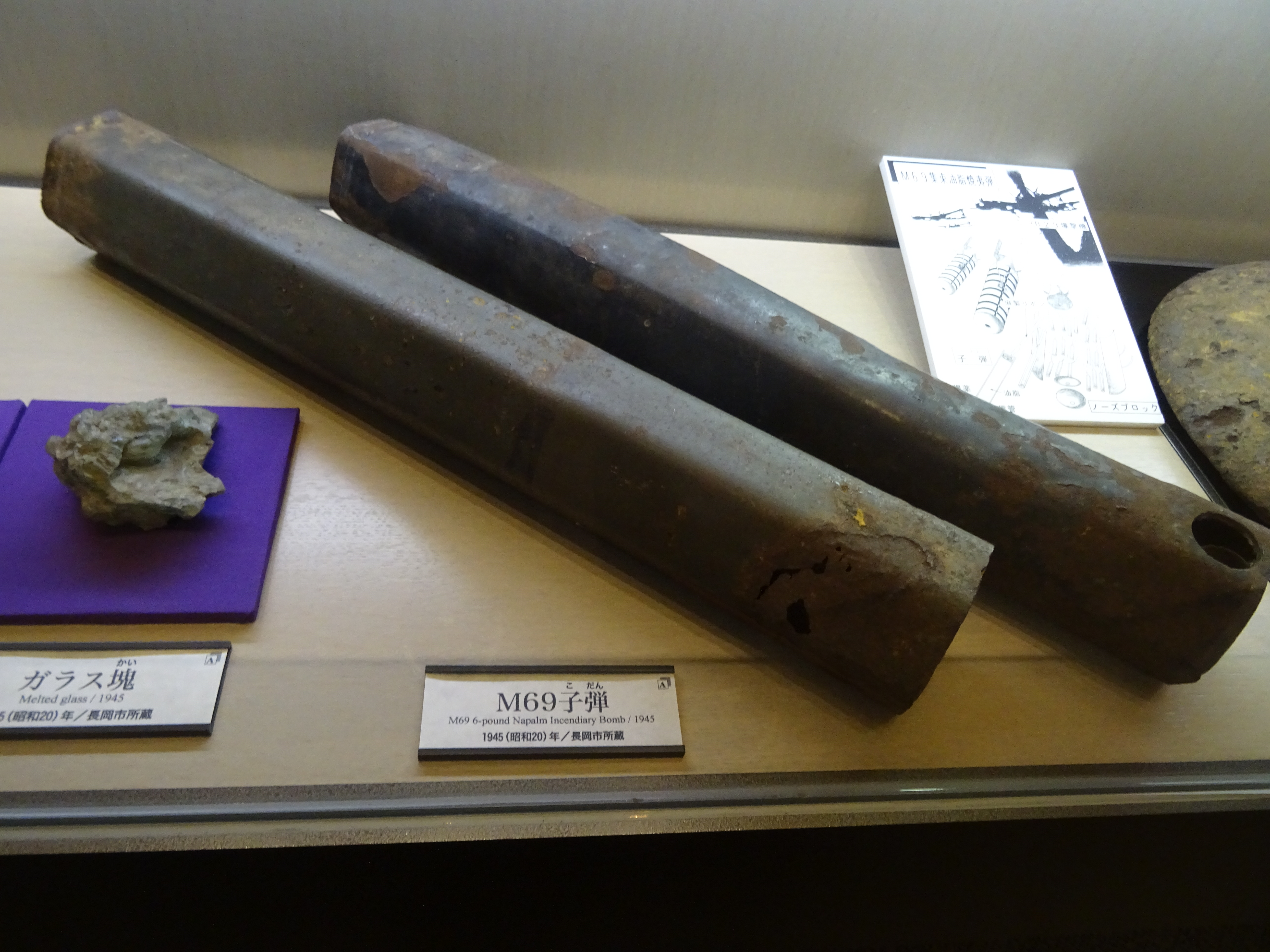
The target area was Zone I in northeastern Tokyo -- a rectangle covering the Asakusa, Honjo, and Fukagawa wards of the Shitamachi district. With roughly 1.1 million residents, it was one of the most densely populated urban areas on Earth. Most buildings were constructed from wood and bamboo, packed tightly together. The same district had burned catastrophically in the Great Kanto Earthquake of 1923. American intelligence rated it the most combustible area in Tokyo. At 12:08 a.m. on March 10, pathfinder bombers laid down an X-shaped pattern of napalm fires to guide the main force. Within thirty minutes, the fires were beyond the control of Tokyo's 8,000 firefighters. Within an hour, the fire department abandoned firefighting entirely and switched to rescue operations. Over 125 firemen and 500 civil guards were killed, and 96 fire engines destroyed. Wind-driven flames merged into firestorms that consumed everything in their path except stone structures.
Survival Meant Running
For civilians on the ground, the key to survival was grasping instantly that the situation was hopeless and fleeing. Historian Richard B. Frank wrote those exact words, and the accounts bear them out. Families who stayed to fight the fires in their homes or sheltered in the crude foxholes dug in their yards were burned alive or suffocated as the firestorm consumed the oxygen around them. The heat reached temperatures that caused clothing to ignite without touching flame. It melted window glass, and cyclonic winds blew the liquefied glass through the air. Thousands died by asphyxiation as the firestorm sucked breathable air from entire neighborhoods. The Sumida River, which divides the district, became both an escape route and a death trap as desperate civilians crowded its banks and bridges. The raid lasted approximately two hours and forty minutes. American aircrews flying through the final waves reported heavy turbulence from the thermal updrafts and the smell of burning flesh entering their aircraft.
What Came After
LeMay lost fourteen B-29s and ninety-six airmen -- a fraction of the catastrophic losses his intelligence officers had predicted. The Japanese air defenses, geared for high-altitude daytime interception, were caught off guard by the low-altitude night attack. The raid's tactical success made firebombing the standard for the remainder of the war. Emperor Hirohito toured the devastated areas on March 18. Whether this visit convinced him the war was lost remains debated among historians. Japan did not surrender until mid-August 1945, after the atomic bombings of Hiroshima and Nagasaki. The moral reckoning has never fully resolved. Philosopher A. C. Grayling called the raid "unnecessary and disproportionate." Others argue it was the only viable tactic after precision bombing had failed. The debate echoes similar arguments about the bombing of Dresden.
Memory in the Ashes
For decades, Japan's official commemoration of the March 10 raid remained muted. Academic Cary Karacas has argued that the Japanese government preferred to focus on the atomic bombings of Hiroshima and Nagasaki, which reinforced a narrative of victimhood without confronting Japan's own initiation of area bombing against Chinese cities. Efforts to build an official Tokyo Peace Museum were canceled by the Tokyo Metropolitan Assembly in 1999. Instead, the Dwelling of Remembrance memorial was built in Yokoamicho Park and dedicated in March 2001. Writer Katsumoto Saotome, who survived the raid as a child, spent his life campaigning for recognition. Unable to secure government support, he established the privately funded Center of the Tokyo Raids and War Damage, which opened in 2002 and remains the primary repository of information about the firebombing. In 2007, a group of survivors filed suit seeking compensation from the Japanese government; the Tokyo District Court ruled against them in 2009. A monument placed near Senso-ji temple in Asakusa in 1963 stands as one of the few neighborhood-level markers of the night the city burned.
From the Air
Located at 35.70N, 139.80E in the Sumida and Koto ward areas of eastern Tokyo. The target zone straddled the Sumida River, which remains a prominent visual landmark from the air. The Senso-ji temple complex in Asakusa, now rebuilt, is visible at lower altitudes. Tokyo Haneda Airport (RJTT) lies approximately 8 nautical miles to the south. Tokyo Narita International Airport (RJAA) is 35 nautical miles to the east-northeast. Best viewed at 2,000-4,000 feet AGL over the Sumida River for a sense of the zone's scale. Yokoamicho Park, site of the Dwelling of Remembrance memorial, sits along the west bank of the river.