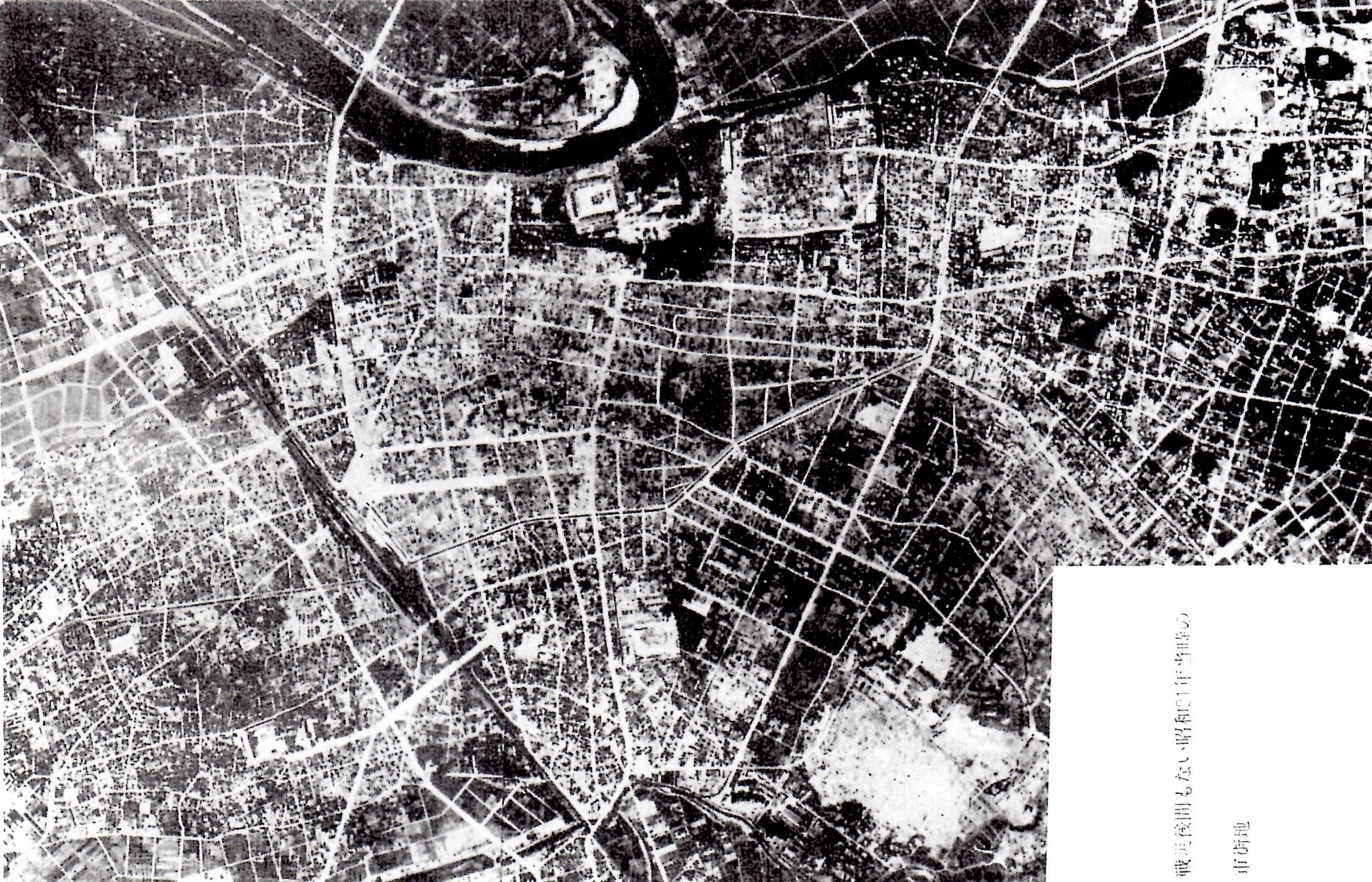
Bombing of Toyohashi
Eight times between January and June 1945, bombs fell on Toyohashi. Each raid was small -- stray loads from bombers hitting alternate targets, or individual aircraft seizing a target of opportunity. About 25 to 30 people died in those eight attacks combined. The raids barely warranted a footnote in the city's wartime records. Then came the night of June 19. Starting after midnight and lasting nearly three hours, 136 Boeing B-29 Superfortresses conducted a systematic firebombing of the city, and by dawn, nearly 62 percent of Toyohashi lay in ashes. The ninth raid erased whatever sense of safety the first eight had allowed the city to maintain.
The Crossroads in the Crosshairs
Toyohashi's strategic misfortune was geographic. Sitting on the Tokaido Main Line -- the rail spine connecting Tokyo and Osaka -- the city served as a junction point where the Iida and Atsumi branch lines peeled off into the rural interior of eastern Aichi Prefecture. Its port facilities on Mikawa Bay added another layer of logistical value. The city's industrial base was modest, but its role as a transportation node made it a target worth burning. Beyond the rail yards and port, Toyohashi hosted a constellation of military installations: a large Imperial Japanese Army training ground near what is now Aichi University, the headquarters of the 18th Infantry Regiment, the 4th Cavalry Brigade, the 4th Independent Combat Engineer Regiment, and an airfield where the 381st Naval Air Group flew Mitsubishi J2M Raiden interceptors. For American strategic planners, Toyohashi checked every box.
Three Hours Before Dawn
The attack began late on June 19 or just after midnight on June 20, 1945 -- the operational reports are ambiguous about the exact timing. What is not ambiguous is the scale. One hundred thirty-six B-29s dropped incendiary clusters across the city in a pattern designed to create overlapping firestorms. The primary kill zone stretched from Toyohashi Station to City Hall, consuming the dense commercial district between them. Large sections of the Azumada and Maebata neighborhoods burned, along with blocks surrounding Azumada Elementary School. Toyohashi was not alone that night. Simultaneously, other B-29 formations were firebombing Shizuoka, in neighboring Shizuoka Prefecture, and Fukuoka, on the island of Kyushu. The coordinated triple strike was part of the U.S. Army Air Forces' campaign to systematically destroy mid-sized Japanese cities after the major industrial centers had already been devastated.
What the Fires Took
Japanese authorities tallied the damage with bureaucratic precision: 624 dead, 346 injured, 16,009 households affected, 68,502 people displaced, 15,886 houses damaged or destroyed. Five temples were reduced to foundations. Azumada Elementary School was gutted. The Kawai Hospital burned -- it would be rebuilt, change hands and location several times, and eventually become the Oshima Orthopedic Clinic in the Ihara neighborhood, a small footnote of continuity in a landscape of rupture. In 1946, the United States Strategic Bombing Survey calculated that 61.9 percent of the city had been destroyed. The figure placed Toyohashi among the most thoroughly damaged cities in the firebombing campaign, measured by percentage of urban area consumed.
Lessons from Hamamatsu
The paradox of Toyohashi's destruction is that while property damage was catastrophic, casualties were relatively light for an attack of this magnitude. The reason was grimly practical: Toyohashi's residents had watched what happened to neighboring Hamamatsu. That city had endured its first major air raid in February 1945 and suffered repeated attacks in the months that followed, each one teaching the surrounding region hard lessons about evacuation timing, shelter construction, and the behavior of incendiary fires in dense wooden neighborhoods. By June, Toyohashi's population had absorbed those lessons. When the sirens sounded and the sky filled with the drone of Superfortress engines, people knew what to do and where to go. The knowledge that saved lives in Toyohashi was purchased with lives lost in Hamamatsu -- a grim exchange that repeated itself across Japan as the firebombing campaign moved from city to city through the spring and summer of 1945.
What Remains
Modern Toyohashi is a city of 370,000 that still serves its ancient function as a transportation crossroads. The Tokaido Main Line still runs through Toyohashi Station, and the Tokaido Shinkansen stops here on local services. The port on Mikawa Bay handles automobile exports. The military installations are gone, replaced by universities and residential neighborhoods. There is no single grand memorial to the bombing -- the memory is distributed across smaller monuments, school curricula, and the annual observances that many Japanese cities maintain for their air raid anniversaries. The rebuilt cityscape itself is the most visible legacy: the wide streets and firebreaks of the postwar grid replaced the narrow lanes that fed the firestorms. Walk the blocks between the station and city hall today, and you are walking the footprint of the fire.
From the Air
Located at 34.766N, 137.383E on the coastal plain of eastern Aichi Prefecture, facing Mikawa Bay. Toyohashi is identifiable from the air by its position at the junction of rail lines fanning out from the main station, and by the port facilities along the bay shoreline to the south. Nearest airports: Nagoya Airfield / Komaki (RJNA) approximately 40nm northwest, Chubu Centrair International Airport (RJGG) approximately 35nm west across the bay, Hamamatsu Air Base (RJNH) approximately 25nm east. The Tokaido Shinkansen line runs through the city on an elevated track, visible as a straight line cutting east-west. The Atsumi Peninsula extends to the southwest, with Mikawa Bay opening to the south.