Bonaventure Cemetery: Where the Dead Rest Under Spanish Moss
The girl on the cover of 'Midnight in the Garden of Good and Evil' doesn't live at Bonaventure anymore. The Bird Girl statue - a bronze sculpture of a young girl holding bird feeders - was relocated to a museum after the book's popularity brought so many visitors she needed protection. But Bonaventure remains, 160 acres of Victorian sepulchral art draped in Spanish moss, overlooking the Wilmington River. The cemetery opened in 1846 on the grounds of a plantation destroyed by fire. The ruins became gardens; the gardens became a city of the dead. Today, Bonaventure is Savannah's most atmospheric destination - a place where beauty and mortality negotiate terms under cathedral oaks.
The Setting
Live oaks arch over winding roads, their branches hung with Spanish moss that filters light into gray-green dimness. The Wilmington River slides past the eastern edge. Victorian monuments rise among magnolias and azaleas: angels, obelisks, draped urns, weeping figures, mausoleums in every Classical style. The landscape was designed as pleasure grounds before it became a cemetery; the pathways invite wandering. The effect is deliberately romantic - nature and death harmonized into something approaching paradise. The beauty is calculated but real. Bonaventure was designed to make the living envy the dead.
The History
John Mullryne established Bonaventure plantation in the 1760s. The mansion burned during a dinner party, according to legend, while guests continued their meal on the lawn watching flames consume the house. The ruins became atmospheric. Peter Wiltberger purchased the property from Commodore Josiah Tattnall III in 1846 and developed it as a private cemetery; the city of Savannah acquired it in 1907. Notable burials include poet Conrad Aiken (who requested his grave face the river), songwriter Johnny Mercer, and various Savannah aristocrats whose monuments compete for attention. The cemetery remains active; modern burials continue alongside Victorian monuments.
The Fame
John Berendt's 1994 book 'Midnight in the Garden of Good and Evil' featured Bonaventure prominently, using the Bird Girl statue on its cover. The book spent four years on the bestseller list. Visitors flooded Savannah seeking the locations described, and Bonaventure became overwhelmed. The Bird Girl moved to the Telfair Academy for protection. The cemetery remains famous, attracting visitors who may not have read the book but know the image. Bonaventure has become part of Savannah's tourism industry - ghost tours, photography workshops, history walks. The dead have become an attraction.
The Art
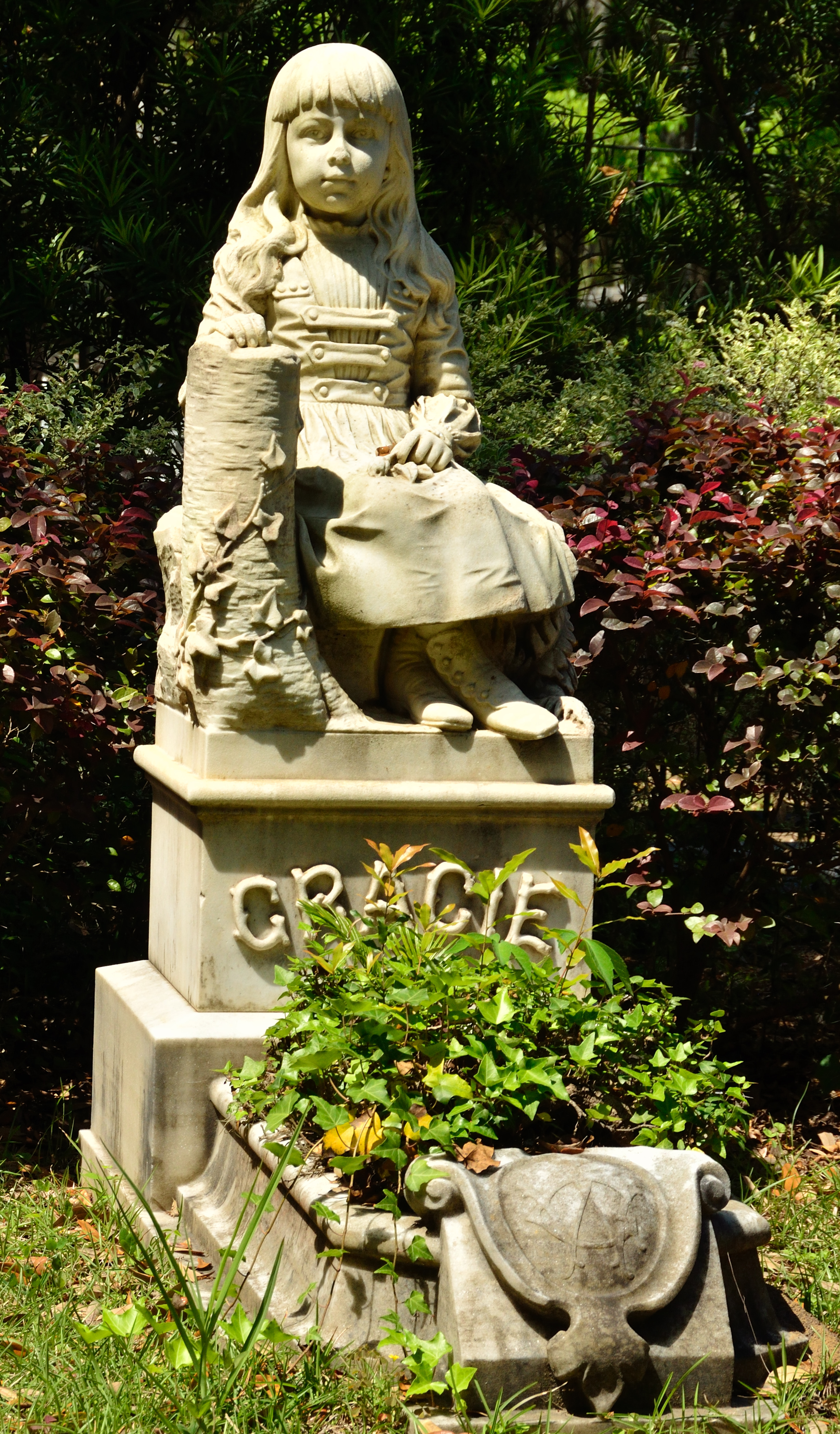
Bonaventure is essentially an outdoor sculpture museum. Victorian mourning culture produced elaborate funerary art: angels representing salvation, draped urns symbolizing the veil between life and death, broken columns indicating lives cut short, anchors signifying hope. The craftsmanship is exceptional - marble carved with sensitivity, bronze cast with detail. Gracie Watson's monument, featuring a life-sized marble statue of a six-year-old girl who died in 1889, is particularly affecting. The art reflects a culture that confronted death directly, memorializing the departed with effort and expense that modern practice rarely matches.
Visiting Bonaventure Cemetery
Bonaventure Cemetery is located roughly 4 miles east of downtown Savannah, accessible by car via Bonaventure Road. The cemetery is open daily during daylight hours; admission is free. Maps and visitor information are available at the entrance. Walking tours are offered by various companies; some focus on history, others on ghosts. The grounds are extensive; allow 2-3 hours for thorough exploration. Photography is permitted; the lighting is best in early morning or late afternoon when moss-filtered sun creates atmosphere. Respect the graves and mourners. The Bird Girl is at Telfair Academy downtown; Bonaventure no longer has her. Downtown Savannah has extensive lodging and dining.
From the Air
Located at 32.04°N, 81.04°W east of downtown Savannah on a bluff overlooking the Wilmington River. From altitude, Bonaventure appears as a dense tree canopy - live oaks creating nearly continuous cover over the 160-acre grounds. The Wilmington River forms the eastern boundary. Whitish dots visible through gaps in the canopy are the marble monuments. The contrast with surrounding residential development emphasizes the cemetery's preservation as green space. Savannah's historic district is visible to the west. The approach to Savannah International Airport often provides views of the area. The cemetery's atmospheric quality comes from tree cover and river setting - landscape design from nearly two centuries ago still functioning as intended.