Boot Düsseldorf
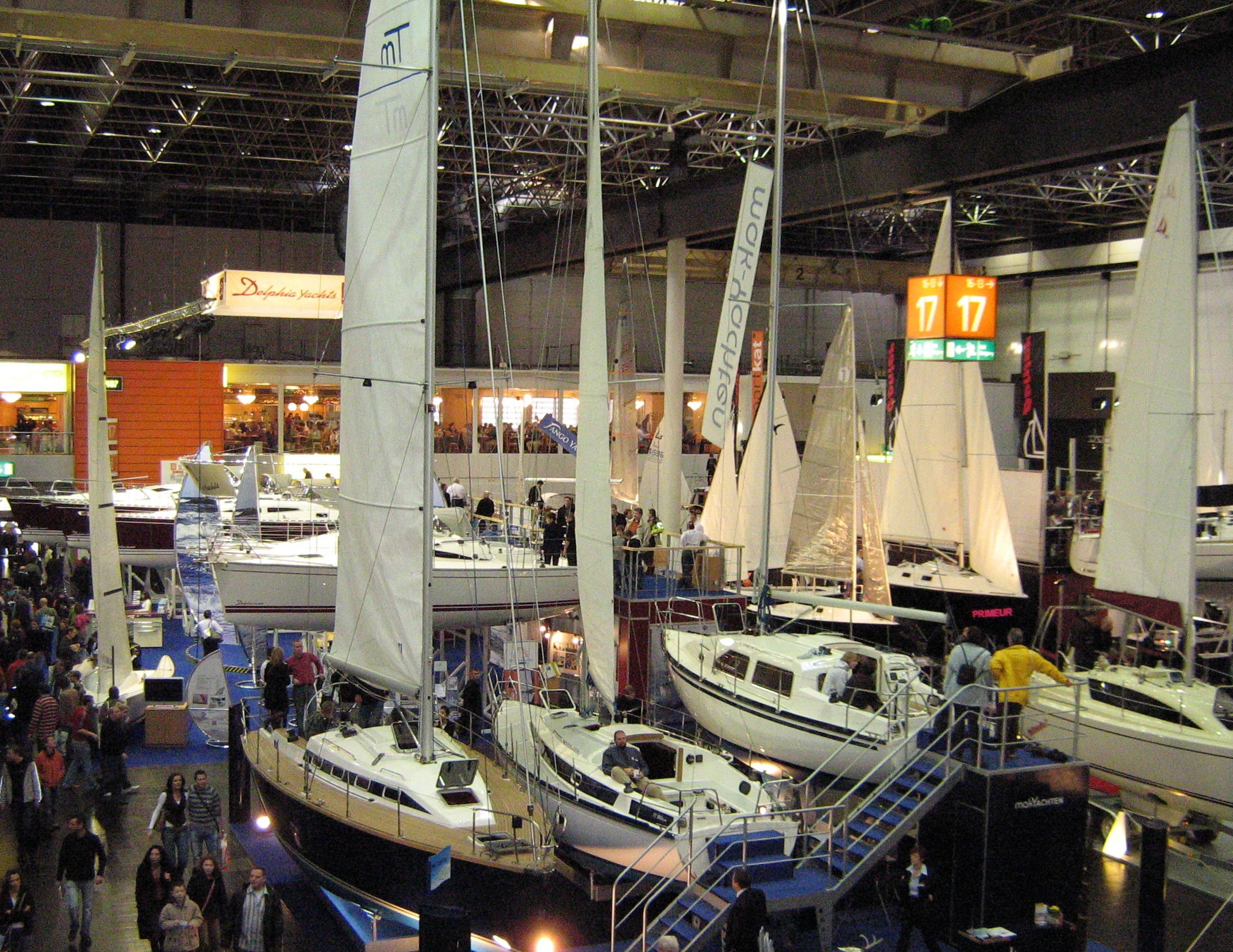
There is something gloriously absurd about boot Düsseldorf. The world's largest boat and yacht trade fair takes place in the dead of January, indoors, in a city that sits roughly six hundred kilometers from the North Sea and considers a Rhine cruise an adventure. And yet for one week each winter, the seventeen halls of Messe Düsseldorf swell with around 1,600 exhibitors from more than fifty countries, presenting everything from kayaks to superyachts of up to 180 gross register tons — vessels you can actually walk onto, fully assembled, surrounded by tarmac in landlocked North Rhine-Westphalia. This is what happens when a regional trade fair takes a niche seriously for half a century.
The First Boat Show
The first Düsseldorf Boat Show opened on the twenty-seventh of November, 1969 — autumn, not January, with 116 exhibitors from eight countries spread across 11,000 square meters and drawing 34,000 visitors. By 1972 the show had moved to the new Messe premises in Düsseldorf-Stockum, where it has lived ever since, and that year it served as a forum for preparations for the Munich Summer Olympics. Canada became the show's first partner country in 1976. By 1979 the exhibitors had begun to use the indoor scale as a selling point: Preussag AG installed an eight-by-four-by-four meter glazed saturation diving tower right on the show floor. In 1981, the year's theme was 'marine science,' and the Swiss oceanographer Jacques Piccard — who had descended seven miles into the Mariana Trench aboard the bathyscaphe Trieste in 1960 — appeared with underwater photography. The show was learning to think of itself as more than a marketplace.
Why Düsseldorf
Genoa's Salone Nautico Internazionale is comparable in size, but Italy holds its boat show on the Mediterranean, where boats live. Düsseldorf, by contrast, has chosen to be deliberately, defiantly inland — at the heart of what the trade calls the European megalopolis, an axis of dense population reaching from England through the Low Countries to northern Italy. The reasoning is logistical and demographic. More potential buyers live within a short rail ride of Düsseldorf than within reach of any seaside venue. Messe Düsseldorf is one of Europe's largest exhibition complexes; the halls are tall enough and the floors strong enough to take superyachts in one piece. By 2008, the show's fortieth year, the floor area for boot had reached 220,000 square meters. The 2010 edition set records with more than 150 premieres, twenty of them world premieres, including the show's first serious push on alternative-fuel sailing and motor yachts.
Of Cousteau and the European Yacht of the Year
In 1998 boot partnered with the Lisbon Expo, themed 'The Oceans, a Heritage for the Future,' and brought in the French environmentalist Jean-Michel Cousteau — son of Jacques — to make the case that yacht culture and ocean stewardship could share a hall. In 2001 the German magazine Yacht launched the European Yacht of the Year award at boot, and it has been chosen every year since by a jury drawn from eleven leading European sailing magazines — Voile Magazine of France, Yachting World of England, Yate of Spain, Seilas of Norway, and others — making boot the place where the European sailing industry annually crowns its best. The European Powerboat of the Year followed in 2005, judged on the same model by the German magazine BOOTE and its sister publications across the continent. Diving, kayaking, sport fishing, and yacht charter operations have all become permanent sections of the show. Visitor numbers peaked at just over 400,000 in 1992; today the figures are smaller, but the trade buyers remain.
A Week in January
Walk into Hall 6 on opening day and you might find a Sunseeker 86 yacht parked beside a row of Bavaria cruisers, with a Jeanneau Sun Odyssey on one side and a Hanse 545 on the other — all of them shipped to a city without a coast. Hall 3 might hold Pershings and Princess motor yachts; Hall 16 might be diving gear, dry suits, regulators, dive computers. As a long-time partner of Kiel Week — the Baltic regatta in late June that is one of the world's largest sailing events — boot keeps the German sailing calendar synchronized: the buyer who orders in January takes delivery in time for summer in Schleswig-Holstein. Boot Düsseldorf is also, somewhat improbably, the largest German internet portal for water sports through its boot.de companion site. The premise that a boat show belongs by the water turns out to be optional. What you need is buyers, scale, and good rail connections.
From the Air
Messe Düsseldorf sits at 51.26°N, 6.74°E in the Düsseldorf-Stockum district, on the northern side of the city across the Rhine from the suburb of Lörick. From altitude, the most distinctive landmark is the Rhine Tower (Rheinturm, 240 m) downtown, with the Messe complex visible as a cluster of vast hangar-like halls north of the city center. Düsseldorf International (EDDL/DUS) is just 2 km north of the fairground — boot's international visitors literally step off the plane and onto the show floor. Köln-Bonn (EDDK/CGN) is 50 km south. The show runs the week ending the last Saturday in January.