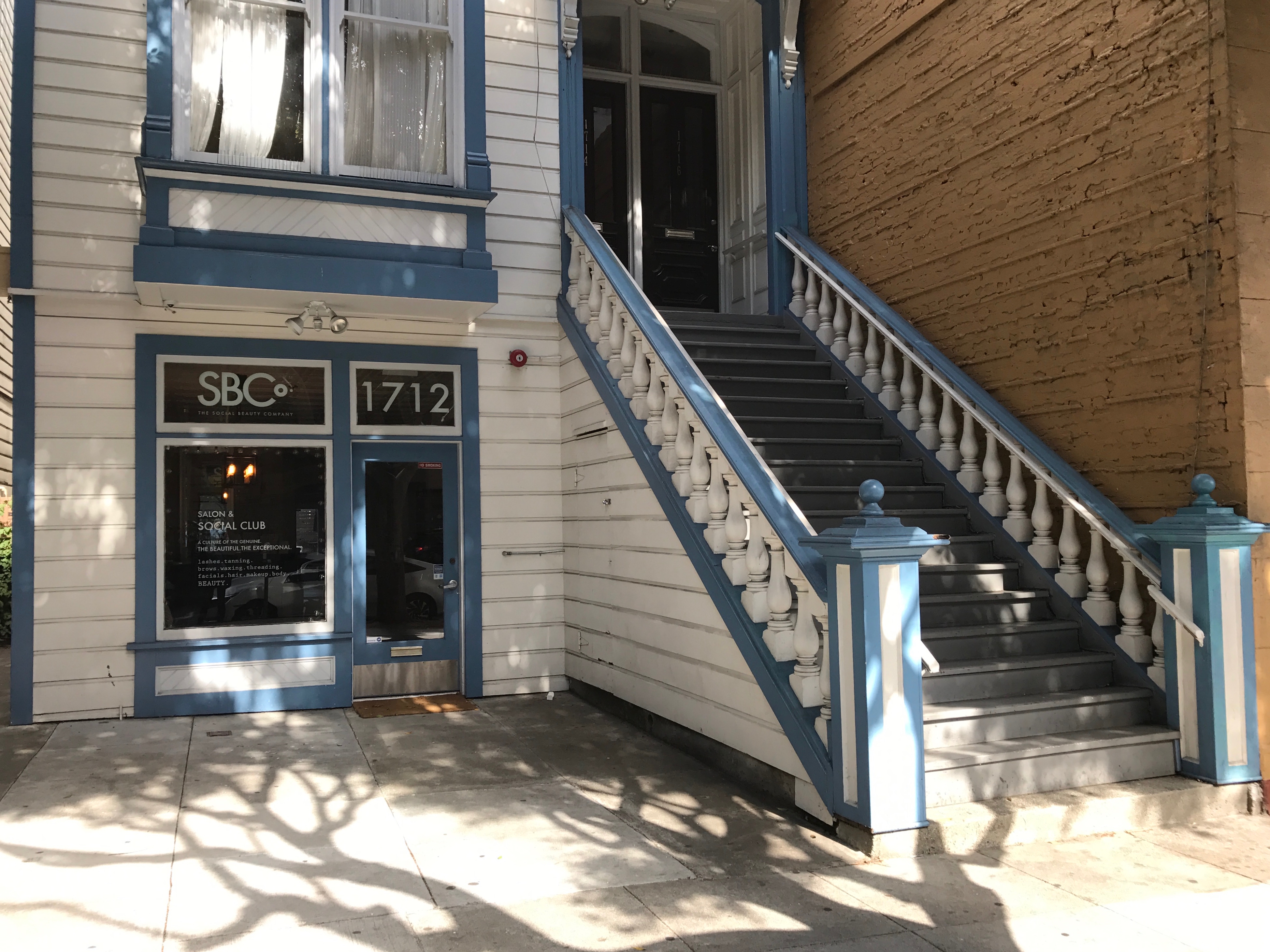
Bop City
Two in the morning, and the rest of San Francisco was asleep. That's when the door opened at 1690 Post Street, and the back room of a Victorian house in the Western Addition became the most important jazz club on the West Coast. Jimbo's Bop City operated from 2 AM to 6 AM, filling the hours when every other venue had gone dark. The arrangement was half genius, half necessity -- and from 1949 to 1965, it drew Billie Holiday, Louis Armstrong, Chet Baker, and Charlie Parker into a neighborhood that had already been reshaped by war and would soon be reshaped again by urban renewal.
From Waffle Shop to Jazz Temple
John "Jimbo" Edwards never planned to run a jazz club. He rented the Victorian at 1690 Post Street intending to open a cafe called Jimbo's Waffle Shop. But the building had history: the same space had briefly housed Vout City, a club run by the eccentric musician Slim Gaillard, and before that, the ground floor had been Nippon Drug Store -- a remnant of the Japantown that had existed here before the wartime internment of Japanese Americans emptied the neighborhood. African Americans had moved in during the 1940s, creating a vibrant Black community in the Western Addition. When musicians urged Edwards to add a stage in the back room, he listened. The club opened in late March 1949 with a concert by the Dizzy Gillespie Orchestra and Sarah Vaughan.
The Sound That Changed the City
San Francisco in the late 1940s was a Dixieland town. Lu Watters' Yerba Buena Jazz Band and other traditional revival groups dominated the scene, while modern jazz -- swing, bebop, the sound of the future -- flourished in Los Angeles on Central Avenue. Bop City broke that pattern wide open. By booking bebop and modern jazz acts in the dead of night, Edwards created a space where San Francisco's ears could catch up to its ambitions. The after-hours format meant musicians finishing their regular gigs at other clubs would come to Bop City to jam, turning the back room into a proving ground where established masters and young hopefuls traded solos until dawn.
A Neighborhood Twice Displaced
The story of Bop City cannot be separated from the neighborhood that made it possible. The Western Addition's transformation into a center of Black cultural life happened because of an injustice: the forced internment of Japanese Americans during World War II, which vacated homes and businesses that African American families filled. By the 1950s, the Fillmore district pulsed with Black-owned clubs, restaurants, and shops. But urban renewal arrived in the 1960s and 1970s with demolition crews, displacing the community that had built the neighborhood's second life. Bop City closed in 1965, not because the music failed but because jazz lost its commercial footing to rock and roll.
The House That Moved
The Victorian that housed Bop City survived both closure and demolition -- barely. During the urban renewal that gutted much of the Western Addition in the 1970s, the building was physically relocated two blocks west, from 1690 Post Street to 1712 Fillmore Street, where it still stands. The city designated it a San Francisco Landmark, a recognition that what happened inside those walls mattered enough to justify the extraordinary effort of moving an entire house. The building's journey mirrors the neighborhood's own: displaced, transformed, but stubbornly present. The music stopped decades ago, but the room where Dizzy Gillespie played opening night and Charlie Parker jammed until sunrise still holds its ground on Fillmore Street.
From the Air
Located at 37.7857°N, 122.4294°W in San Francisco's Western Addition / Fillmore district. The building now stands at 1712 Fillmore Street. Best viewed at 1,500-2,500 feet AGL. Nearest airports: KSFO (11 nm south), KOAK (10 nm east). The Fillmore district is identifiable between Japantown's Peace Pagoda and the Divisadero corridor.