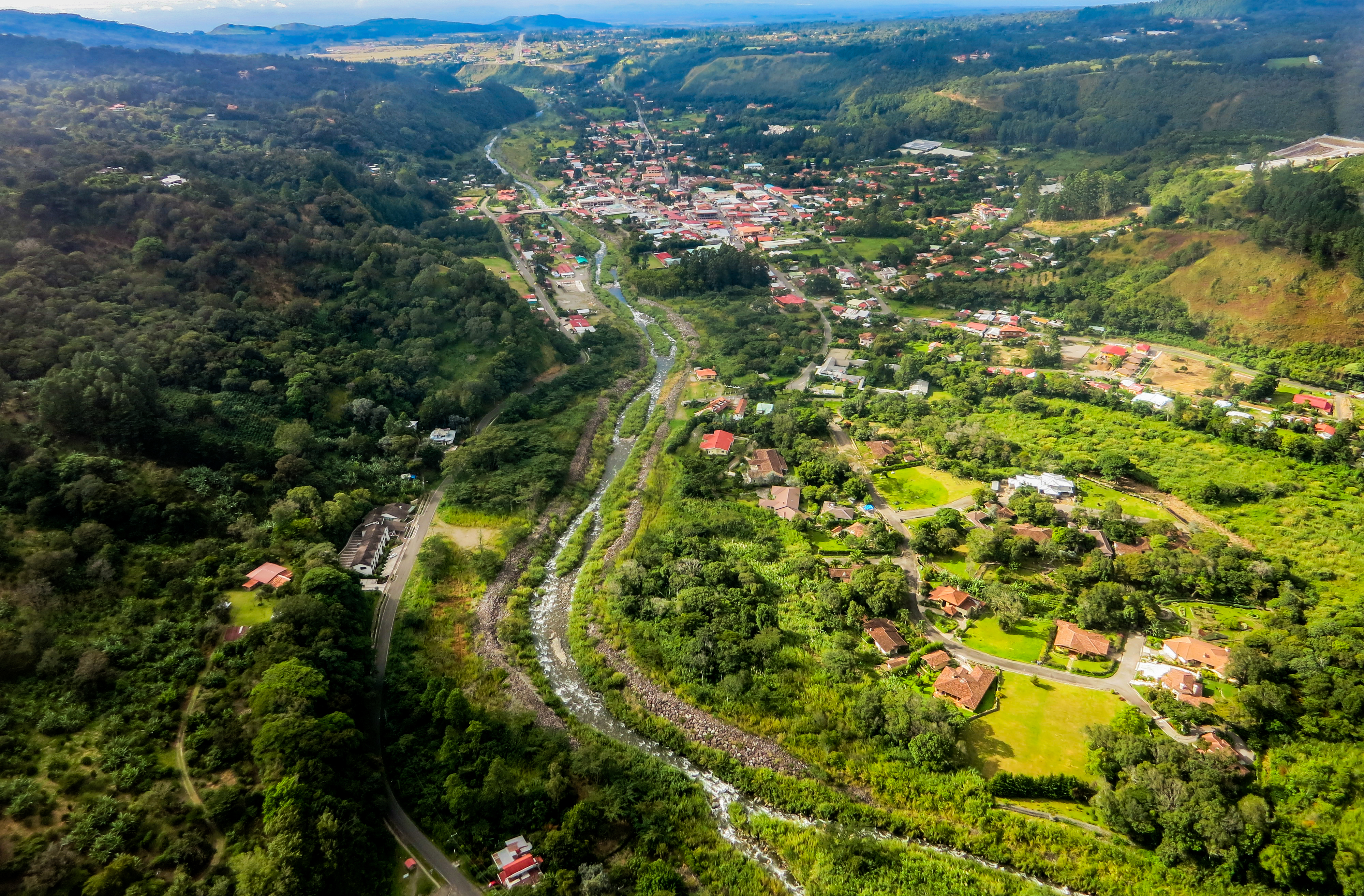
Boquete
Magazines called it "the land of eternal springtime," and the name stuck. Boquete, a small town tucked into the western highlands of Panama's Chiriqui Province, sits at the foot of Volcan Baru beside the Caldara River, where year-round temperatures hover in the low seventies Fahrenheit. Until the early 2000s, almost nobody outside of Panama had heard of it. Then developers built Valle Escondido, expat publications took notice, and within a few years this quiet agricultural village had become one of the most talked-about retirement destinations in the Americas. The transformation was swift, but the valley's appeal -- cool mountain air, world-class coffee, and cloud forests teeming with quetzals -- predates any real estate brochure.
The Geisha in the Cup
Boquete's volcanic slopes produce some of the most sought-after coffee on earth. The region's prized varietal is Geisha, a bean originally from Ethiopia that found ideal growing conditions on the flanks of Volcan Baru. At auction, Geisha lots from Boquete have sold for over $1,000 per pound, with records shattered repeatedly -- the 2025 Best of Panama auction saw lots from Hacienda La Esmeralda fetch over $13,000 per kilogram. Buyers from Europe and Asia prize its jasmine-like aroma and bright, tea-like finish. Farms like Kotowa, whose coffee shop sits near the tourism office on the road toward David, welcome visitors for tours of the drying patios and roasting facilities. Beyond coffee, the valley's agriculture includes strawberries, oranges, and cacao -- a reminder that before the expats arrived, Boquete's economy ran on what grew in its rich volcanic soil.
A Valley of Flowers and Feathers
Locals call this place the Valley of the Flowers, and two annual festivals make the case: the Festival of Flowers and Coffee in January and the Orchid Fair in March. But the real spectacle is overhead, not in a garden. Boquete sits at the edge of cloud forest habitat where birdwatchers come hoping to spot the resplendent quetzal, a jewel-toned bird the ancient Maya considered sacred. Howler monkeys shake the canopy, and the surrounding trails -- from the Sendero Los Quetzales to lesser-known paths in the Bajo Mono area -- wind through forests so dense that wandering off-trail without a guide is genuinely risky. The biodiversity here rivals that of neighboring Costa Rica, but with fewer crowds and lower prices, a fact that Boquete's promoters never tire of pointing out.
When the Expats Came
For generations, Boquete's families lived by farming and kept to themselves. The shift began around 2002, when Valle Escondido opened as a gated residential community marketed to North Americans. Expat-focused magazines ranked Boquete among the world's best retirement spots, and a wave of retirees followed, drawn by temperate weather, affordable living, and a relaxed pace. English is now widely spoken downtown, and the amenities range from health spas to international restaurants. Whether this transformation enriched or diluted Boquete depends on whom you ask. The town's central plaza still anchors daily life -- the bus from David drops passengers beside an old train car near Baru Restaurant -- but the streets around it now cater as much to foreign newcomers as to the multigenerational families who built the place.
The Volcano Next Door
Volcan Baru looms over Boquete at 3,475 meters, the highest point in Panama. Tour operators offer jeep rides to the summit for around $150, but the more rewarding approach is on foot: a grueling, roughly six-hour climb up a steep dirt road that begins at the national park trailhead. Hikers who start around midnight can reach the top in time for a sunrise that reveals both the Pacific Ocean and the Caribbean Sea -- one of the few places on earth where both are visible at once. The temperature near the summit can drop below freezing, and two people have died from hypothermia at the top, so warm layers and ample water are essential. For those less inclined toward punishment, the hot springs near Caldera offer a gentler encounter with the volcano's geothermal energy.
From the Air
Boquete is at 8.78N, 82.44W, nestled in a valley on the eastern flank of Volcan Baru (3,475 m / 11,401 ft). The nearest commercial airport is Enrique Malek International (MPDA) in David, about 40 km south. From altitude, the town is identifiable by the Caldara River corridor running through a green valley surrounded by cloud-forest ridges. Best viewed below 10,000 ft for detail; the summit of Volcan Baru is visible from much higher.