Borra Caves
Somewhere in the darkness, 80 meters below the surface of the Ananthagiri hills, sulfur springs seep through limestone passages and orange microbial mats bloom in water that has never seen sunlight. The Borra Caves -- Borra Guhalu in Telugu, from a North Andhra dialect word meaning "hole" -- are the deepest caves in India, a karstic labyrinth extending 200 meters in length and reaching 12 meters in height, set at an elevation of 705 meters in the Eastern Ghats of Andhra Pradesh. They are also, in their own strange way, a temple. Deep inside the lightless passages, a stalagmite formation bears an uncanny resemblance to a Shiva lingam, and above it sits a stone shape that locals see as Kamadhenu, the sacred wish-fulfilling cow of Hindu mythology. The Gosthani River -- its name derived from the Sanskrit for "cow's udder" -- is said to originate from this very spot.
Fifty Thousand Years of Darkness
Long before anyone attached divine meaning to the formations inside, humans were already using the Borra Caves. Archaeologists from Andhra University unearthed Middle Paleolithic stone tools here dating back 30,000 to 50,000 years, confirming that people sheltered in these passages tens of thousands of years before the first civilizations arose in the subcontinent. The tools are crude by later standards -- shaped for cutting and scraping rather than ceremony -- but their presence this deep in the Eastern Ghats tells a story of ancient migration and survival. What drew those early humans was likely the same thing that draws visitors today: shelter from monsoon rains, a constant interior temperature of about 16 degrees Celsius regardless of the season, and the presence of fresh water from the sulfur springs that thread through the cave system.
A Living Underground
The Borra Caves are not silent stone halls. They are alive. Sulfur springs discharge into the passages, corroding the limestone and feeding thick orange microbial mats -- some 2.5 centimeters thick -- that extend three meters from the deepest cave openings. Patches of yellow biofilm float in the spring water like pale mucus. These extremophile communities thrive where no light penetrates, drawing energy from the cave's chemistry rather than the sun. Above them, in the twilight zone where some light still reaches, colonies of fulvous fruit bats cling to the ceiling. Rousettus leschenaultii, with their large eyes and slender bodies, roost here by day and emerge at dusk to feed on jamun, guava, and mango from the surrounding forests. The golden gecko, another resident, navigates the cave walls in permanent darkness. In 2014, scientists described Habrobathynella borraensis from these caves -- the first cavernicolous species of its genus ever found in India.
Columns and Curtains
The formations that make the caves a tourist attraction have been building themselves for millennia, one mineral-laden drop at a time. Stalactites hang from the ceiling in lengths ranging from a few centimeters to well over a meter. Stalagmites rise from the floor, the largest reaching 1.2 meters, while full columns -- where stalactite and stalagmite have finally met -- stand 6 meters tall and 0.75 meters wide. The Andhra Pradesh State Tourism Department has installed 26 mercury, sodium vapor, and halogen lamps throughout the caves, casting the formations in dramatic light that reveals colors the total darkness normally hides. The effect is theatrical: curtains of mineral deposit glow amber and cream under the artificial light, while shadows pool in the deeper recesses where the passages continue beyond the tourist path.
The Araku Road
Reaching the Borra Caves requires commitment. From Visakhapatnam, 90 kilometers to the southeast, the road climbs steadily into the Eastern Ghats, winding through hairpin turns for roughly three hours. The nearest airport is Visakhapatnam Airport, 76 kilometers away. But the journey is part of the experience: the Araku Valley, a hill station 29 kilometers beyond the caves, draws its own visitors with cool temperatures, coffee plantations, and views of forested ridgelines. November and December are the ideal months, when the monsoon has ended and the air is clear enough to see the full sweep of the Ananthagiri hills. The average annual temperature in the Araku hills hovers around 25 degrees Celsius, and annual rainfall of 950 millimeters falls mostly during the northeast monsoon -- meaning that outside the wet season, the caves and the valley around them offer one of the most comfortable climates in tropical India.
From the Air
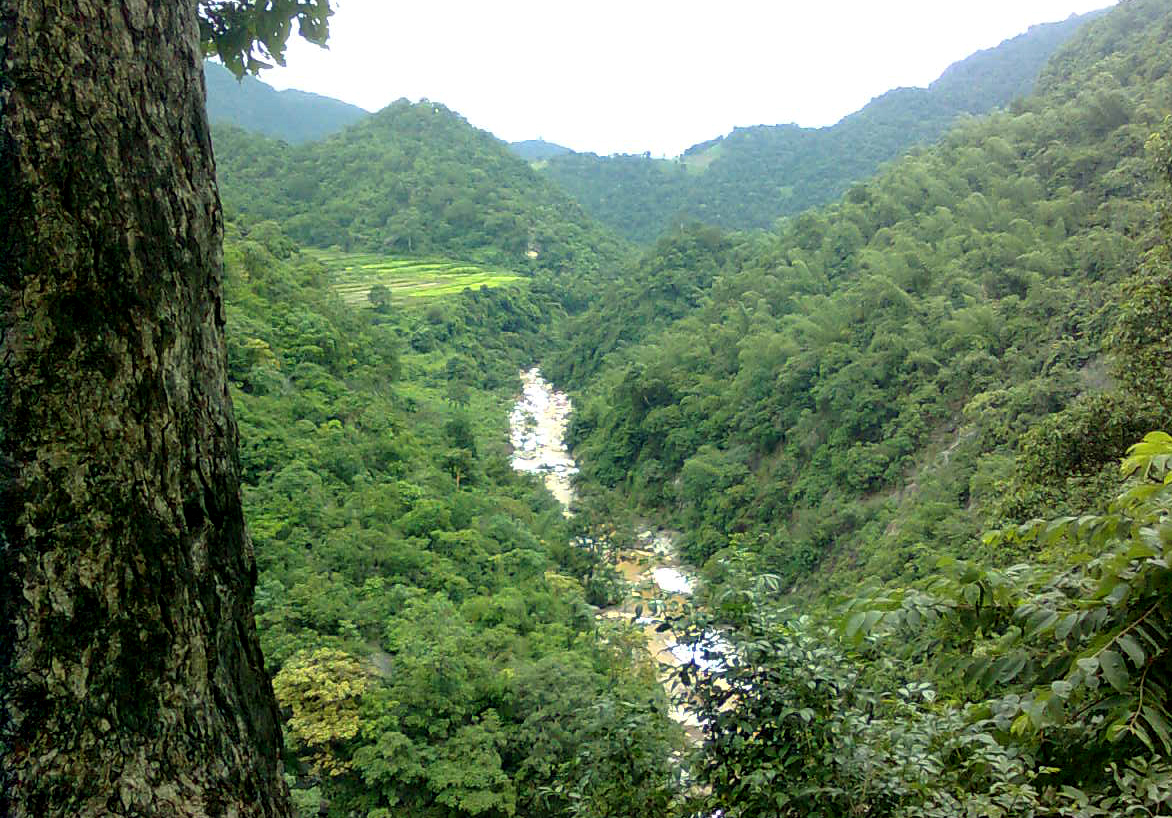
Located at 18.17°N, 83.00°E in the Ananthagiri hills of the Eastern Ghats, at an elevation of approximately 705 meters. The caves themselves are underground and not visible from the air, but the surrounding terrain -- steep, forested hills of the Araku Valley -- is distinctive. The nearest airport is Visakhapatnam (VOVZ/VTZ), approximately 76 km to the southeast. The hill road from Visakhapatnam is visible as a winding ribbon through the Eastern Ghats. Best viewed at 3,000-5,000 feet to appreciate the dramatic elevation change from the coastal plain to the Araku Valley highlands.