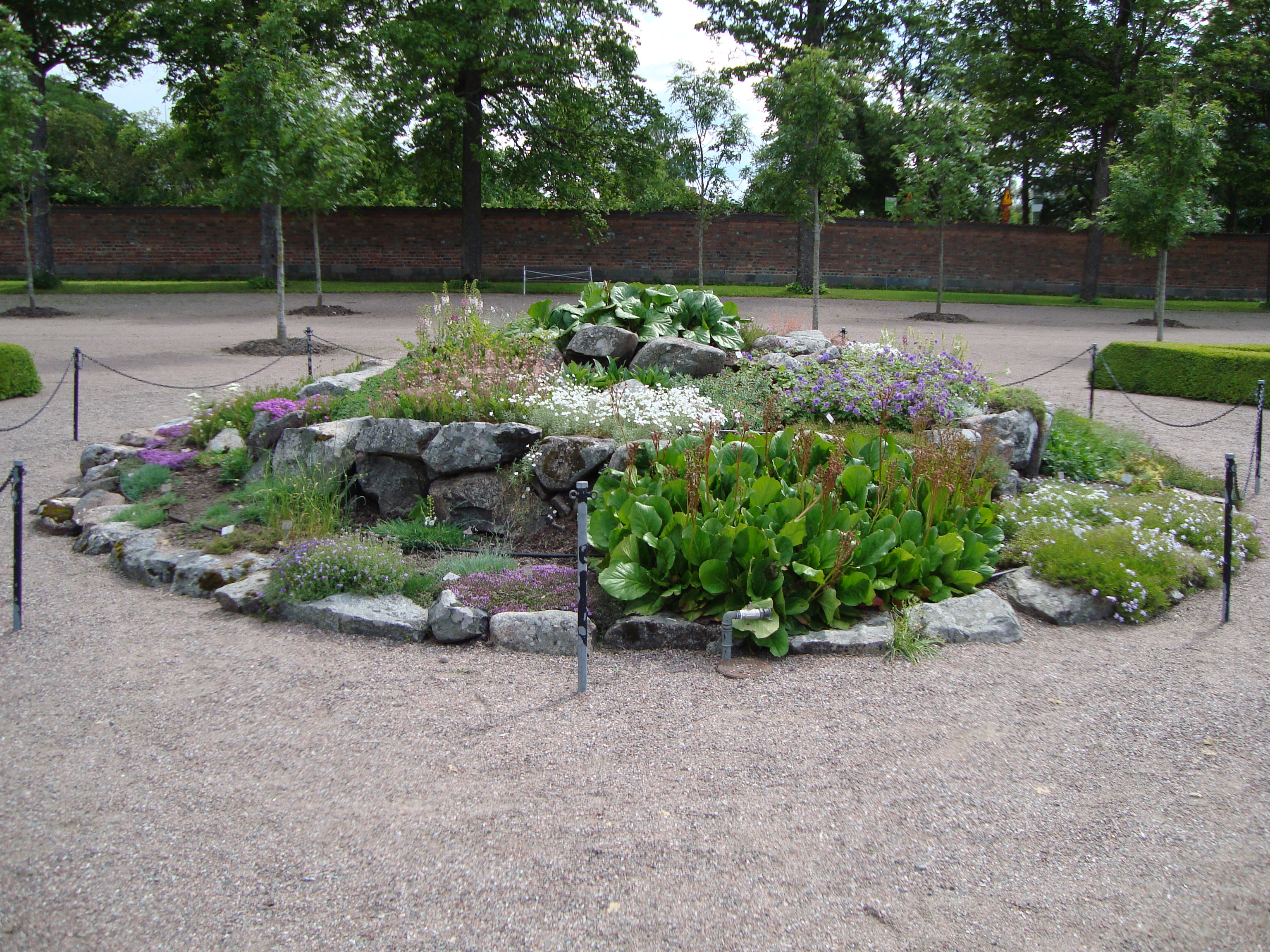
Botanical Garden of Uppsala University
In the spring of 1729, a 21-year-old student wandered through what had become an embarrassment - Uppsala University's botanical garden, once Sweden's pride, now completely neglected. But Carl Linnaeus saw something others had missed. He identified plants, recited their properties, demonstrated a virtuosic knowledge that stunned Olof Celsius, a professor watching nearby. That chance encounter secured Linnaeus the patronage that would launch his career. Within decades, he would transform this very garden into a collection of 3,000 species and revolutionize how humanity names every living thing.
From Fire to Neglect
The garden Linnaeus encountered had known better days. Founded in 1655 by Olaus Rudbeck, it was Sweden's first botanical garden, eventually housing approximately 1,800 species by century's end. Then came the catastrophic Uppsala fire of 1702, which destroyed much of the city. The garden survived but fell into abandonment. For nearly three decades, what had been a center of botanical learning became an overgrown relic. When Linnaeus arrived as a student, he found opportunity where others saw only decay. His demonstration of botanical mastery to Celsius that spring day set him on a path that would lead to a professorship, and from there, to one of the great intellectual projects of the Enlightenment.
A King's Gift
Under Linnaeus's direction, the collection doubled in size, but the original site had a fundamental problem: the ground was too wet for many species. Carl Peter Thunberg, Linnaeus's successor, approached King Gustav III with a solution. The royal castle in Uppsala stood on higher ground, with formal gardens that could be converted to botanical purposes. Gustav III exceeded all expectations. He not only gave the requested land but added another plot south of Norbyvägen, then paid for the landscaping himself. He laid the foundation stone for a new orangery and remained personally involved until his assassination in 1792. After his death, funds dried up, and the orangery didn't open until 1802.
The Lion in the Orangery
Gustav IV Adolf, the next king, made his own peculiar contribution. In 1802, he donated items from his grandmother Queen Louisa Ulrika's collection - she had been a significant patron to Linnaeus during his lifetime. But Gustav IV Adolf's most memorable gift was alive: a lion, housed in the new orangery. Based on the scientific understanding of the time, the caretakers fed it live chickens. The lion did not thrive. It died from unknown causes in 1803, a reminder that even royal enthusiasm cannot overcome the fundamental challenges of keeping African predators in Swedish captivity. The university continued displaying zoological collections in the orangery until 1856, when they moved to the Gustavianum.
Linnaeus's Living Legacy
Today, Uppsala University maintains three botanical gardens, each tied to Linnaeus's memory. The original 1655 site survives as the Linnaean Garden, maintained to Linnaeus's recorded design - a living reconstruction of how he organized his botanical world. Linnaeus Hammarby, his family's summer home, offers another window into his life. And the main Botanical Garden near Uppsala Castle, born from royal generosity and scientific ambition, continues as a center for public education. The shift from university research site to public recreation mirrors changes in botanical gardens worldwide during the 19th century. Since the late 1800s, public funds have supported its maintenance.
Where Names Are Born
The significance of Uppsala's botanical garden extends far beyond Sweden. Here, Linnaeus developed and refined the binomial nomenclature system - genus and species - that scientists still use to name every organism on Earth. Every plant and animal you've ever read about, from Homo sapiens to Tyrannosaurus rex, carries a name structured according to principles Linnaeus formalized while walking these paths. The garden where he proved himself to Celsius, the collection he expanded from neglect to world prominence, the royal land where his successors built the modern institution - all of it represents not just botanical history but a fundamental shift in how humanity understands and categorizes the natural world. The labels in gardens everywhere echo what began here.
From the Air
The Botanical Garden lies adjacent to Uppsala Castle at 59.85°N, 17.63°E, on elevated ground above the Fyris River valley. The castle and its distinctive twin towers serve as the primary visual landmark; the garden spreads below to the south. The original Linnaean Garden is in the old town near the cathedral, approximately 1km northeast. Stockholm Arlanda Airport (ESSA) is 18nm southeast. At 1,500-2,000 feet, the relationship between castle, garden, and the medieval city center becomes clear. The geometric patterns of the formal botanical layout may be visible in clear conditions.