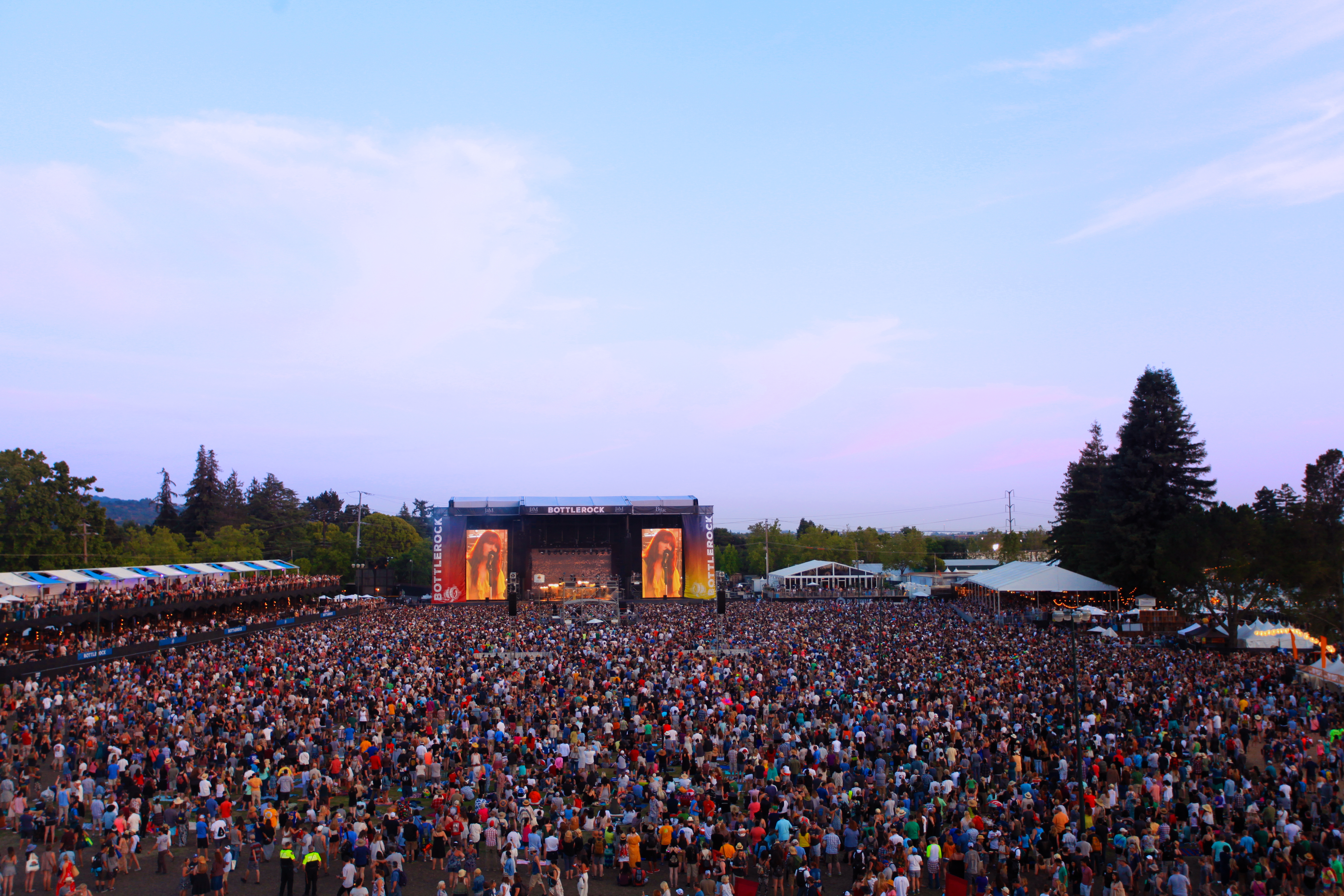
BottleRock Napa Valley
The first BottleRock Napa Valley, in May 2013, left behind more than just trampled fairground grass. It left more than $4.5 million in unpaid bills. Vendors, stagehands, security guards, even the City of Napa itself -- all stiffed by organizers who had drawn 120,000 fans to a wine region better known for Cabernet than crowd-surfing. The festival should have died right there, another cautionary tale of overambition. Instead, new ownership stepped in, honored the debts, and built BottleRock into one of California's signature music events -- proof that in Napa Valley, a good idea paired with the right management can survive almost anything.
A Gamble on the Fairgrounds
The idea was audacious: stage a major music festival not at some remote ranch or purpose-built amphitheater, but at the Napa Valley Expo, a compact fairground a few blocks from downtown Napa. Bob Vogt, a local attorney with a passion for live music, conceived the event and assembled a lineup that would have been ambitious for a festival twice its age. The Black Keys, Kings of Leon, Jane's Addiction, The Flaming Lips -- sixty bands across three stages over five days in May 2013. Forty local wineries poured alongside the music, weaving Napa's identity into the festival fabric. The crowds came. The reviews were warm. But the finances were catastrophic. By July, lawsuits were piling up -- a portable toilet company, the International Alliance of Theatrical Stage Employees, even the co-founder's own father -- and the original promoters were drowning in red ink.
Resurrection Under New Management
What happened next separated BottleRock from the long list of festivals that flame out after a single edition. New producers took over for 2014, trimming the event from five days to three and booking a lineup headlined by The Cure and OutKast that signaled both ambition and eclecticism. Crucially, they committed to paying off their predecessors' debts from festival proceeds. The move bought goodwill with the city and the community. By 2015, with headliners like Imagine Dragons and Robert Plant, BottleRock had stabilized. By 2016, when Stevie Wonder, Florence + The Machine, and the Red Hot Chili Peppers topped the bill, the festival had become a Memorial Day weekend institution. The three-day format stuck, and BottleRock settled into a rhythm that balanced rock heritage with contemporary pop and hip-hop.
The Wine Country Difference
What distinguishes BottleRock from the crush of American music festivals is its setting. Napa Valley is not a field in Tennessee or a desert in Southern California. It is America's most famous wine region, and the festival leans into that identity with a culinary stage that pairs chefs with musicians in live cooking demonstrations. Attendees move between headliner sets and wine pavilions where dozens of local vintners pour their latest releases. The compact footprint of the Napa Valley Expo means the festival feels intimate despite drawing tens of thousands; you can walk from the main stage to a Cabernet tasting in under five minutes. The May weather cooperates almost reliably -- warm days and cool North Bay evenings that remind visitors why people pay a premium to live here.
Headliners and History
The festival's booking philosophy has always been broad. Tom Petty and the Heartbreakers played in 2017, one of Petty's final festival appearances before his death that October. Bruno Mars and Muse shared a billing in 2018. Neil Young performed in 2019, the same weekend as Mumford and Sons and Pharrell Williams. After the COVID-19 pandemic cancelled the 2020 edition and pushed the 2021 festival to September, BottleRock roared back in 2022 with Metallica and P!nk headlining on the same weekend. The 2023 edition made history when Lizzo became the first Black woman to headline the festival. Pearl Jam and Stevie Nicks anchored 2024, and by 2025, with Green Day, Justin Timberlake, and Noah Kahan drawing crowds, the festival was fielding eighty performers across three days.
A Festival That Found Its Footing
BottleRock's survival story is inseparable from Napa's own identity as a place that values reinvention. The valley that pivoted from ranching to winemaking, that rebuilt after the devastating 2014 earthquake, embraced a music festival that nearly collapsed under its own debut. Today the event is woven into the local economy, filling hotels and tasting rooms on a weekend that once belonged exclusively to backyard barbecues. For the musicians, it offers something rare: a festival where the green room has better wine than most restaurants. For attendees, it is three days where the music competes with the Cabernet for their attention -- and both usually win.
From the Air
Located at 38.30N, 122.28W at the Napa Valley Expo fairgrounds in downtown Napa. The venue sits just east of the Napa River, identifiable from the air by the compact layout of stages and vendor tents visible during late May. Napa County Airport (KAPC) is 5nm south. Approaching from the east along the Silverado Trail or from the south over San Pablo Bay, the Napa River provides a reliable visual reference winding through the valley floor. Best viewed at 2,000-3,000 feet AGL. The surrounding Napa Valley vineyards create a distinctive patchwork of green and gold depending on season.