Boulder City and Hoover Dam
In 1931, in the depths of the Depression, the federal government began building the largest dam in the world. They needed somewhere to house the workers, somewhere away from the chaos of Las Vegas. Boulder City was built from scratch as a model community - planned streets, company housing, and one revolutionary rule: no gambling. It remains the only city in Nevada where gambling is illegal. The dam these workers built - Hoover Dam - was completed in 1936, two years ahead of schedule, creating Lake Mead and providing power and water that would transform the American Southwest. Boulder City endures as a quiet anomaly, a small town of 16,000 preserving its origins while Las Vegas sprawls 25 miles away.
The Dam
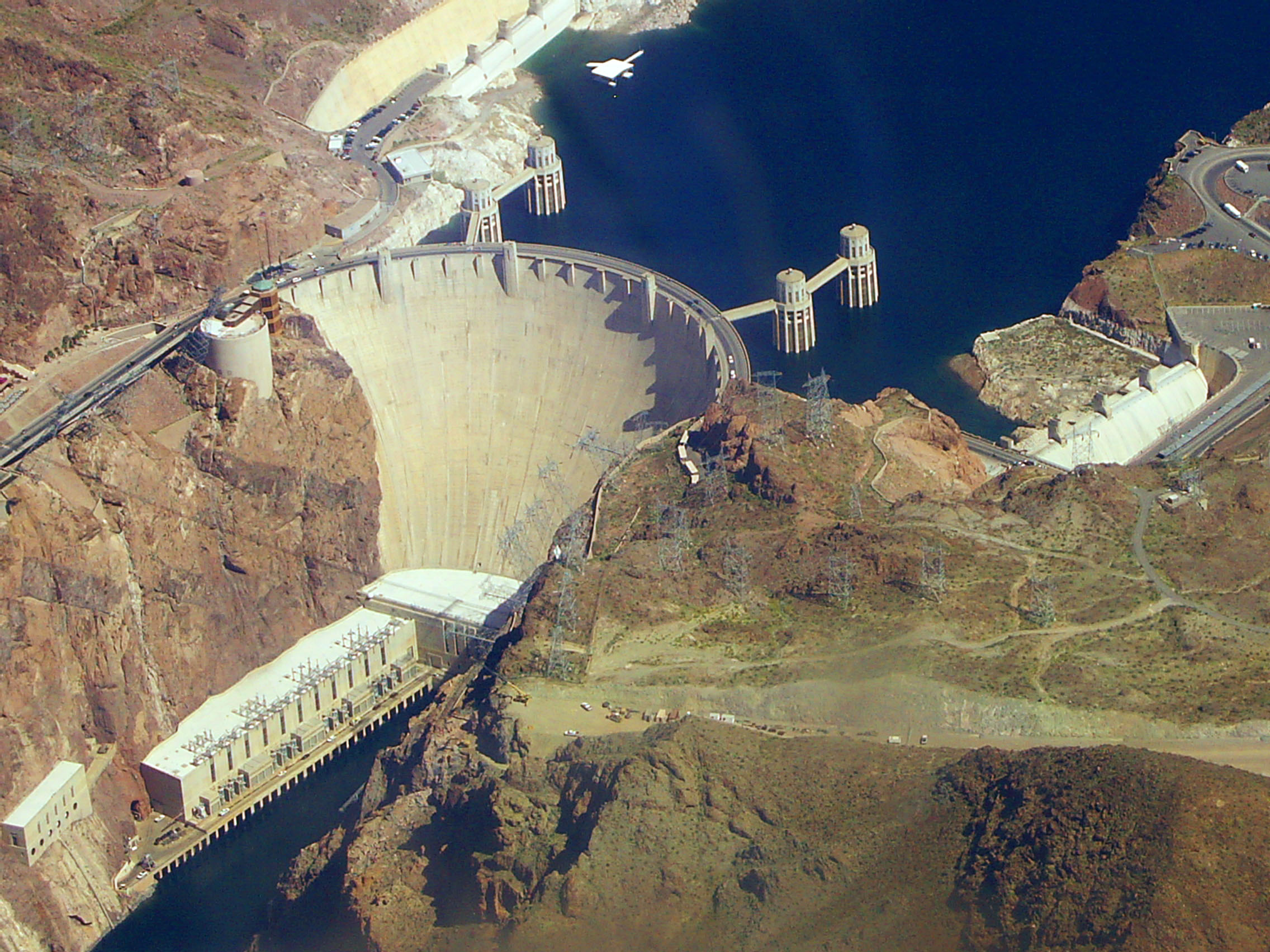
Hoover Dam is 726 feet tall and 660 feet thick at its base - one of the largest concrete structures ever built. Construction employed over 21,000 workers during the Depression years 1931-1936. The work was brutal: summer temperatures in the canyon exceeded 120°F; 96 workers officially died during construction (the real toll was likely higher). The dam required innovative concrete cooling systems; without them, the poured concrete would have taken 125 years to cure. The completed dam created Lake Mead, the largest reservoir in the United States by capacity, providing water and power to Nevada, Arizona, and Southern California.
The City
Boulder City was planned by the Bureau of Reclamation as housing for dam workers. Designer Saco DeBoer created a model town: tree-lined streets, public parks, schools, and hospitals. Houses were assigned based on job classification - executives got larger homes on higher ground. The government ran everything: utilities, stores, transportation. Crucially, gambling, alcohol (during Prohibition), and prostitution were banned - a response to the vice prevalent in Las Vegas. When the dam was completed, the government sold the houses to residents. Boulder City incorporated in 1960, maintaining the gambling prohibition that makes it unique in Nevada.
The Legacy
Hoover Dam transformed the American Southwest. The electricity it generates - 2,080 megawatts at peak - powered the growth of Las Vegas, Phoenix, and Southern California. Lake Mead provided irrigation water and municipal supply to millions. The dam made cities possible in the desert. But the transformation came at a cost: the Colorado River no longer reaches the sea; downstream ecosystems have collapsed; Lake Mead is shrinking as drought and overuse consume more water than the river provides. Hoover Dam remains an engineering marvel; whether it represents triumph or hubris depends on how the Colorado River's story ends.
Boulder City Today
Boulder City retains its small-town character while Las Vegas metro surrounds it. The gambling prohibition, maintained through decades of pressure and ballot initiatives, keeps the casinos away; the town remains a quiet alternative to Strip excess. Historic downtown preserves 1930s architecture. The Boulder Dam Hotel houses a museum. The town serves as gateway to both Hoover Dam and Lake Mead National Recreation Area. Residents value the quiet - many work in Las Vegas but live where gambling, with its associated development, is forbidden. The model community built for dam workers remains, in its way, a model still.
Visiting Boulder City and Hoover Dam
Boulder City is located 25 miles southeast of Las Vegas via US-93. Hoover Dam is 8 miles beyond Boulder City. Dam tours include the Hoover Dam Powerplant Tour (30 minutes) and the Hoover Dam Tour (1 hour, including power plant). Tours require security screening; reservations recommended. The Mike O'Callaghan-Pat Tillman Memorial Bridge offers dam views without entering the facility. Boulder City's historic downtown has restaurants, shops, and the Boulder Dam Museum. Lake Mead National Recreation Area surrounds the lake; recreation includes boating, fishing, and swimming. Las Vegas serves as the gateway airport. The dam is open year-round; summer temperatures are extreme - morning visits are cooler.
From the Air
Located at 35.98°N, 114.83°W in southern Nevada. From altitude, Hoover Dam is visible at the point where Lake Mead narrows into Black Canyon - the dam's white concrete contrasts with dark canyon walls. Lake Mead stretches northeast, its 'bathtub ring' of exposed rock showing the reservoir's declining water level. Boulder City is visible as a developed area northwest of the dam. Las Vegas's sprawl is visible 25 miles northwest. The Colorado River continues south from the dam toward Lake Mohave. The terrain is Mojave Desert - brown mountains, sparse vegetation, and the engineered blue of reservoir water.